Best Suppressors for Straight-Wall Cartridges
David Higginbotham
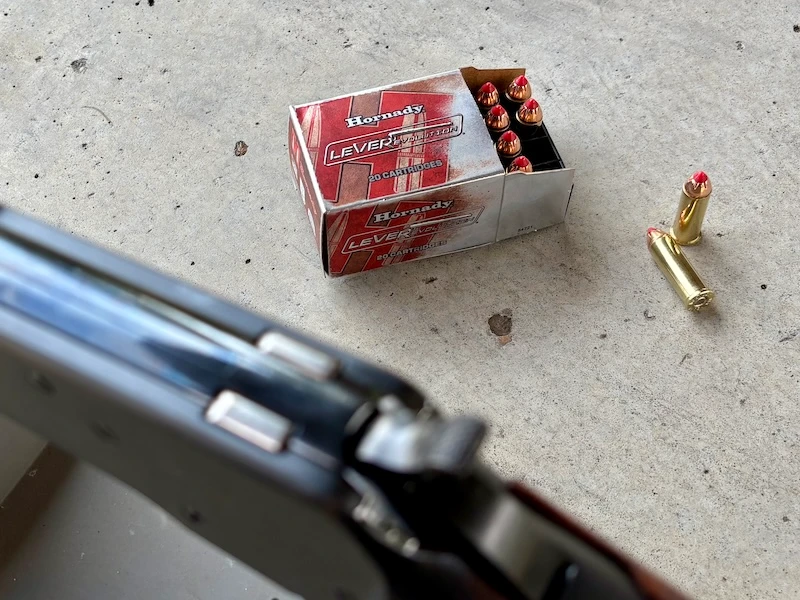
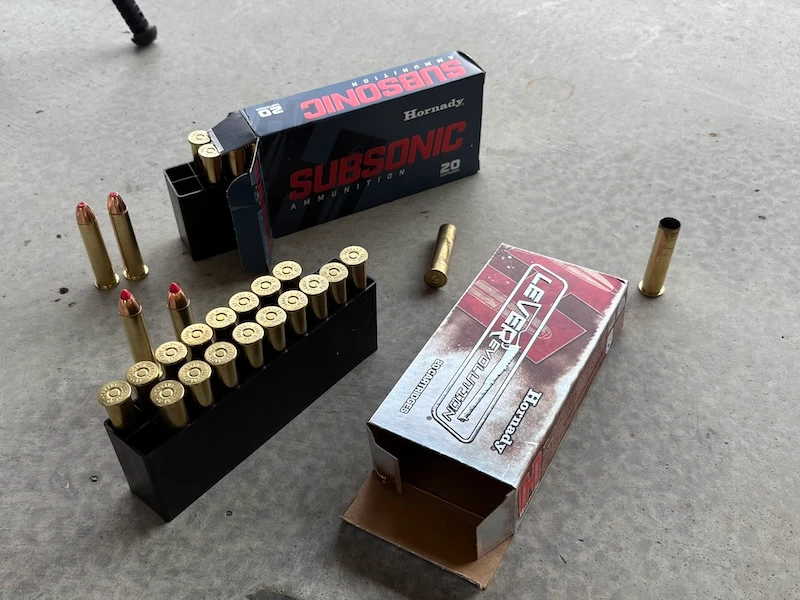
Some states and locals that had once allowed only shotguns for hunting whitetail are opening up options for hunting with straight-wall cartridges (SWCs), too. A few even allow rounds like .44 Magnum and .350 Legend during what was once muzzle-loading season. These rounds are usually large, heavy, and a bit slow—all of which makes them perfect for suppression.
What Is a Straight-Wall Cartridge?
Understanding straight-wall cartridges is easy enough. If the cartridge case has a straight wall, it is technically a straight-wall cartridge, but that doesn’t mean it qualifies as a straight-wall cartridge for hunting.
While there are generalizations, there’s not a federal standard. For most straight-wall states, the main concern seems to be ethical hunts with rounds that have reliable terminal ballistic performance. One reliable measure is case length—and many put the cutoff right at the .357 mark, eliminating the more anemic .38 Special rounds.
Other states, concerned about over-travel, limit the top end of power, as well. Rounds like the .45-70 are good to go in most states, but not all.
.22 LR has a straight wall. Does that count? In at least one state, it does.
All of this is to say: check your local regulations.
Commonly Approved Straight-Wall Cartridges
As a gross generalization, these rounds meet the standards for whitetail hunts:
| .30 Carbine | .360 Buckhammer | .45 Raptor |
| .350 Legend | .400 Legend | .454 Casull |
| .357 Magnum | .41 Magnum | .460 S&W Magnum |
| .357 Maximum | .44 Magnum | .500 S&W Magnum |
| .45 Colt | .50 Beowulf | |
| .450 Bushmaster |
As stated above, this is a generalization — always confirm against your specific state’s regulations before hunting.
How Did We Get Here?
Whitetail deer were once scarce. With few hunting restrictions, and less enforcement, Americans in the 19th and early 20th centuries, across much of the Midwest, especially, relied on deer for food. Strict regulations were put in place to help whitetail populations rebound.
By the time hunting was permitted again, human population density had become another concern. Rifle rounds may travel long distances, endangering the precious humans. After WWII, many states opened seasons to shotgun hunts, which didn’t pose the same perceived risk as rifles, as slugs can drop up to three feet over two hundred yards.
Jump ahead half a century, and Ohio’s Wildlife Council successfully argued that some straight-walled cartridges worked like slugs. SWCs had modest muzzle velocities, and their projectiles tended to be heavier, which meant they drop fast. Plus, most were more accurate than slugs.
Loosening the Shotgun Restriction
Starting in 2014, many of the midwestern states loosened their regulations to allow for straight-walled cartridges. Ammo companies immediately spun up new options, like .350 Legend. .360 Buckhammer and .400 Legend soon followed, and .450 Bushmaster saw a resurgence.
Some states, like Arkansas, took a look at the ever-narrowing gap between modern muzzle-loaders and center-fire rifles, and concluded that restricting some types of guns but permitting others seemed arbitrary. Why was it legal to hunt with a .45 caliber in-line muzzle-loader, and not with a .45-70?
If the intent had been to use flintlocks for a more primitive, less reliable (and arguably less ethical) hunt, that ship had sailed.
Regulations aside, there’s a huge benefit for moving away from the shotguns and the muzzle-loaders….
Suppressing Straight-Wall Buck-Thumpers
You want the straight dope on suppressing straight-wall cartridges? It is easy. There’s nothing inherently different in suppressing a SWC that wouldn’t also apply to a necked cartridge. The biggest difference may be the size and speed of the projectiles, but even that is going to have some overlap.
Step One — Find the Perfect Rifle
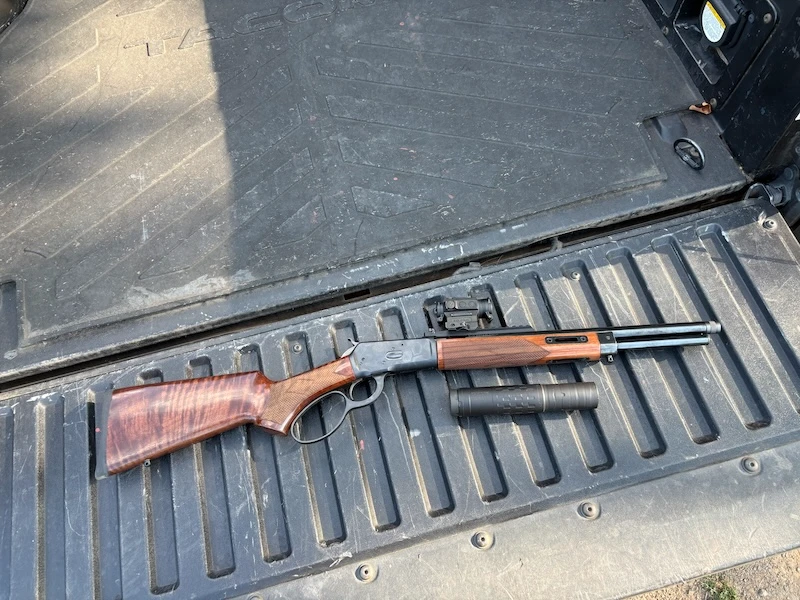
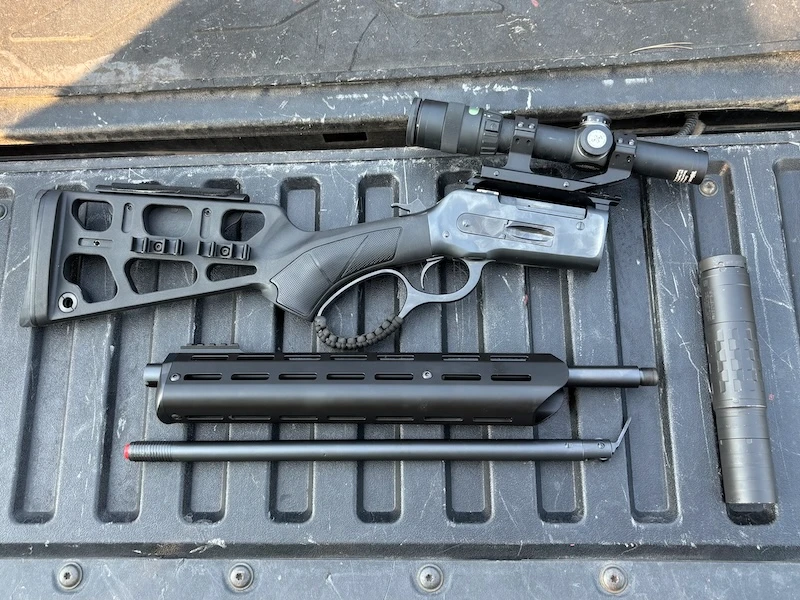
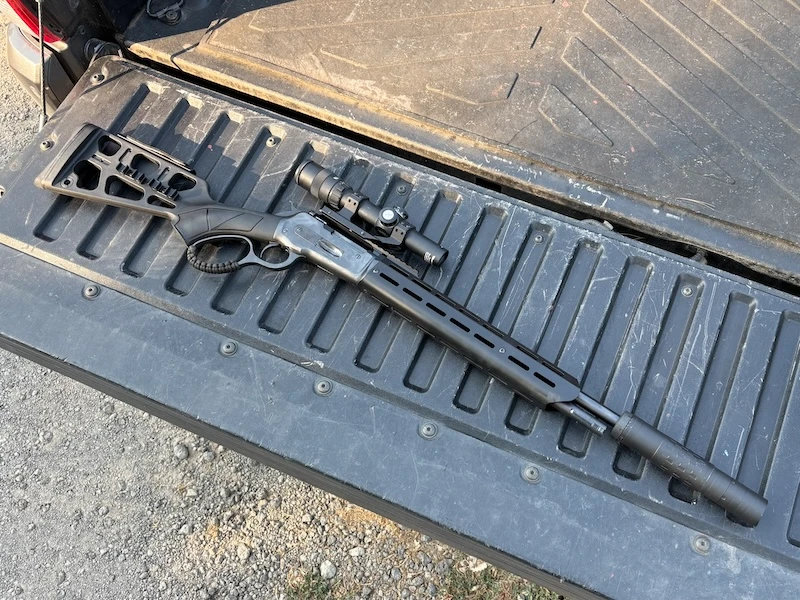
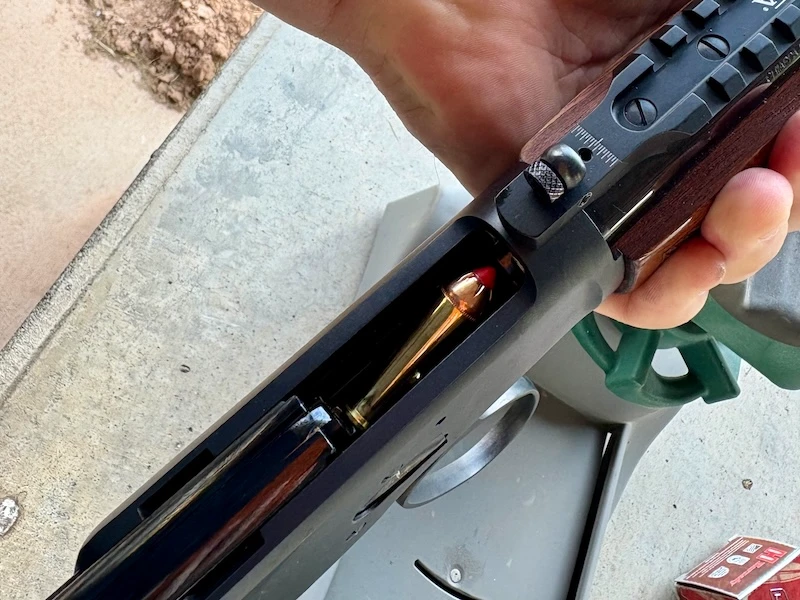
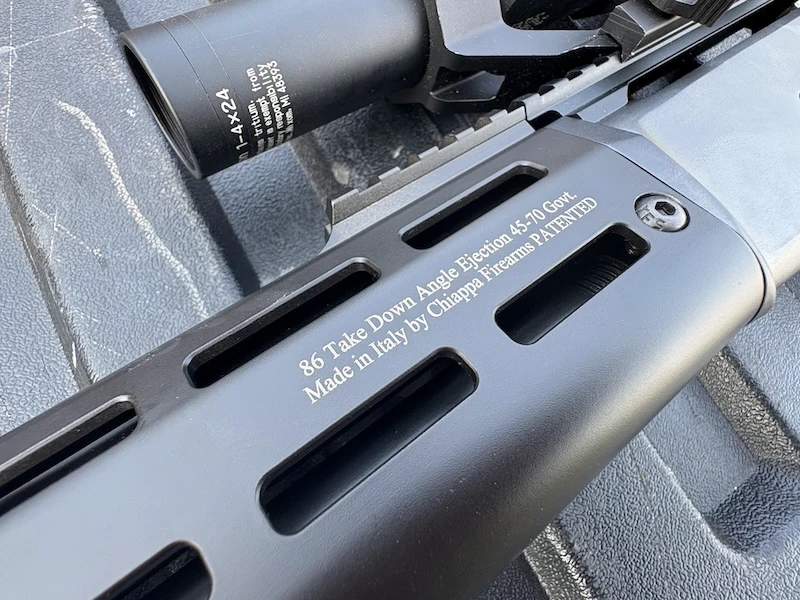
This season, I’ll be hunting with one of these two — if not both. The first, and a leading contender for my upcoming season, is the Chiappa 86 Wildlands Takedown. This one is in .45-70. The other is a 92 Wildlands Field, in .44 Magnum.
When picking a straight-wall rifle, you have numerous options. All these calibers are available as bolt-actions. Some are available as single shots. Lever-actions, for me, offer a mix of tradition and functionality. Many have iron sights (the 92 Wildlands does). These guns are compact and versatile, and ideal for getting into the dense brush where I hunt in Arkansas.
I’m testing a couple of distinct options here. The first is caliber. I’ve often thought .45-70 was ideal for bigger game at short range, but I’ve never hunted whitetail with it. A .44 Magnum, out of a 16″ barrel, seems more reasonable at distances around 100 yards.
Step Two — Irons, Optics, or Dots?
Chiappa’s 92 Wildlands has a forward-mounted rail, as it ejects out the top. This allows for a red dot, or even a scout scope.
As the 86 Wildlands is a take-down, the rail is split where the front end disconnects, which means the optic is most stable behind that point.
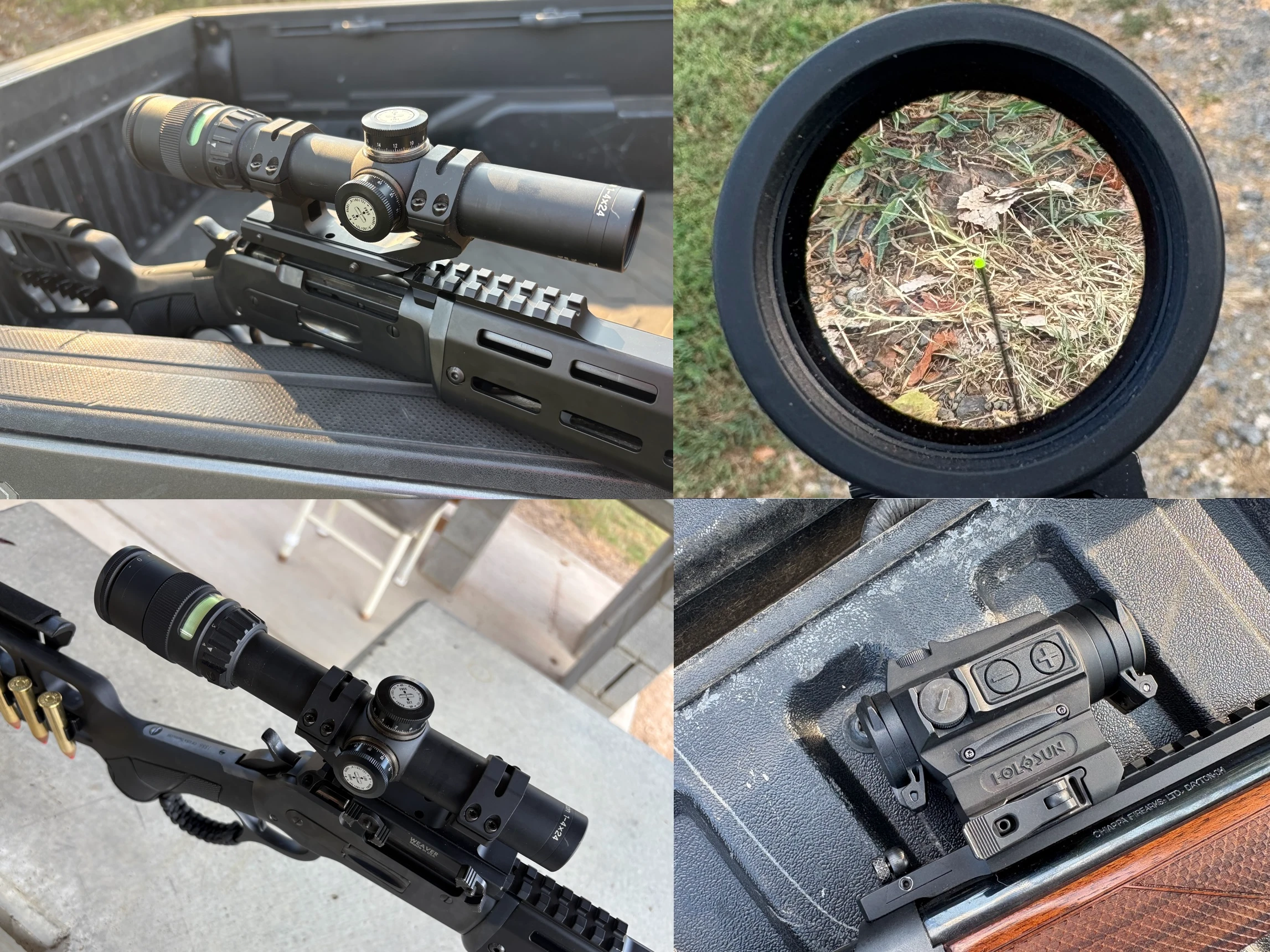
I opted for a Trijicon 1-4 on the 86, as it has a wide-open field of view that is ideal for fast target acquisition at close distances. I’ve hunted hogs with this scope and I respect its capabilities.
With the Holosun red dot on the 92, I had no difficulty with target acquisition. Red dots are like that. But the field of view is limited and there’s no magnification.
I’m still looking for the sweet spot with the Trij. I used several sets of rings, and varied the eye relief. My issue was more related to shooting offhand—finding the right eye relief when throwing the rifle up for a fast shot. In the end, I reversed the mount and brought it back. This was the optimal placement for shooting from the bench, at least.
Step Three — The Best Suppressor for Straight-Walled Cartridges
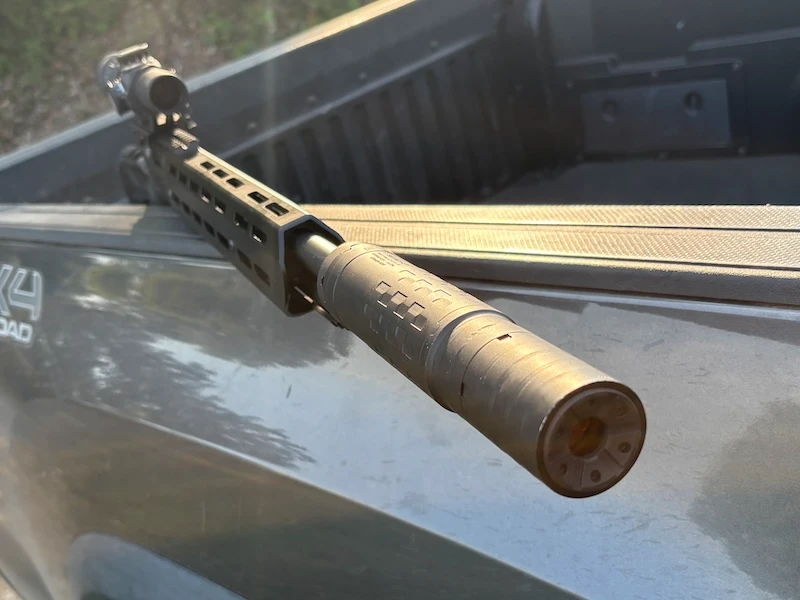
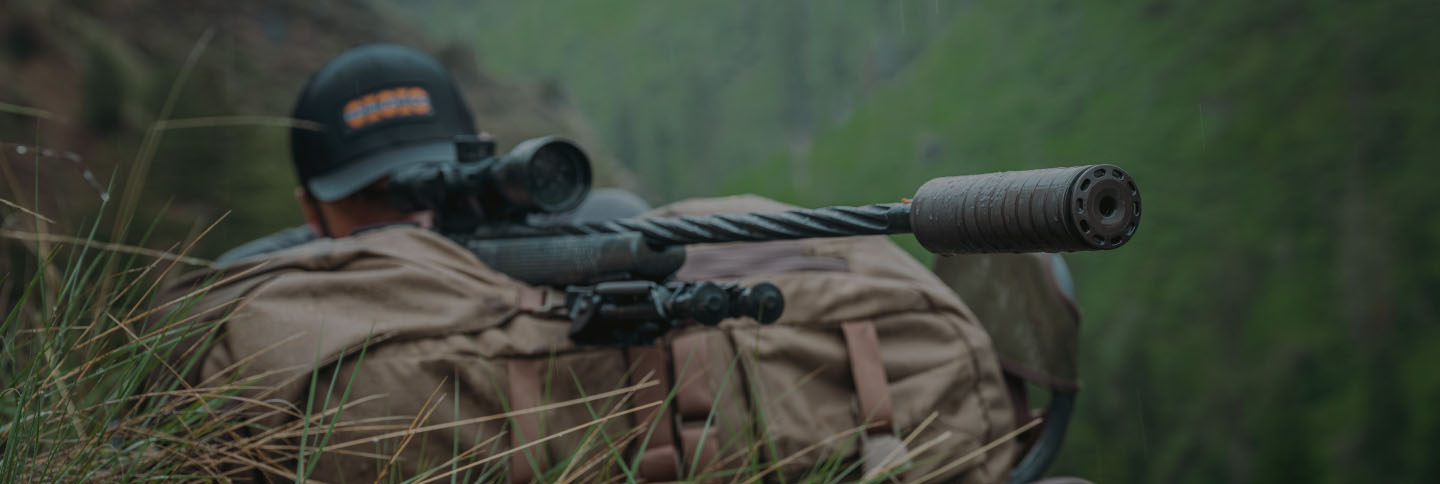
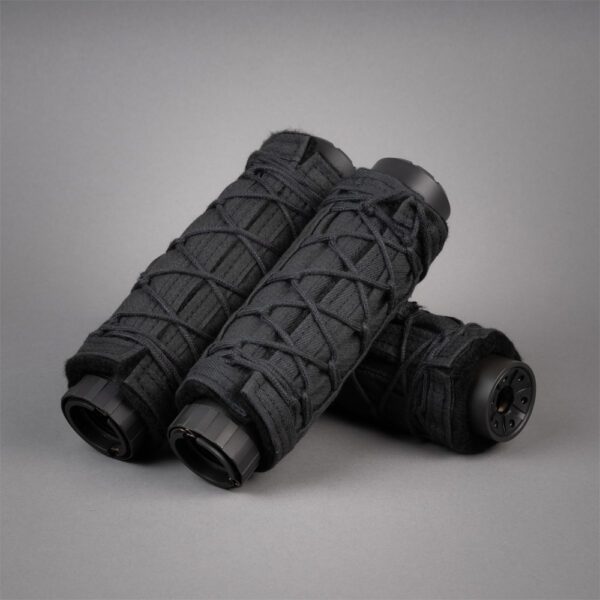
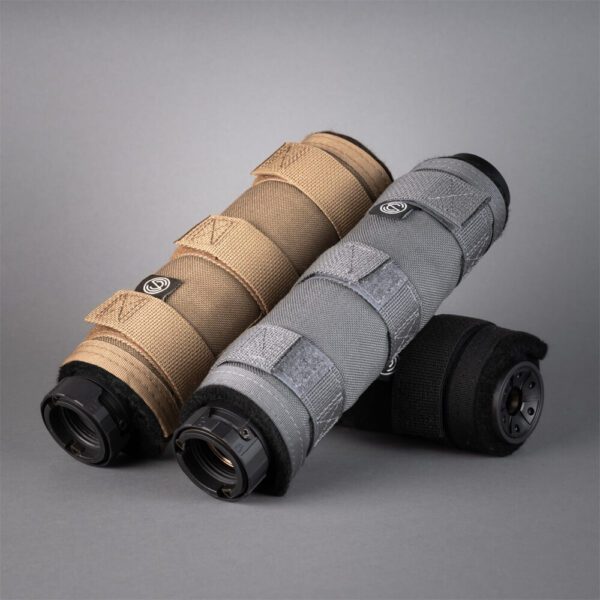
Here’s where it gets good. Both .45-70 and .44 Magnum are ideal for suppression. I like the versatility of SilencerCo’s Hybrid 46M. In its long form, it offers exceptional sound reduction. If you’re moving through heavy brush, its short form allows for more maneuverability. As both of the rounds I’m hunting with are .40 calibers, the Hybrid 46M is spot on.
Which Suppressor for Which Straight-Wall Cartridge?
It comes down to bore diameter. The Omega 36M tops out around .36 inches — plenty for 9mm through .338 Lapua Magnum, including .350 Legend — but anything larger needs the Hybrid 46M, which clears up to .458 inches.
| Cartridge | Bullet Diameter | Suppressor |
|---|---|---|
| .350 Legend | .357–.358 in. | Omega 36M |
| .360 Buckhammer | .358 in. | Omega 36M |
| .44 Magnum | .429 in. | Hybrid 46M |
| .400 Legend | .400–.401 in. | Hybrid 46M |
| .450 Bushmaster | .452 in. | Hybrid 46M |
| .45-70 Government | .458 in. | Hybrid 46M |
If you are looking at other calibers, be sure they clear. No .30-caliber cans will clear a .350 Legend’s .357-inch bullet. For this, stick with the Omega 36M. For anything larger — .400 Legend, .44 Magnum, .450 Bushmaster, .45-70, and up — you need the Hybrid 46M.
Suppressor Legality for Deer Hunting
Suppressor ownership and hunting use are legal across most of the country — currently 42 of 50 states allow ownership, and of those, only Connecticut restricts hunting specifically. That’s a separate check from the straight-wall cartridge question above: one is about which round you can legally hunt with, the other is about whether you can hunt suppressed at all in your state. Confirm both before you head out.
What If Your State Doesn't Call Out SWCs?
If your state’s regulations don’t specifically address straight-wall cartridges, the safest approach is to treat it like traditional muzzleloader season: hunt at closer range, where shot placement matters more than a cartridge’s reach.
If I were in some kind of mythical survival situation, a .45-70 wouldn’t be the gun I’d reach for first. But I’m not. And hunting at much closer range is a worthy test of your skills. Any yokel can park in an elevated tin-can with a lil-buddy heater and sip lattes from his wife’s Stanley cup while he waits for a buck to get hungry enough to hit the food plot.
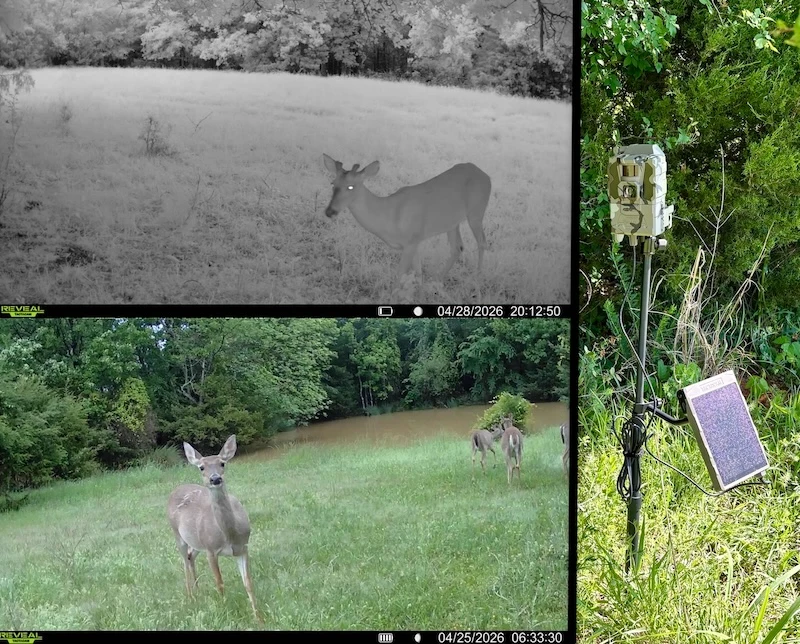
Hunting on foot is far more demanding. Climbing trees. Watching paths. Monitoring scent. Waiting for that one majestic animal to close in close enough for a shot… it is addictive. If you’re serious about the on-foot approach, a trail camera system that can track movement patterns before season opens — I run Reveal’s Tactacam line — is one of the single best strategic advantages available to an archery or straight-wall hunter.