Adjustable Gas Block for a Suppressor: Do You Need One?

Jason Mosher
As suppressors continue to soar in popularity, many new suppressor owners wonder: do you need an adjustable gas block? The short answer is you do not always need an adjustable gas block to run a suppressor on your rifle.
A suppressor pushes extra gas back into the action, and an adjustable gas block lets you dial that excess pressure back down. Whether your rifle actually needs one depends on your barrel length, gas system, caliber, and the specific suppressor on your muzzle.
When I first started shooting suppressed, I assumed every rifle would run fine right out of the box. I quickly learned that attaching a traditional suppressor onto a standard semi-automatic rifle changes the entire operating cycle. The bolt slams back harder, brass often flies forward instead of to the side, and your eyes start watering after a few quick shots.
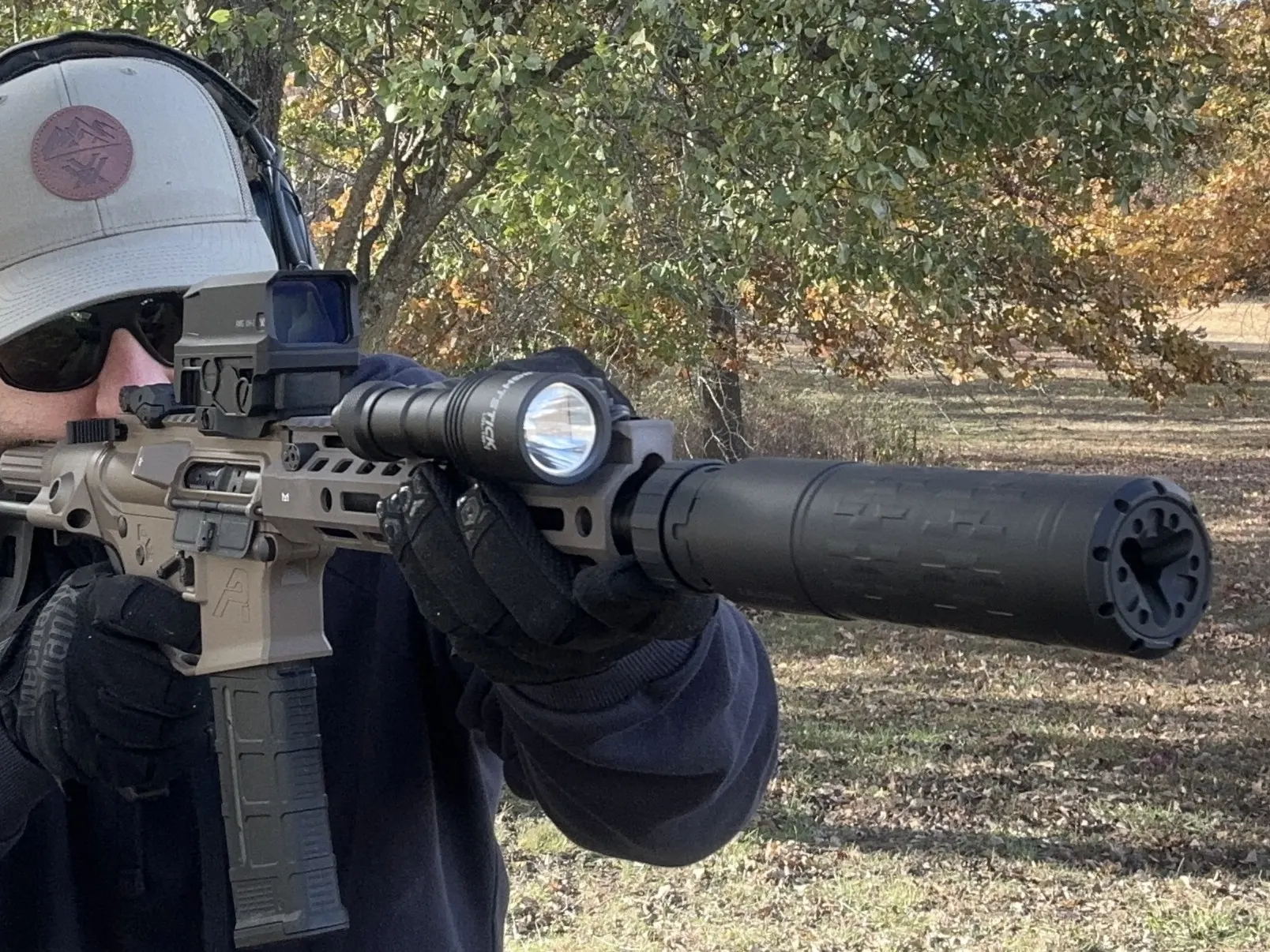
Some rifles are set up from the factory to handle a suppressor without any adjustment. Others, however, need an adjustable gas block so they can be fine-tuned for the best performance and reliability.
Still, swapping out gas blocks for an adjustable one is not mandatory for every rifle with a can. Some factory rifles handle the added pressure just fine. Other times, an upgraded buffer spring or the right suppressor choice solves the problem without touching the barrel.
Understanding how gas moves through your rifle will help you decide if this upgrade belongs on your setup.
Why Does a Suppressor Over-Gas an AR-15?
To understand why a rifle gets over-gassed, you need to look at how a suppressor works. A suppressor traps and slows down high-pressure propellant gases at the muzzle to reduce noise.
Because that gas cannot escape out the front as quickly, it takes the path of least resistance. Part of it travels backward down the barrel and through the gas tube into your receiver.
We call this reverse flow “back pressure.” An AR-15 rifle already has some back pressure—in fact, this is what makes the rifle work. When that back pressure hits your bolt carrier group, it drives the action rearward and the buffer spring pushes it back forward. The two work in harmony.
When you add a suppressor, the gas hits the action with much more speed and force than the rifle was designed to handle.

You will notice three main symptoms when your AR-15 is over-gassed:
- First, you get gas to the face as excess gas and burnt powder blow out through the ejection port.
- Second, you feel harsh cycling because the heavier bolt velocity creates a sharp, snappy recoil impulse. This sends your spent brass flying forward toward the one o’clock position.
- Third, you get faster wear as that extra carrier speed batters your buffer, wears out extractor springs, and puts premature stress on your bolt lugs.
Short-barreled ARs get it the worst. On a short barrel with a pistol- or carbine-length gas system, the gas port sits much closer to the chamber where pressures are highest.
When shooting a short 5.56 setup suppressed without regulating the gas, the bolt carrier group will often be coated in thick carbon sludge before the second magazine is finished.
Do You Need an Adjustable Gas Block for a Suppressor?
This question comes down to how your specific rifle and suppressor interact. Four factors dictate how much excess gas ends up in your action.
- Barrel length
- Gas system length
- Caliber
- Suppressor design
Look at your barrel and gas system length. A 16-inch or 18-inch AR-15 with a mid-length or rifle-length gas system taps gas further down the bore where pressure has already dropped. These rifles usually handle a suppressor smoothly with a standard fixed gas block.
On the other hand, a 10.3-inch or 11.5-inch barrel with a carbine-length gas system almost always runs over-gassed once you add a can.
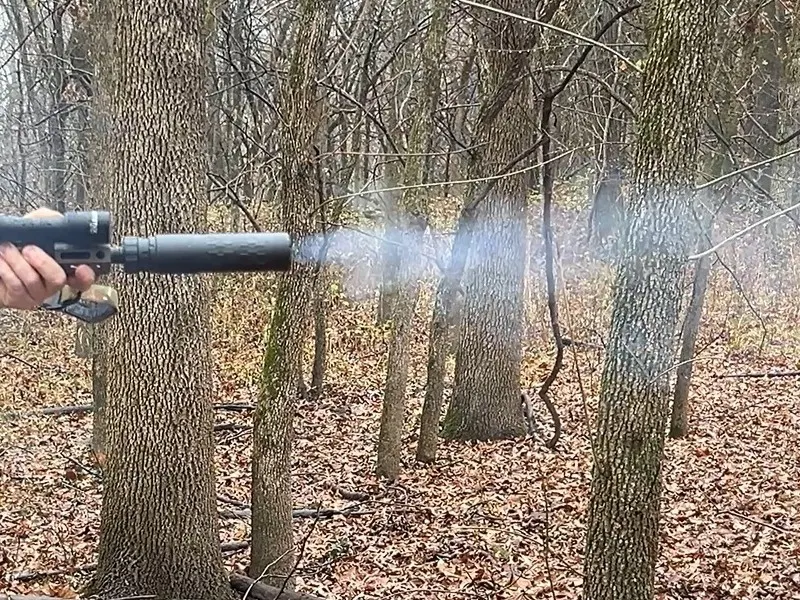
Caliber plays a big role as well. High-pressure rounds like 5.56 NATO and .308 Winchester generate a lot of gas volume. When you suppress them, that high pressure has nowhere to go but backward.
Lower-pressure cartridges, such as subsonic .300 Blackout, generate far less gas and rarely overwhelm the action on their own.
Traditional sealed-baffle suppressors trap gas very effectively. This, in turn, maximizes sound suppression at the muzzle but drives more gas back through the system. Low-back-pressure designs are built to reduce that blowback.
If you shoot a standard 16-inch rifle occasionally, you can probably skip the adjustable block. If you run a short-barreled 5.56 with a traditional high-back-pressure suppressor, an adjustable block makes a night-and-day difference.
How Do You Adjust a Gas Block for Suppressed Shooting?
Tuning an adjustable gas block is straightforward once you get to the range. Because every manufacturer uses a slightly different click or screw mechanism, always read your gas block maker’s instructions before you start turning screws.
The general tuning process works the same way across almost every platform. Load several magazines with one round each of the same ammunition you plan to shoot most often. Make sure your suppressor is mounted securely and correctly.
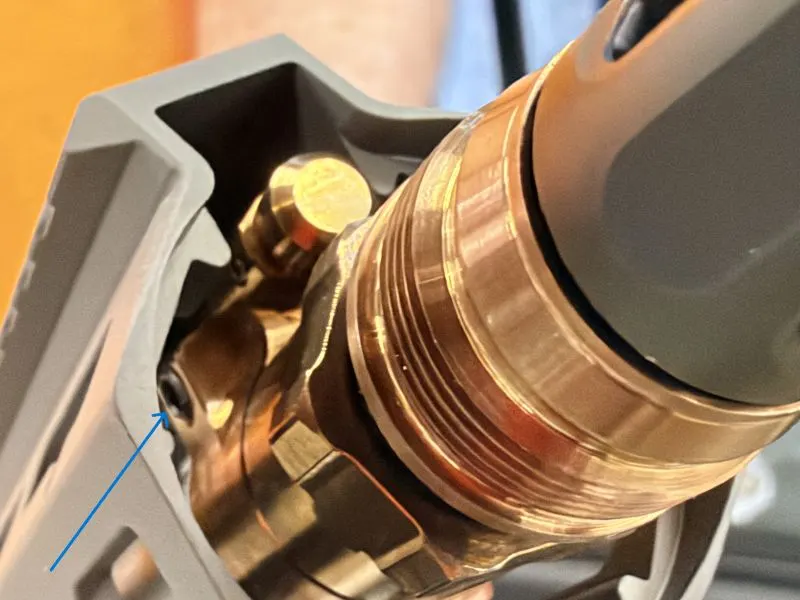
I like to start with the gas block open so the rifle cycles and locks in place on the empty magazine. With each shot, I slowly close it until the bolt stops locking back on an empty magazine.
Once the bolt will not lock back after firing a single round from the magazine, turn the adjustment screw open slightly. Each time you make an adjustment, fire another single round from a magazine. When the bolt locks open on an empty magazine, add just one or two more clicks to give yourself a small reliability margin for dirty chambers, cold weather, or weaker ammo.
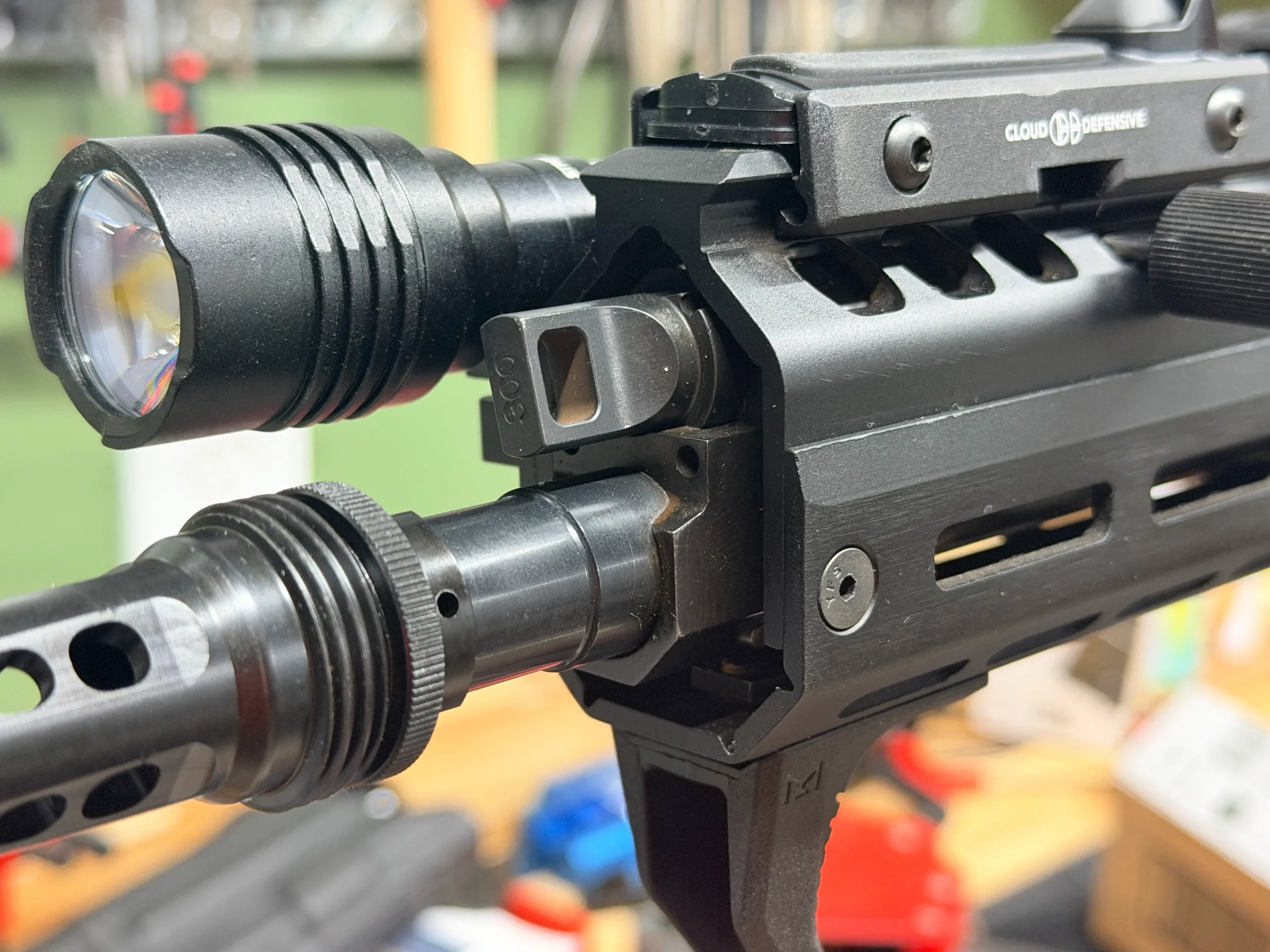
While performing this process, you can also watch the ejection pattern as you fire each round. When over-gassed, brass will normally launch forward at one o’clock. You may also get a sharp puff of gas in your eyes.
As you restrict the gas using the gas block, the brass should settle into a clean three-to-four o’clock pile. The action should also quiet down noticeably, and the gas in your face will disappear.
What If You Want to Shoot Unsuppressed After Tuning?
A block tuned for suppressed shooting will leave your rifle under-gassed once the suppressor comes off. With less back pressure, the action gets less gas than it needs, so expect short-stroking and failures to cycle or lock back.
You have three options. You can re-adjust the block each time you swap, run two known settings (one suppressed, one unsuppressed) and note the click count for each, or accept that the rifle is a dedicated suppressed gun and leave it alone.
How Do You Install an Adjustable Gas Block?
Installing an adjustable gas block on a standard AR-15 is a moderate workbench project, so here is a quick overview rather than a step-by-step guide.
Because the gas block sits underneath the handguard on most modern free-floated rifles, installation almost always requires removing your muzzle device and pulling the handguard off the barrel nut.
Once the barrel is exposed, you loosen the set screws or drive out the taper pins holding your factory gas block in place. Then you slide the entire assembly—gas block and gas tube—off the front of the barrel.
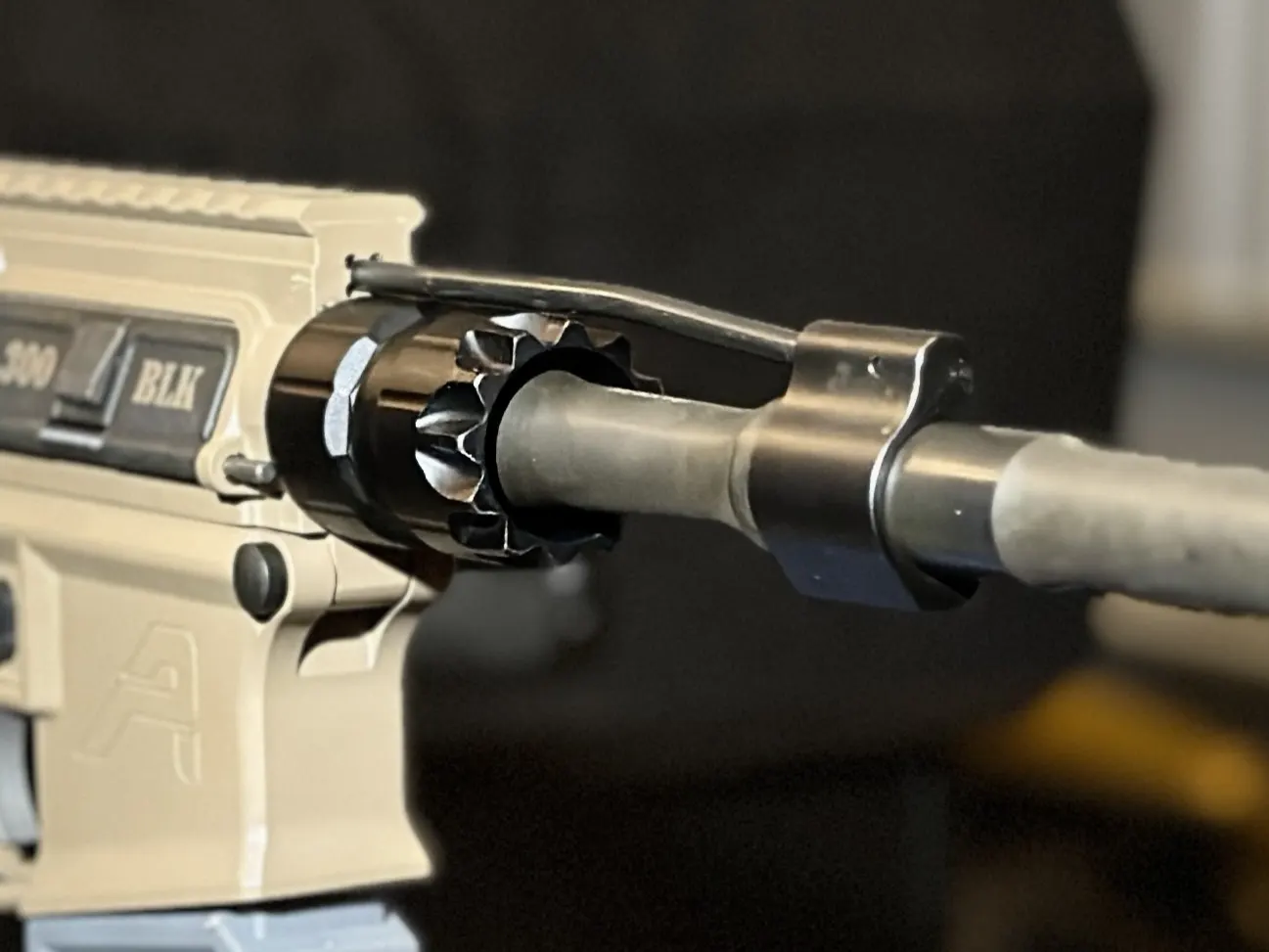
From there, you transfer the gas tube over to your new adjustable gas block and secure it with a fresh gas tube roll pin. Then you slide the new block onto the barrel, carefully aligning the gas port in the barrel with the port inside the block.
Proper alignment is important during this step. Even a slight misalignment can choke off the gas supply and turn your semi-automatic rifle into a single-shot gun.
Every manufacturer specifies their own fastener method, thread locker requirements, and torque values. Always follow the exact instructions included in your gas block’s box rather than guessing on torque specs.
When to See a Gunsmith
If you do not own an upper receiver vise block, a torque wrench, and roll pin punches, taking your upper receiver to a qualified local gunsmith is a smart move. This will ensure the gas port is aligned properly and the block stays locked in place under heavy firing schedules.
Are Adjustable Gas Blocks Reliable?
Whenever you add moving parts to a rifle’s operating system, you introduce potential failure points. If we are being completely honest, adjustable gas blocks have two known reliability quirks: set screws can back out under heat and vibration, and heavy carbon buildup can freeze the internal adjustment mechanism.
Neither issue is a dealbreaker if you set the block up correctly and do basic maintenance. Set screws back out when shooters skip prep work during installation.
By degreasing the barrel and screw threads, applying thread locker, and dimpling the bottom of the barrel when applicable, your gas block will stay put through thousands of rounds.
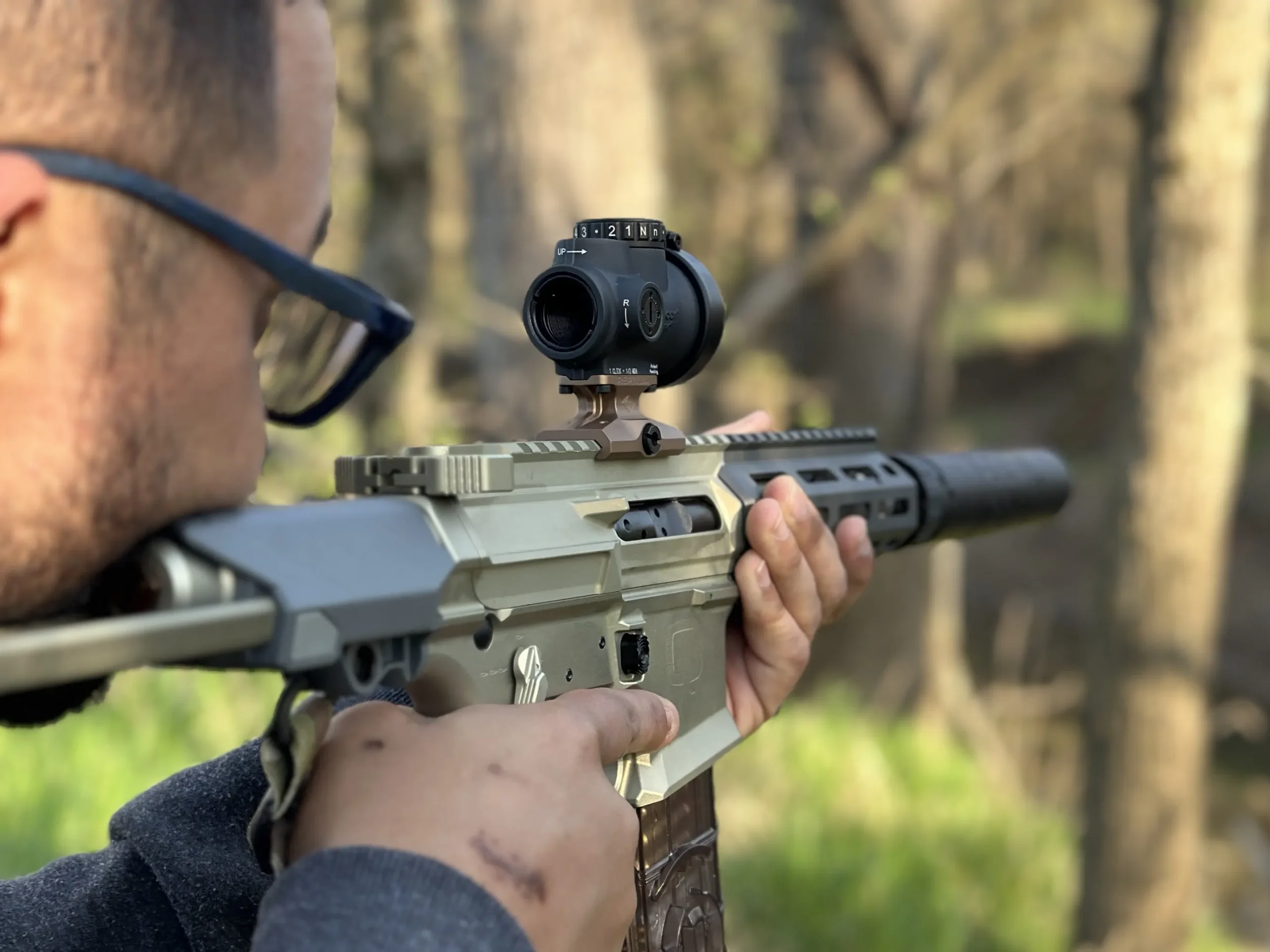
Carbon lock happens when burnt powder and fouling bake onto the internal adjustment screw or detent after hundreds of suppressed rounds. If you leave an adjustable block untouched in one position for a year of heavy suppressed shooting, that screw will likely be seized up the next time you try to turn it.
Preventing carbon lock takes less than a minute during your normal cleaning routine. Every few hundred rounds, put a drop of gun oil or anti-seize on the adjustment screw. Turn it a couple of clicks in both directions to break up the carbon crust, and return it to your preferred setting.
What Are the Alternatives to an Adjustable Gas Block?
Swapping out your gas block is not the only way to correct an over-gassed suppressed rifle. Depending on your setup, you can choose between four main options, and each has its own purpose and trade-off:
- Adjustable gas block: This restricts excess gas right at the barrel port before it enters the action. The trade-off is that it requires removing the handguard to install and needs periodic cleaning to prevent carbon lock.
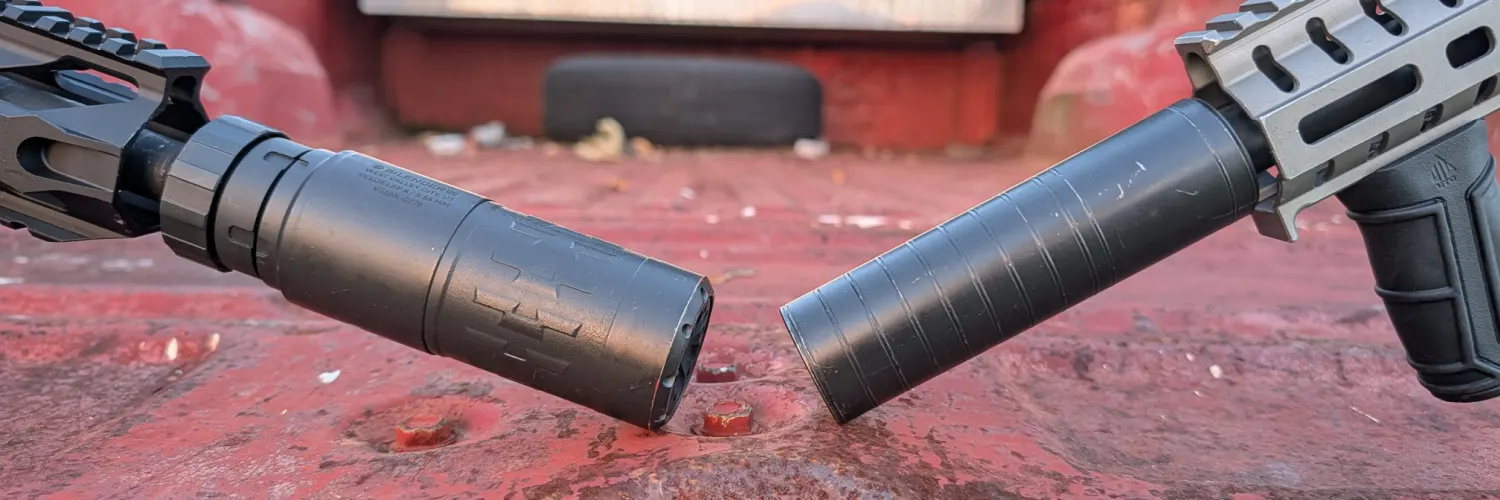
- Low back pressure suppressor: This reduces the amount of gas pushed back toward the shooter and the action. The trade-off is that it costs more upfront than mechanical rifle parts and can sound slightly different at the muzzle. If you want to skip turning screws on your rifle altogether, a dedicated low-back-pressure can like the Velos LBP lets many rifles run closer to how they run unsuppressed.
- Gas-defeating charging handle: This blocks and redirects gas away from the shooter’s eyes at the rear of the receiver. The trade-off is that it does not reduce carrier velocity, recoil, or internal parts wear. For shooters who just want to stop their eyes from watering, a gas-defeating charging handle takes seconds to drop in at the bench.
- Heavier buffer: This slows down the bolt carrier group using added reciprocating mass in the buffer tube. The trade-off is that while it is an easy drop-in install, it does not stop excess gas and fouling from entering the receiver in the first place.
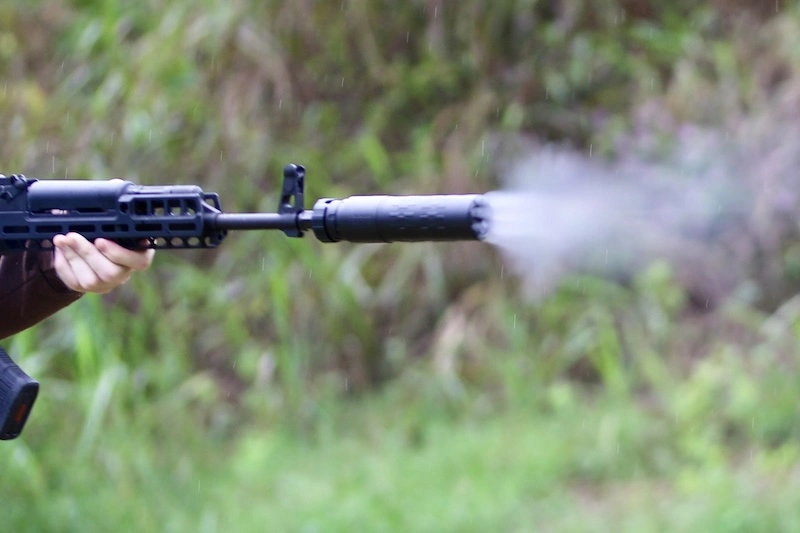
Which Fix Is Best for Your Suppressed Rifle?
Adding an adjustable gas block is one of the most effective ways to fine-tune a dedicated suppressed rifle. This is especially true if you love running short barrels with traditional sealed suppressors like the Omega 300 or a multi-caliber can like the Hybrid 46.
When you restrict the gas at the port, the rifle shoots flatter, stays cleaner inside the receiver, and stops pelting you with burnt powder on every shot.
That said, do not feel like you have to tear your upper receiver apart just to enjoy suppressed shooting. If you want a suppressor that runs cleanly across multiple rifles, cans like the Velos LBP 556K handle the gas management at the muzzle.
And if your current rifle already cycles well and just vents a little smoke near your nose, dropping in a gas-defeating charging handle and a heavier buffer might be all you need.
Take your rifle to the range, pay attention to where your brass lands and how the action feels on your shoulder. Let the gun tell you what it needs.
Frequently Asked Questions
Are Adjustable Gas Blocks Worth It?
An adjustable gas block is worth it if you shoot a short-barreled rifle with a traditional high-back-pressure suppressor. Cutting the gas at the barrel port noticeably reduces recoil, stops gas from blowing into your face, and keeps your internal parts from wearing out early.
If you shoot a 16-inch rifle or use a low-back-pressure suppressor, you likely will not need one.
Can You Put an Adjustable Gas Block on Any AR?
You can put an adjustable gas block on almost any standard AR-15 or AR-10, provided you match the block’s inside diameter to your barrel’s gas journal size—most commonly .750 inches on AR-15s, though .625, .875, and .936 exist.
You also need to make sure the adjustable block’s outer profile fits inside your free-float handguard without touching the rail walls during barrel flex.
Do You Need an Adjustable Gas Block for 300 Blackout?
Most shooters do not need an adjustable gas block for .300 Blackout if they primarily shoot subsonic ammunition through a pistol-length gas system. This is because subsonic rounds need all the gas they can get to cycle.
However, if you regularly switch between low-pressure subsonic rounds and high-pressure supersonics, an adjustable gas block helps keep supersonic loads from battering the action.
Are All Gas Blocks Adjustable?
No, most factory AR-15s come with a standard fixed low-profile gas block or a pinned A2 front sight base.
Fixed gas blocks have a single wide-open passage that lets all available barrel gas flow straight into the gas tube. The barrel’s gas port size alone regulates the gas volume on a fixed block.
Jason Mosher