Are Suppressors Legal in Michigan? 2026 Silencer Laws

William Lawson
If you are asking, “Are suppressors legal in Michigan?” the answer is absolutely yes. Thanks to federal policy updates and clear state precedent, 2026 stands as the simplest and most cost-effective time in nearly a century to acquire a silencer in the Great Lakes State. With the elimination of the $200 federal transfer tax fee, buyers instantly save roughly 22% on an average $700 suppressor, making out-the-door ownership far more accessible.
Are Suppressors Legal in Michigan?
Yes, firearm suppressors—frequently referred to as silencers—are 100% legal to own, possess, and use in the state of Michigan.
Whether you are looking to protect your hearing on the shooting range, reduce recoil during target practice, or take a suppressed rifle into the woods for white-tailed deer season, Michigan gun owners enjoy full legal access to suppressors.
Because Michigan does not impose additional state-level permits, licensing fees, or separate state registries for suppressor ownership, the primary requirement for Michigan residents is simple: you must remain fully compliant with federal law.
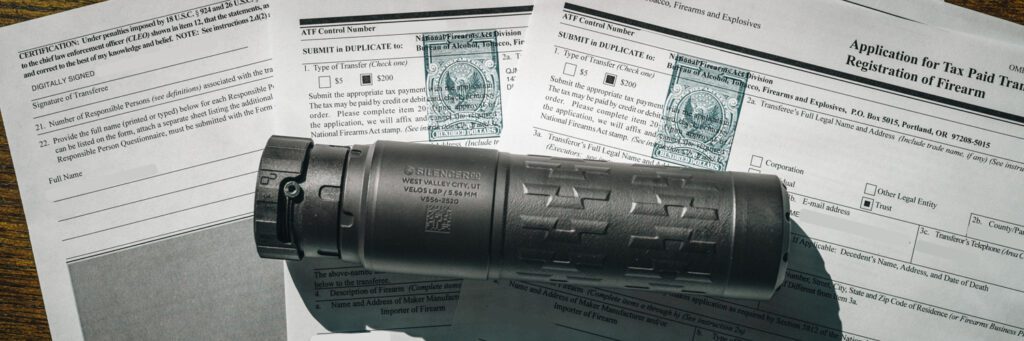
As of 2026, acquiring a suppressor in Michigan follows standard federal National Firearms Act (NFA) rules. While federal legislation eliminated the traditional $200 tax fee for NFA registration stamps, the registration process itself remains mandatory. So long as you complete a Bureau of Alcohol, Tobacco, Firearms and Explosives (ATF) Form 4, submit your digital fingerprints, pass the required background check, and obtain federal approval before taking possession, you are completely legally clear in the Great Lakes State.
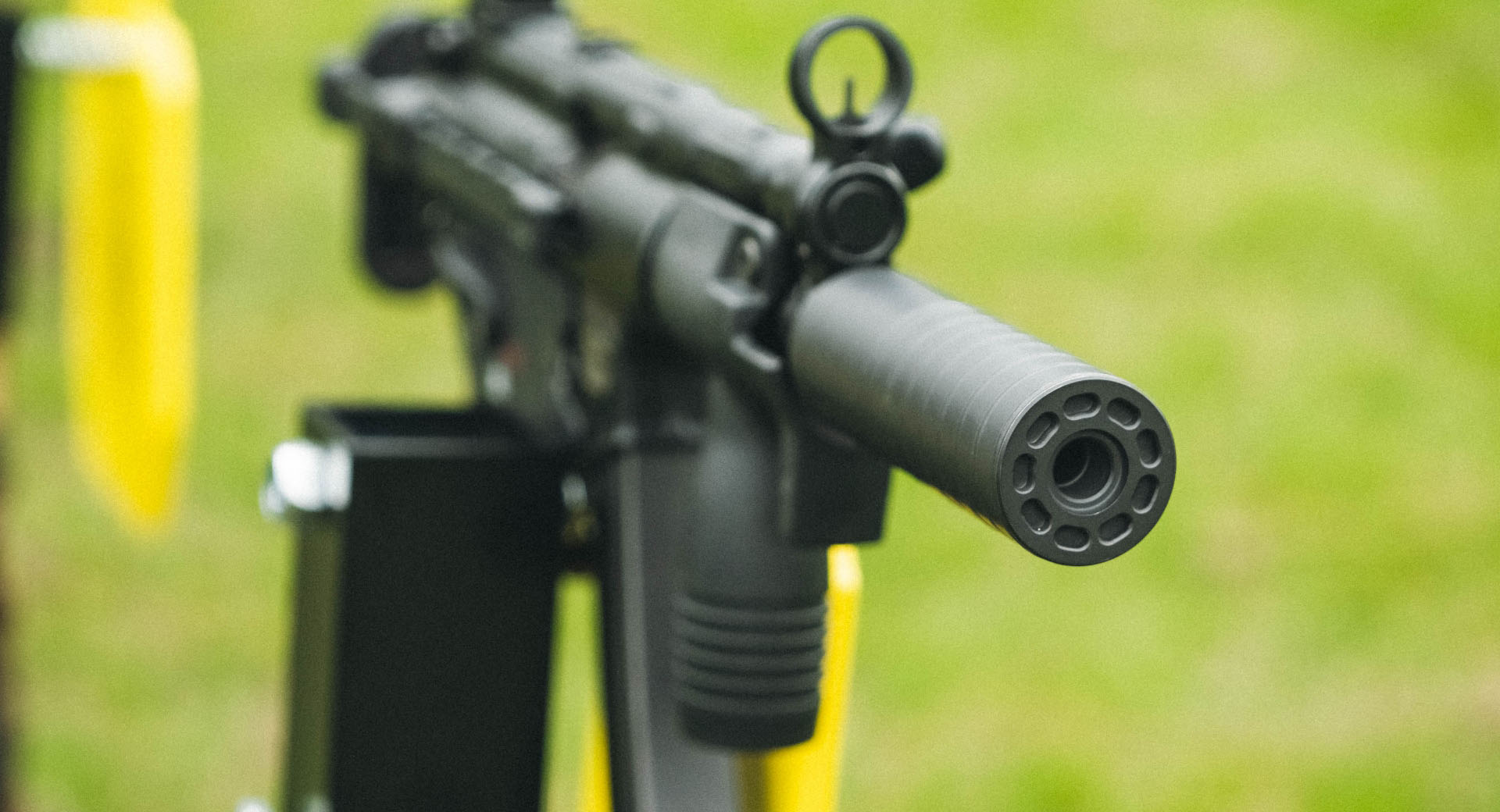
Terminology Note: Many gun owners wonder why terminology shifts between “suppressor” and “silencer.” In legal codes and federal NFA statutes, the government uses the term silencer. In the firearms industry, shooter communities and engineers prefer the term suppressor, as these devices suppress noise and muzzle flash rather than making a gunshot completely silent. Regardless of which term you use, both refer to the same regulated hearing protection devices under Michigan state law.
What Michigan State Law Says About Suppressors
Understanding how Michigan law governs suppressors requires looking at the state’s criminal penal code, specifically Michigan Compiled Laws (MCL) § 750.224. At first glance, reading the oldest sections of Michigan’s statute can cause confusion for prospective buyers.
Under MCL § 750.224, Subsection (1)(b), Michigan law states that a person shall not manufacture, sell, offer for sale, or possess a “muffler or silencer.” However, the statute includes a crucial legal safe harbor in Subsection (3)(c). This subsection explicitly exempts individuals who are federally licensed or authorized:
“Subsection (1) does not apply to… A person licensed by the secretary of the treasury of the United States or the secretary’s delegate to manufacture, sell, or possess a machine gun, or a device, weapon, cartridge, container, or contrivance described in subsection (1).”
The Key Precedent: AG Opinion No. 7260
The vital legal bridge linking state law to federal approval is Michigan Attorney General Opinion No. 7260, issued in 2011 by then-AG Bill Schuette. AG Opinion No. 7260 formally clarified that federal NFA registration via an approved ATF Form 4 constitutes federal authorization under Subsection (3)(c). This decision officially aligned Michigan state law with federal NFA standards and established that lawfully registered suppressor owners are completely exempt from the state ban.
In plain English: if your suppressor is registered and approved under federal law, it is 100% legal under Michigan state law.
Unlike some restrictive states that impose state-level bans, waiting periods, magazine capacity limits tied to suppressed firearms, or secondary state registration lists, Michigan’s statutory exemption and AG guidance defer directly to federal standards. Michigan imposes no additional state taxes, no secondary background checks beyond the ATF eForm system, and no prohibition on carrying suppressed firearms for lawful self-defense or recreational shooting.
Federal NFA Requirements for Michigan Residents
Because Michigan state law defers directly to federal NFA guidelines, buying a suppressor in Michigan requires fulfilling the standard federal requirements set by the ATF:
- Age Requirements: You must be at least 21 years old to purchase a suppressor directly from a licensed Class 3 FFL dealer. (Note: Individuals aged 18 to 20 years old may legally own and possess a suppressor if acquired through an NFA Gun Trust or via a legal private transfer, provided state and federal guidelines are met.)
- Residency & Citizenship: You must be a legal resident of the United States and a resident of Michigan.
- Legal Eligibility: You must be legally allowed to possess firearms under state and federal law (i.e., no felony convictions, qualifying misdemeanor domestic violence convictions, or active restraining orders).
- Background Check & Identification: You must successfully pass an NFA background check conducted via the FBI’s National Instant Criminal Background Check System (NICS) during your Form 4 processing.
- CLEO Notification: Under ATF Rule 41F, every applicant must send a Chief Local Law Enforcement Officer (CLEO) notification copy of their Form 4 to their local county sheriff or chief of police. This is notification only—your local chief or sheriff does not need to sign off or grant permission.
- Federal Tax Stamp Registration: You must register your device on the federal NFA registry via ATF Form 4. For more details on how federal registration works across the country, check out our comprehensive guide on understanding NFA tax stamps and eForm registration.
How to Buy a Suppressor in Michigan
Buying a suppressor in Michigan is faster and more streamlined than ever, thanks to modern digital eForms and automated kiosk systems. The step-by-step process breaks down into five straightforward stages:
The 5-Step Purchase Process
- Choose the Right Suppressor: Select a model engineered for your specific shooting needs, whether that means an ultra-light titanium rifle silencer like the Scythe-Ti, a versatile multi-caliber option like the Omega 300 DT, or a dedicated handgun model like the Osprey 2.0.
- Decide How to Register: You can register your suppressor as an Individual or under an NFA Gun Trust. Filing individually is fast, but an NFA Trust allows designated co-trustees (family or close friends) to legally possess and use the suppressor independently.
- Capture Fingerprints and Photos: Modern Class 3 dealers in Michigan utilize electronic kiosks or digital upload software. You can scan your fingerprints digitally to generate a reusable digital fingerprint file (.EFT) and snap a standard passport-style photo on your smartphone.
- Submit Your ATF eForm 4: Your dealer submits your paperwork electronically via the ATF eForms portal. Your dealer will also route the required CLEO notification copy to your local police chief or county sheriff.
- Receive Approval & Pick Up: Once the ATF issues digital Form 4 approval, visit your dealer, complete a final standard ATF Form 4473 background check verification, and take your suppressor home.
Popular Suppressor Options & Specifications
Suppressor Model | Caliber Rating | Weight | Length | Sound Performance (dB) |
| SilencerCo Scythe-Ti | Up to .300 RUM / .30 Cal | 6.3 oz | 6.16 in | ~127.6 dB (.300 BLK) ~128.4 dB (.308) ~132.9 dB (.300 WM) |
| SilencerCo Omega 300 DT | Up to .300 Win Mag / .30 Cal | 14.0 oz | 7.08 in | ~119.5 dB (.300 BLK) ~130.1 dB (5.56) ~133.2 dB (.308) |
| SilencerCo Osprey 2.0 | 9mm to .45 ACP & .300 BLK Sub | 9.2 oz | 8.06 in | ~128.9 dB (9mm) ~130.4 dB (.45 ACP) ~131.3 dB (.300 BLK Sub) |
To locate a licensed Class 3 FFL near you in Detroit, Grand Rapids, Lansing, or the Upper Peninsula, use the official SilencerCo Dealer Locator tool to find an authorized partner.
Can You Hunt with a Suppressor in Michigan?
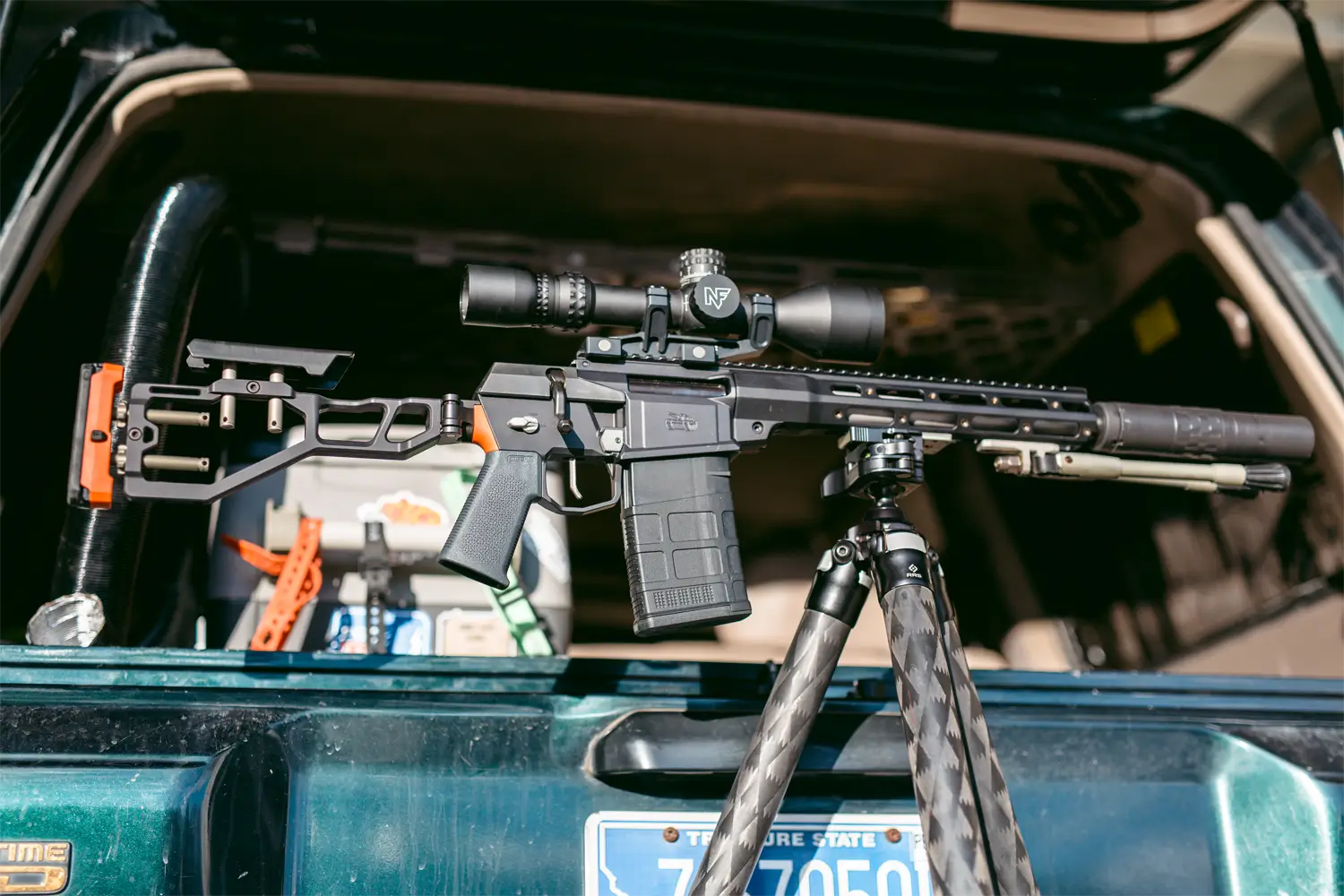
Yes. In February 2016, the Michigan Natural Resources Commission (NRC) voted overwhelmingly to approve suppressor use for all lawful hunting across the state. Today, the Michigan Department of Natural Resources (DNR) explicitly permits hunters to use suppressed firearms for all game species on both public and private land.
Sound Suppression & Hearing Benefits
Standard unsuppressed gunfire typically generates 150 to 165 decibels (dB), well above the 140 dB threshold where instantaneous, permanent hearing loss occurs. Quality suppressors deliver an average noise reduction of 20 to 35 dB. This attenuation drops muzzle noise to safe levels, protecting your hearing without sacrificing situational awareness or requiring bulky ear protection in the field.
Unified Michigan DNR Hunting Rules & Guidelines
Allowed Game Species: Suppressors are legal for hunting whitetail deer, black bear, coyotes/predators, small game, upland birds, and waterfowl (where firearms are permitted).
Licensing & Caliber Regulations: You must hold a valid Michigan Base License and applicable game tags. Using a suppressor does not alter underlying DNR equipment rules; for example, in Southern Michigan’s Limited Firearm Zone, you must still use legal straight-walled cartridges or shotguns fitted with your suppressor.
Documentation in the Field: While hunting, always carry proof of federal registration. A printed copy or clear digital PDF of your approved ATF Form 4 on your smartphone satisfies field verification checks by Michigan Conservation Officers.
Property Access: Fully legal on all DNR public state lands and authorized private lands across Michigan.
Michigan Suppressor FAQ
Are suppressors legal in Michigan?
Yes, firearm suppressors are 100% legal for civilian ownership and use in Michigan. Buyers must adhere to federal NFA registration guidelines, submit an ATF Form 4, pass an FBI background check, and receive approval prior to taking possession.
Are silencers legal in Michigan?
Yes, silencers and suppressors refer to the exact same devices under law and are fully legal in Michigan. “Silencer” is the legal term used in statutory language like MCL § 750.224, while “suppressor” is the technical term preferred by manufacturers.
Do you need a permit or license to own a suppressor in Michigan?
No. Michigan requires no state-level permit, firearm license, or secondary state registration to own a suppressor. Your approved federal ATF Form 4 serves as full legal proof of lawful ownership.
Where can you buy a suppressor in Michigan?
You can buy a suppressor from any federally licensed Class 3 FFL / SOT dealer located in Michigan. You can also purchase online through reputable retailers and have the suppressor transferred to a local Michigan FFL to complete your fingerprinting and eForm 4 filing.
Can you build your own suppressor in Michigan?
Yes. Civilians who are legally eligible to own suppressors can build their own device by submitting an ATF Form 1 (Application to Make and Register a Firearm) and obtaining federal approval prior to manufacturing.
Can you hunt with a suppressor in Michigan?
Yes, the Michigan DNR permits hunters to use suppressed firearms for all legal hunting seasons across Michigan. You can hunt on both public state lands and private property, provided you possess a valid hunting license and carry proof of your approved ATF Form 4.
Can you hunt deer with a suppressor in Michigan?
Yes, hunting whitetail deer with a suppressed rifle, shotgun, or handgun is completely legal in Michigan during authorized firearm deer seasons. You must adhere to standard regional DNR caliber limits and carry your approved tax stamp documentation.
What is the suppressor tax stamp rule in Michigan?
All suppressors in Michigan must be registered with the federal government under the National Firearms Act. While federal rule updates eliminated the legacy $200 tax fee, registering your suppressor on ATF Form 4 and obtaining official federal approval remains mandatory prior to taking physical possession.
William Lawson