Not Shooting .32 ACP Suppressed? You’re Missing Out

Travis Pike
I love the .32 ACP round for a lot of reasons, and one of the biggest is how well it suppresses. It’s easily one of the most enjoyable cartridges to shoot suppressed.
The .32 ACP also has a genuinely fascinating history of being suppressed — it’s the round the OSS and SOE trusted for one of the quietest, most legendary guns of World War 2. More on that in a minute.
Today we are going to break down why the .32 ACP is such an awesome suppressed cartridge and why it’s criminally underrated.
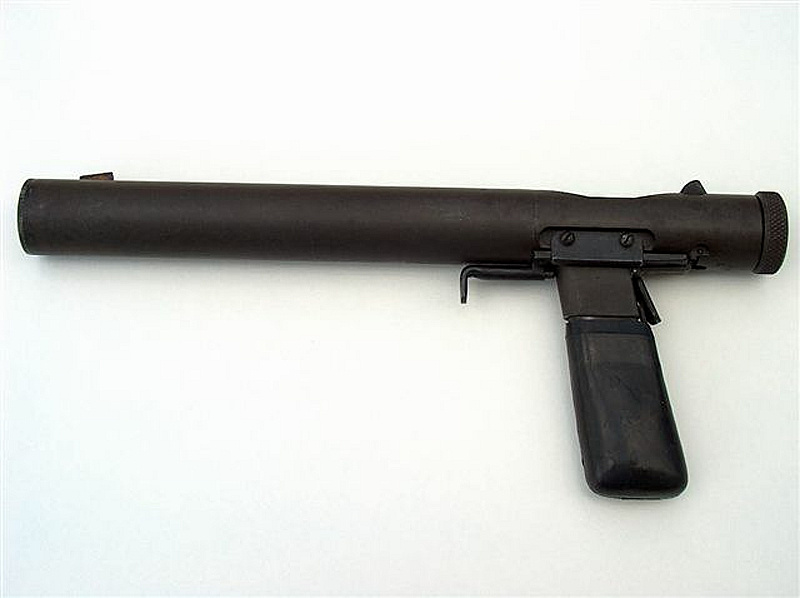
The Welrod: .32 ACP's Suppressed Pedigree
The Welrod is one of the coolest guns in the world, full stop. It’s an integrally suppressed, bolt-action pistol built for OSS and SOE agents during World War 2 — basically a gun designed from the ground up to disappear, sound-wise. And it’s chambered in .32 ACP for a reason: the round is naturally quiet enough that it made the whole concept work.
Naturally Subsonic
Guns make two distinct loud noises when fired. The first is the sound of hot gas exploding into the atmosphere. That’s the noise we cure via a suppressor. What we can’t cure via a suppressor is the supersonic crack.
A bullet goes supersonic around 1,125 feet per second under typical conditions. That supersonic crack can still damage your hearing. The only thing you can do about the supersonic crack is slow it down, and we typically slow it down with heavy bullets.
The meek .32 ACP is naturally subsonic when fired from a handgun. Mild and hot .32 ACP rounds stay subsonic when fired from typical .32 ACP barrel lengths of 2.7 to 4 inches. They often hover between 850 and 1,000 FPS.
We don’t need to seek out a heavy-for-caliber bullet to tame the supersonic crack with .32 ACP. You can grab whatever’s on the shelf and know it will be subsonic through the vast majority of handguns. (If subsonic ammo is still a bit of a mystery to you, we’ve got a whole guide on that.)
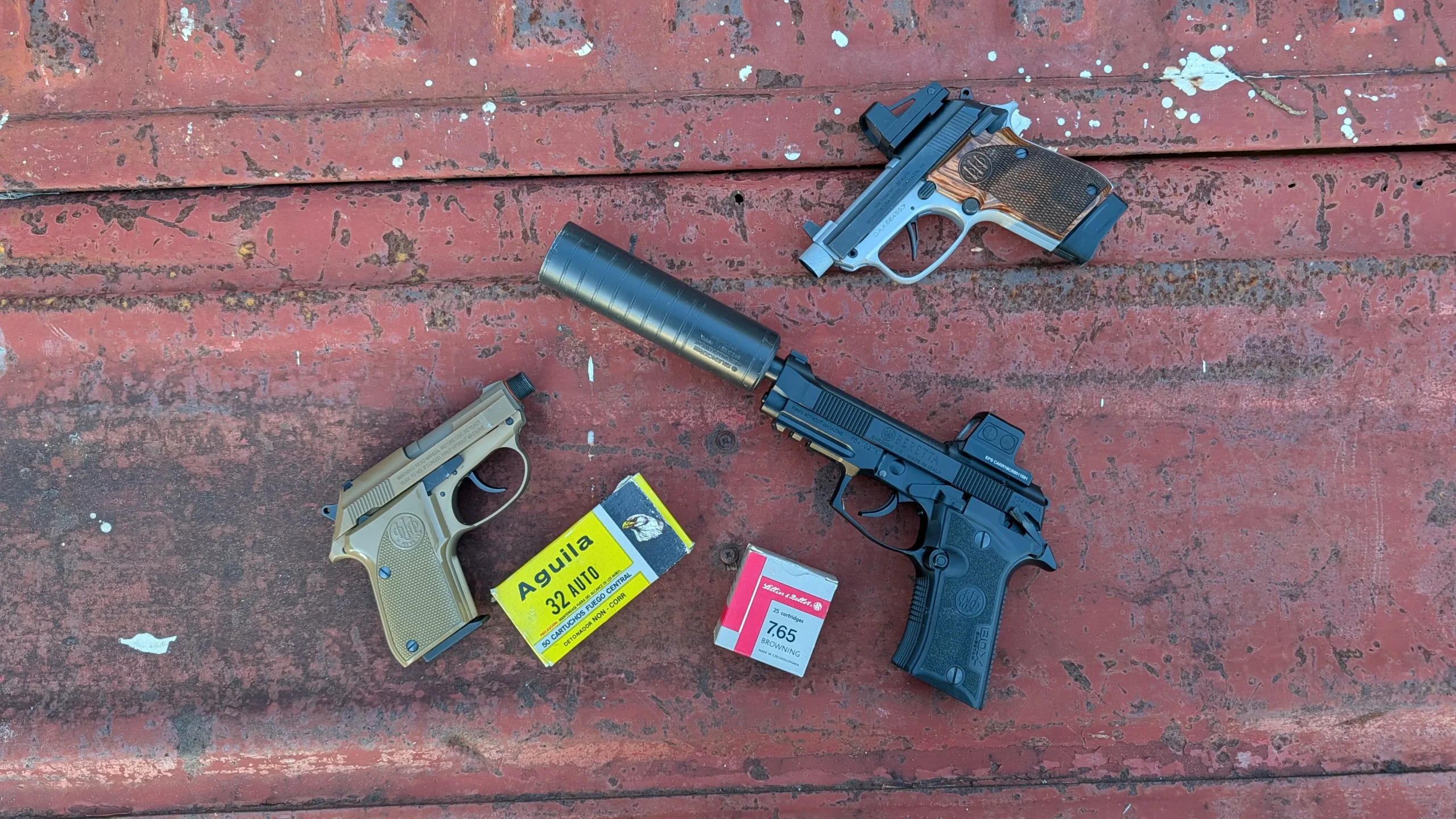
Booster? I Hardly Know Her!
Why doesn’t a .32 ACP suppressor need a recoil booster? It comes down to the gun, not the can.
Most .32 ACPs use a fixed barrel and direct blowback design. Very few use a Browning tilting barrel; in fact, the only locked-breech .32 ACP in production is the KelTec P32. If we use a fixed barrel and blowback action, we don’t need a booster.
Not needing a booster has several benefits—first, less maintenance to worry about. Boosters can get stuck with carbon if you don’t clean them occasionally. When that happens, your gun can become unreliable until you fix it.
Boosters also require lubrication. It’s a moving piece attached to a carbon-spewing machine. Keeping it lightly lubricated ensures smooth movement.
Boosters can also change a handgun’s recoil impulse, giving it a kerchunk feel. Without a booster, the gun’s recoil impulse feels more or less the same regardless of the presence of a suppressor.
Boosters add three things to a suppressor: weight, length, and cost. If we don’t need a booster, we get a lighter suppressor setup that supports a direct-thread design, and we don’t have to pay for a booster.
Even Lighter Recoil
Suppressors can often act a bit like muzzle brakes as the gas hits the baffles. It lightens the recoil. Who doesn’t want less recoil?
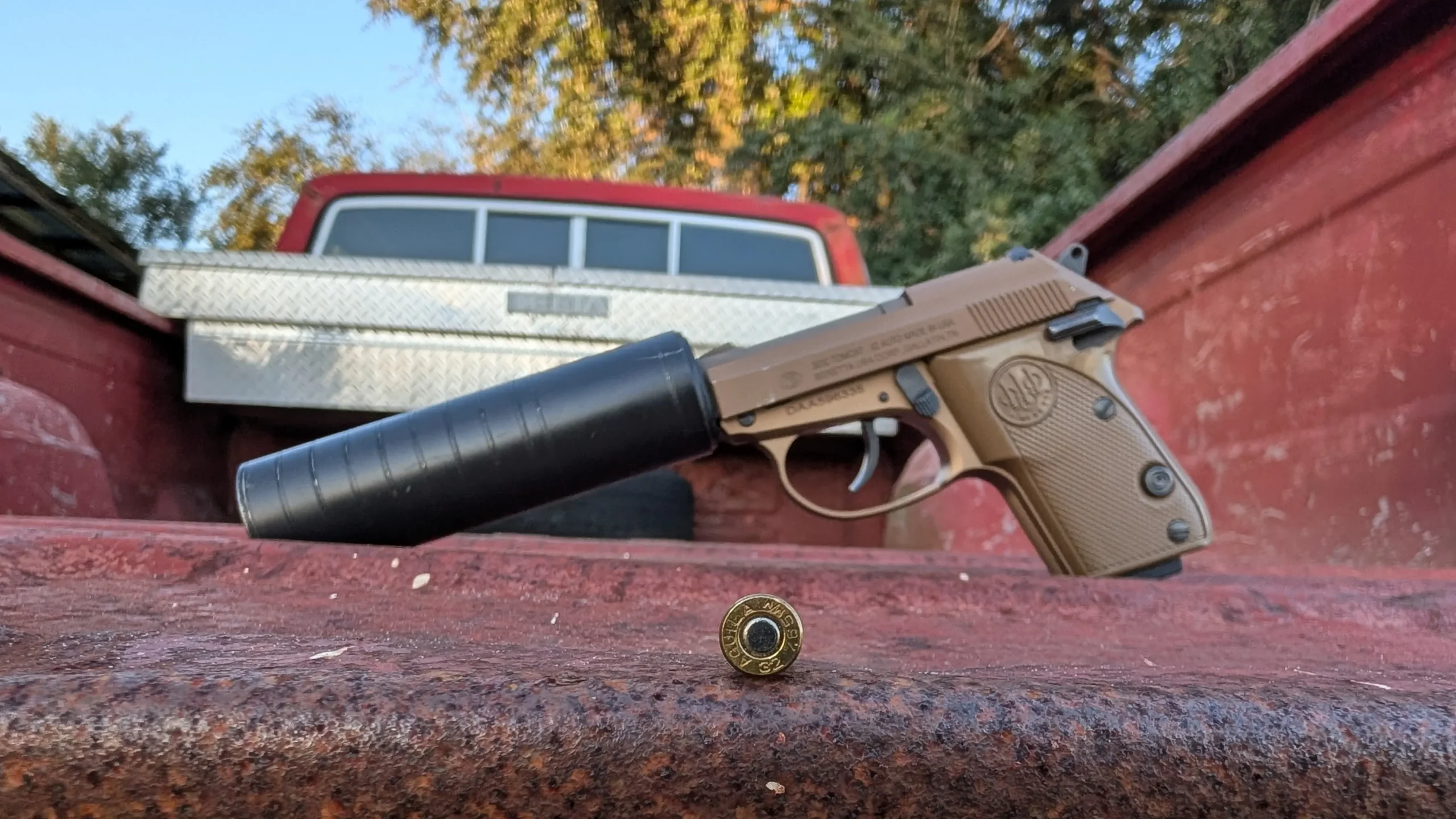
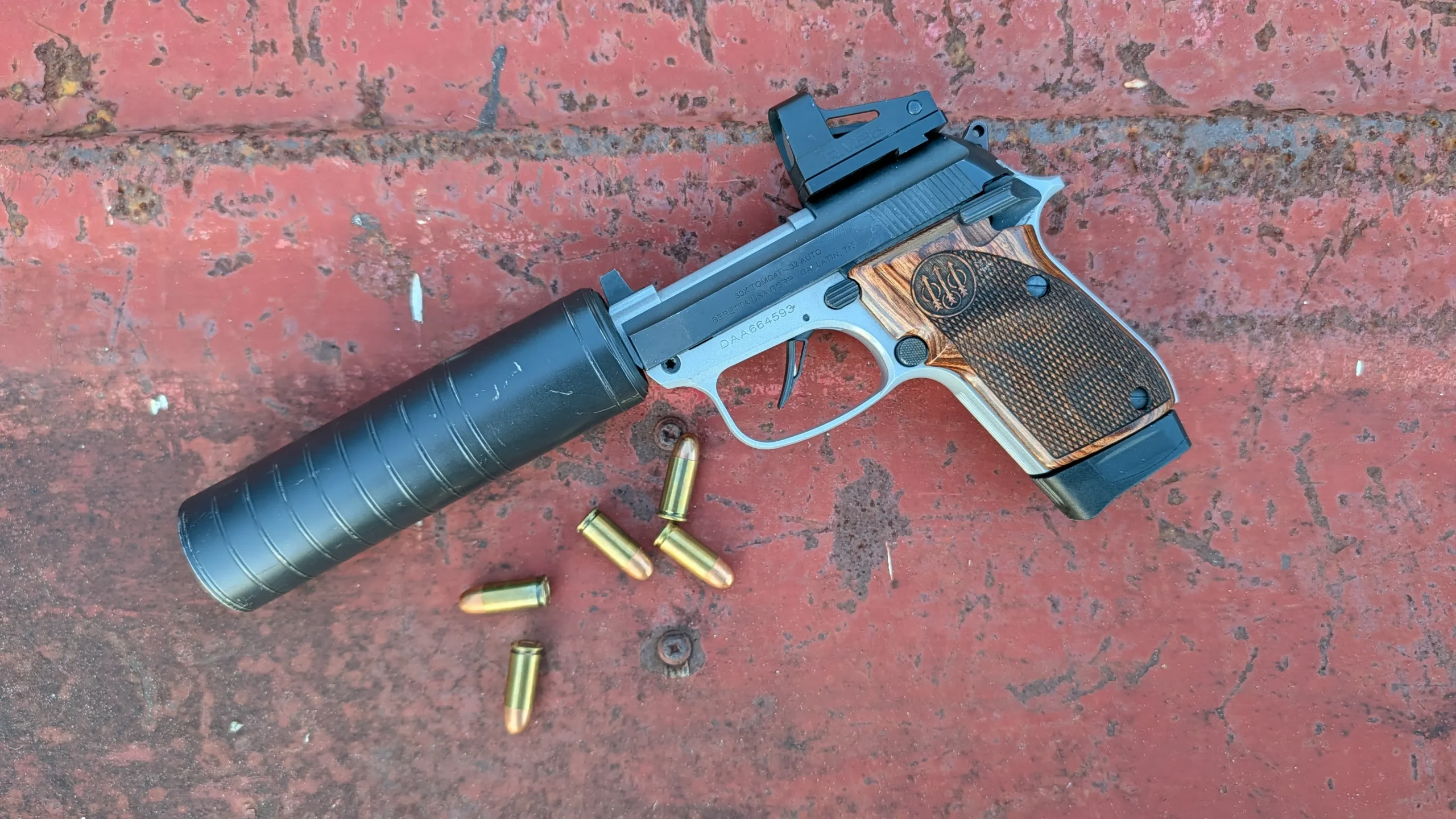
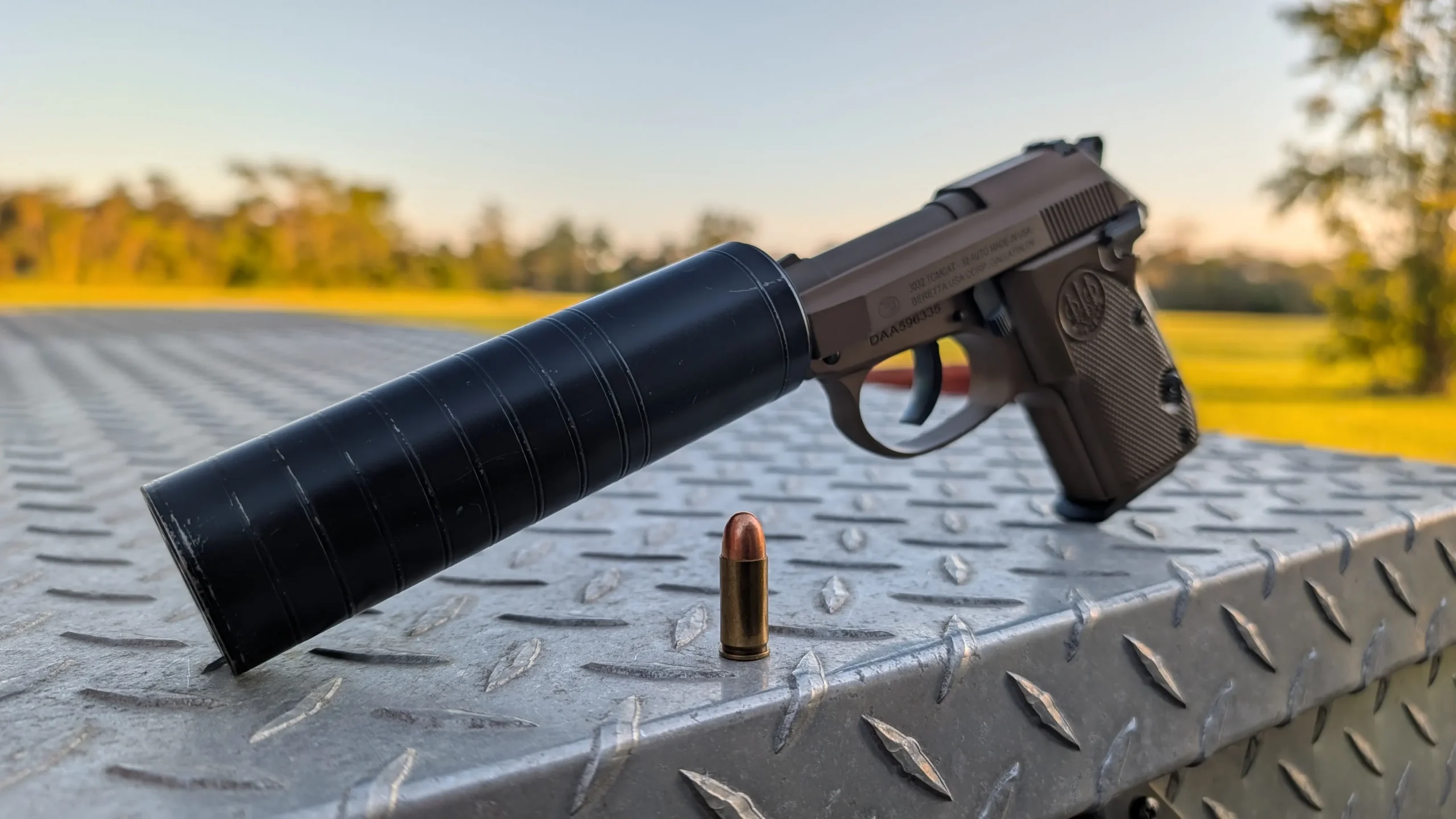
The thing is, the .32 ACP already has light recoil. It’s a kitten, even in small guns like the Beretta Tomcat. Adding a suppressor turns a meow into a purr.
My all-time favorite suppressed gun is the Langdon Tactical 80X Cheetah in .32 ACP. It’s so pleasant to shoot suppressed. I can fire the entire magazine as fast as my finger can pull the trigger, and the gun feels like it barely moves.
We get into rimfire levels of recoil, without the rimfire downsides. We get centerfire reliability with a much cleaner gun. Rimfire suppressors get dirty fast, but the .32 ACP keeps things clean.
It's A Quiet Riot
Here’s how quiet a suppressed .32 ACP actually gets. A suppressor’s job is to catch that hot gas, slow it down, and cool it. That helps reduce gunshot noise. Without a suppressor, we get the ear-splitting bang of hot gas entering the atmosphere.
With the .32 ACP, we tend to have less gas and less pressure. Gas pressure peaks inside the case as the powder ignites and creates the initial push on the projectile. As a bullet travels down the barrel, the pressure relents.
Exact muzzle pressure depends on ammo, barrel length, bullet weight, and more. That said, the .32 ACP is a relatively small, modest-pressure cartridge. A suppressor’s job is to manage that high-pressure gas before it reaches the atmosphere. All else being equal, less gas and lower muzzle pressure make that job easier.
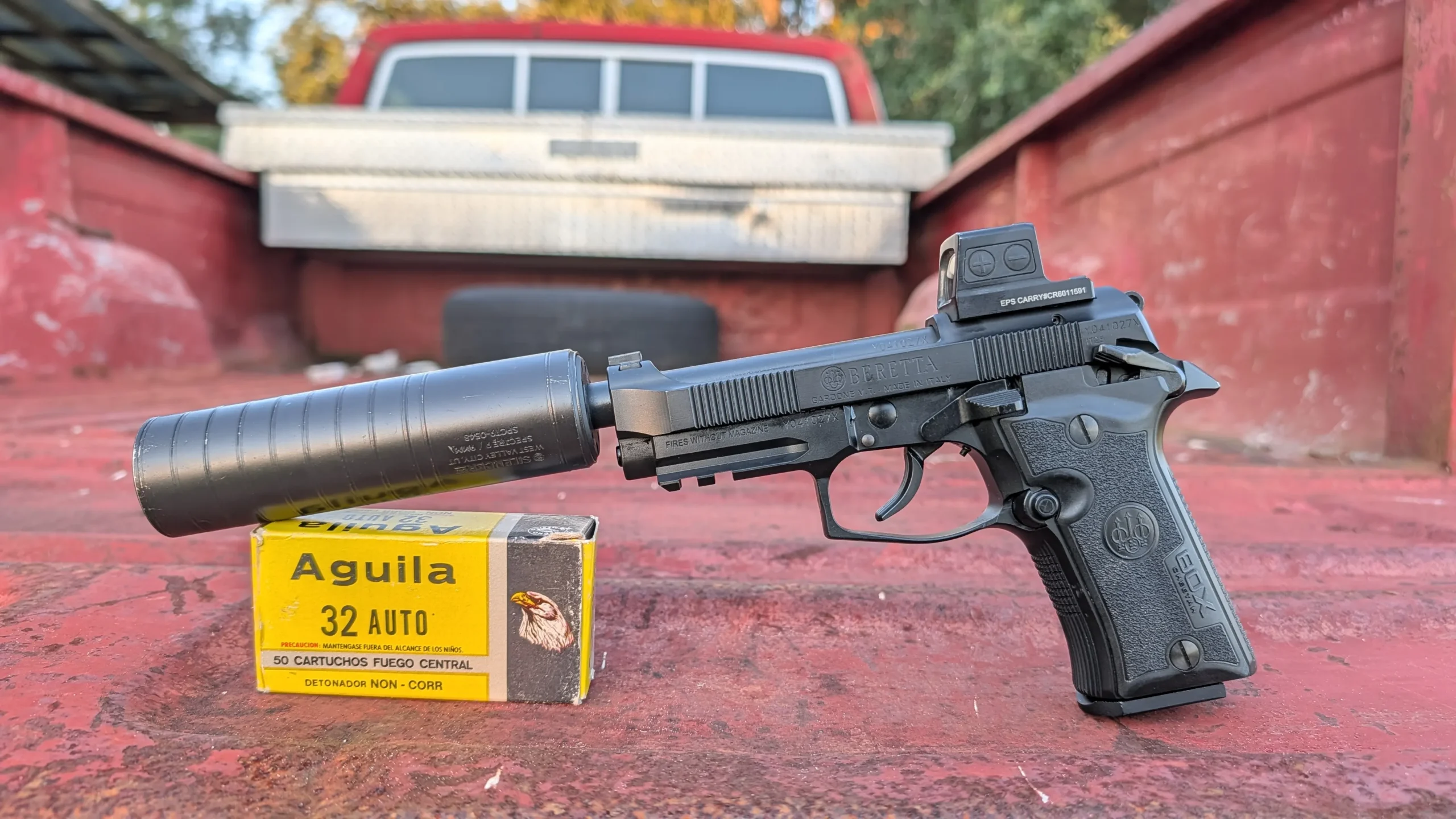
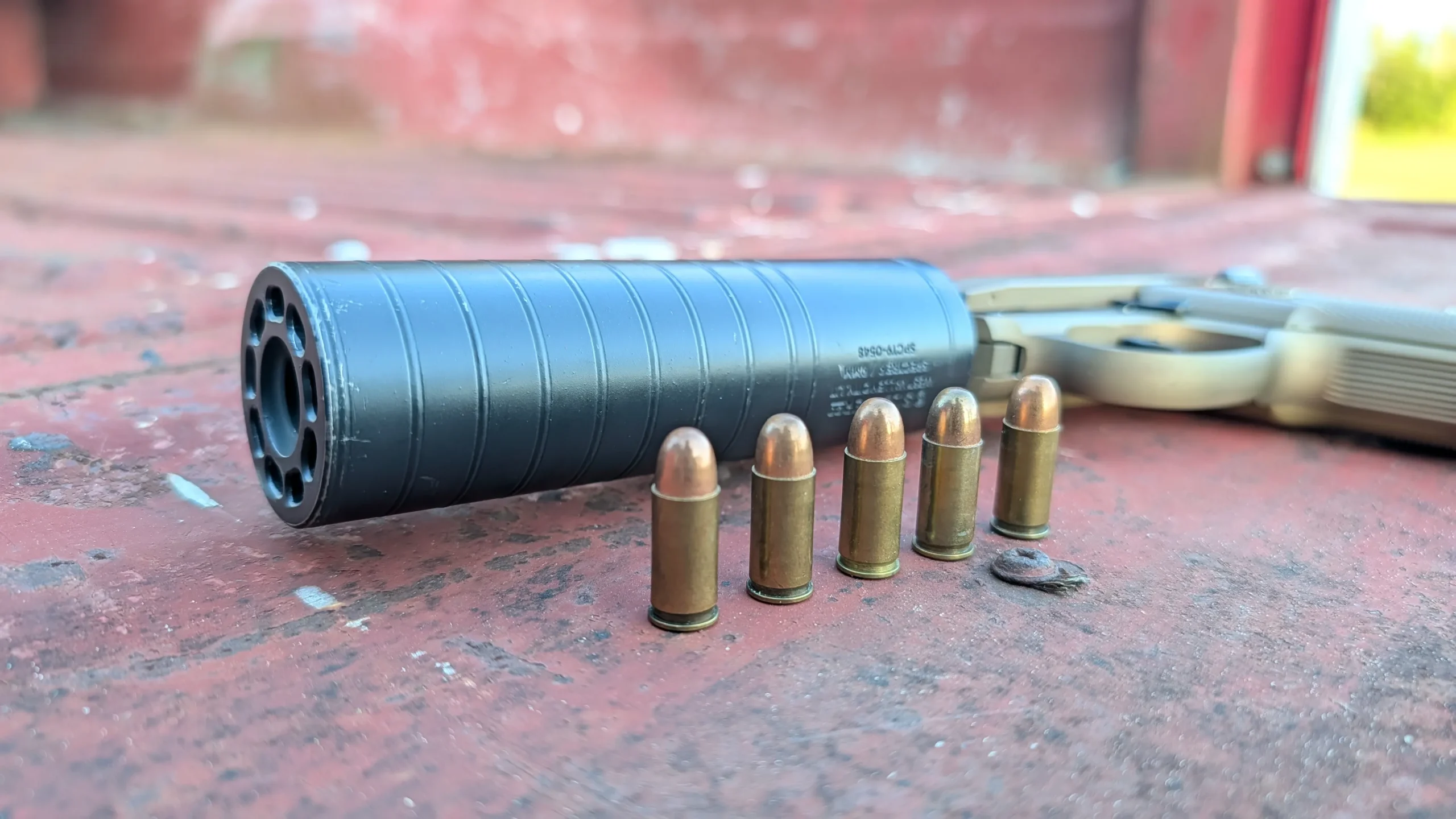
This means you can use a fairly short suppressor and achieve outstanding sound suppression. I use the SilencerCo Spectre 9, and it’s so quiet I can hear the projectile hitting the berm at 25 yards. It’s a wet twack sound as the little .32 ACP slams into dirt.
Honestly, the Spectre 9 might be longer than it needs to be for .32 ACP, and the shorter Spectre 9K can probably give you the same sound suppression.
Less Powder - Less Gas - Less Particulate
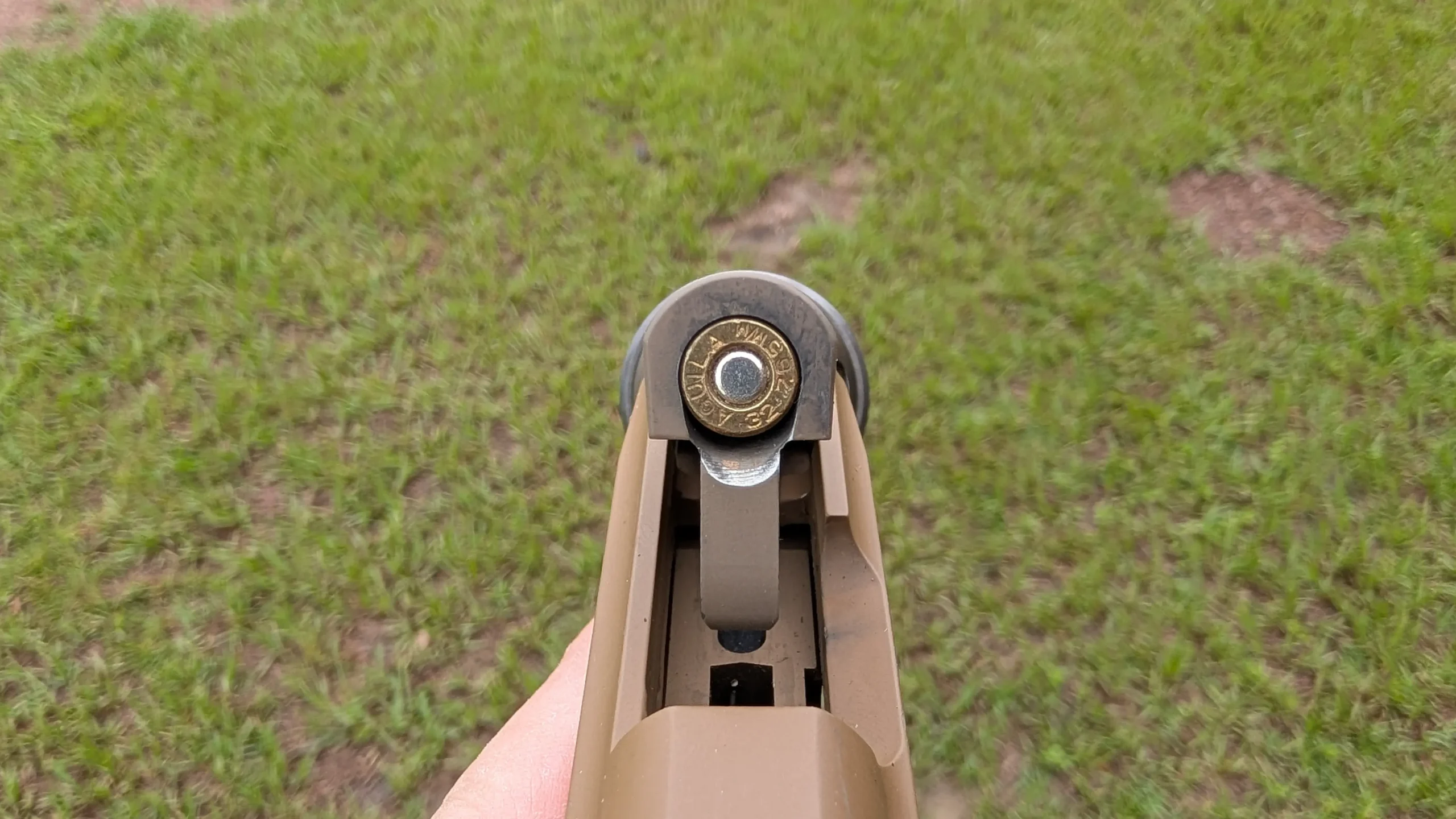
Shooting any gun often results in catching gas and particulates to the face. This can differ widely between guns, suppressors, ammo, and more, but it’s almost universal. Almost, because it doesn’t seem to be a problem with the .32 ACP.
Could it still happen? Sure, the wind might catch it right; humidity plays a factor, and more. While not absolute, the .32 ACP doesn’t have the same particulate and gas problems as larger calibers.
Less powder leads to less gas, which reduces the chance you catch any suppressor blowback. I can shoot my 80X all day long, as fast as I want, and never catch any gas to the face. Even the micro-sized Tomcat doesn’t dose me with gas.
Picking Your Can
What Size Suppressor For .32 ACP?
That’s the million dollar question. What type of suppressor should you use to suppress a .32 ACP pistol? My vote is going to be a lightweight 9mm can. I use a 9mm can because they’re much more common than dedicated .32 cans, and they let you shoot 9mm and even .300 Blackout. (9mm deserves its own deep dive — we’ve written one here.)
Suppressors aren’t cheap, so having one that can tackle multiple guns can be valuable. A dedicated .32 ACP can would likely be smaller and lighter, but it limits you to a fairly expensive and not-so-common cartridge.
I’m probably one of the few people that’s passionate enough about .32 to need a dedicated suppressor, but I’ve found my SilencerCo Spectre 9 to work so well that I don’t see a need for a different can.
The big benefit of a .32 ACP dedicated suppressor would be its likely lighter and shorter design, however, the Spectre 9 is light and short enough for me.
.32 ACP vs. 9mm
Wait, you can use .32 ACP in a can designed for a different cartridge? Yep, you sure can, and it’s completely safe. The 9mm round uses a .355/9mm caliber projectile, and the .32 ACP uses a smaller projectile, typically between .311 and .312.
A can designed for 9mm has more than enough clearance to accommodate the little .32 caliber projectile.
Caliber isn’t everything. A 5.56 projectile is much smaller than 9mm, but you shouldn’t shoot 5.56 through a 9mm can because of pressure differences. The 9mm round has a SAAMI chamber pressure of 35,000 PSI, with 38,500 PSI for +P ammo.
The .32 ACP round has a SAAMI spec pressure of 20,500 PSI, and the European rounds loaded to CIP spec generate a little more at 23,200 PSI. It’s completely safe to use inside a 9mm can.
What about acoustic performance? A dedicated .32 ACP suppressor will likely be marginally quieter, but the difference would be easier to detect with an electronic meter than the human ear.
Pleasantly Suppressed
I’ve shot a lot of handguns suppressed, and the .32 ACP is by far my favorite. It’s just so pleasant. I challenge anyone to slap a suppressor on a Tomcat and not get a goofy grin across your face.
.32 ACP FAQ
Can you shoot .32 ACP through a 9mm suppressor?
Yes, no problem. A 9mm can has way more clearance than it needs for a tiny .311–.312 caliber .32 ACP bullet, and .32 ACP’s pressure (20,500 PSI, a little more for hot European loads) doesn’t come close to what a 9mm suppressor is built to handle. A dedicated .32 ACP can might shave off a touch more noise, but you’d need a meter to prove it — your ears won’t.
Is .32 ACP subsonic?
Yes, naturally. Most .32 ACP loads stay in the 850–1,000 FPS range when fired from typical 2.7–4 inch handgun barrels — well under the roughly 1,125 FPS threshold where the supersonic crack kicks in. You don’t need to hunt for a heavy-for-caliber load to keep it subsonic; nearly anything on the shelf will do.
Do you need a booster for .32 ACP?
No. Almost every .32 ACP pistol runs a fixed barrel and straight blowback, so there’s no tilting barrel that needs a booster to cycle right. Skip the booster and you get a lighter, shorter, cheaper can with one less part to keep clean.
Travis Pike