Hunting With a Suppressor: A Beginner’s Guide to Deer Season

Kat Ainsworth Stevens
You’re sitting in a box blind before sunrise, breath fogging, waiting. A doe steps into the clearing. You settle the crosshairs, exhale, squeeze the trigger — and the shot goes off like a bomb inside a phone booth. Your ears are ringing. Your kid, sitting next to you, has both hands clamped over her head and a look on her face that says she’s not coming back out here next weekend. The doe is long gone, and so is every other deer within half a mile.
That’s deer season without a suppressor in a hard-sided blind — and it’s a big part of why so many hunters are switching over.
There’s also the quieter reward of hunting suppressed: the pre-dawn stillness of the woods, the kind of silence that wraps around you like a warm blanket. That’s part of what makes deer hunting special in the first place. But inside a box blind, an unsuppressed rifle doesn’t just break that silence — it detonates it.
Is It Legal to Hunt Deer With a Suppressor?
As always, it’s your responsibility to familiarize yourself with the laws and regulations where you’ll be hunting. This isn’t legal advice; it’s simply educational material, and claiming ignorance of the law isn’t a valid legal defense.
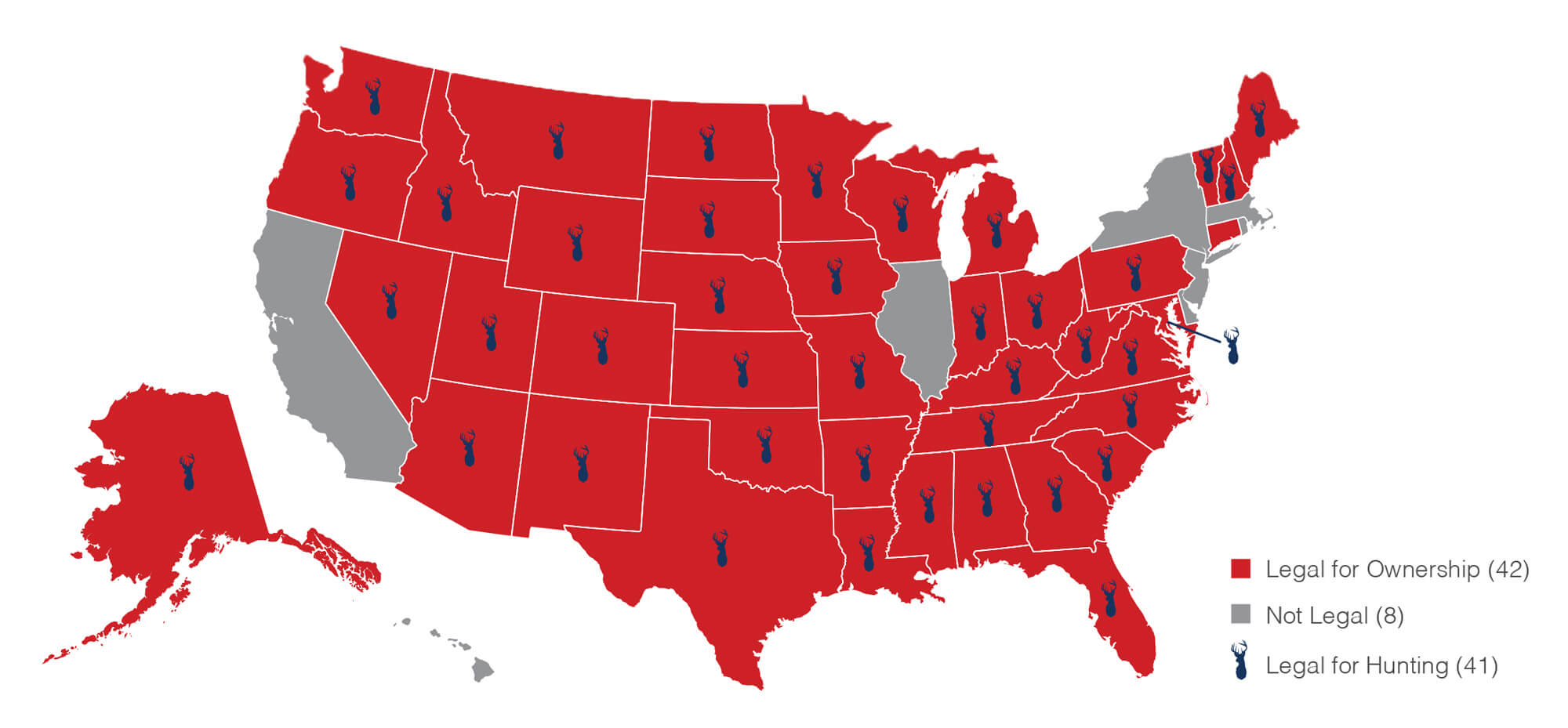
Deer hunting with a suppressor is legal in most of the United States — in fact, if you’re wondering “can you hunt with a suppressor,” the answer is yes almost everywhere. At this time, there are nine states that either ban suppressor ownership entirely or restrict hunters from using suppressors to hunt:
- California
- Connecticut (ownership is legal here — it’s hunting with a suppressor that’s restricted)
- Delaware
- Hawaii
- Illinois
- Massachusetts
- New Jersey
- New York
- Rhode Island
Keep in mind that suppressors being legal for hunting use in your area doesn’t mean other restrictions don’t apply. Check your local laws for details on restrictions related to the specific platform, caliber, and season. The use of a suppressor doesn’t make all other current laws null and void.
Want the full breakdown, state by state? See our complete guide to where suppressors are legal.
Why Bring a Suppressor Into the Blind?
A single unprotected gunshot can cause permanent hearing damage — there’s no “toughing it out.”
Box blinds are fantastic, but their hard sides amplify a gunshot far more than most first-time suppressed hunters expect — a shot that’s manageable in an open field turns genuinely disorienting inside four walls, with nowhere for the blast to go. It’s specifically a blind problem, not a general hunting one, which is exactly why a suppressor matters more here than almost anywhere else you’ll hunt.
The Comfort and Communication Case
Wearing ear pro solves the damage problem, but it creates a different one: many hunters share a blind or stand with family — parents and kids, husband and wife teams, whatever the case — and bulky ear muffs make it a hassle to hear each other. Worse, you can’t hear the deer either: muffled hearing means missing the subtle sound of a whitetail slipping through the trees and grass.
Using a suppressor allows you to take off the heavy ear muffs and listen to both the people and the animals around you. Whispered conversations and cues become simpler, and the entire experience is easier to enjoy. Creating an enjoyable hunting space is the best way to encourage future generations to become lifelong hunters. And there’s no real downside to the trade — you’re not giving anything up by adding a suppressor to get there.
Managing a Suppressor in Different Hunting Setups
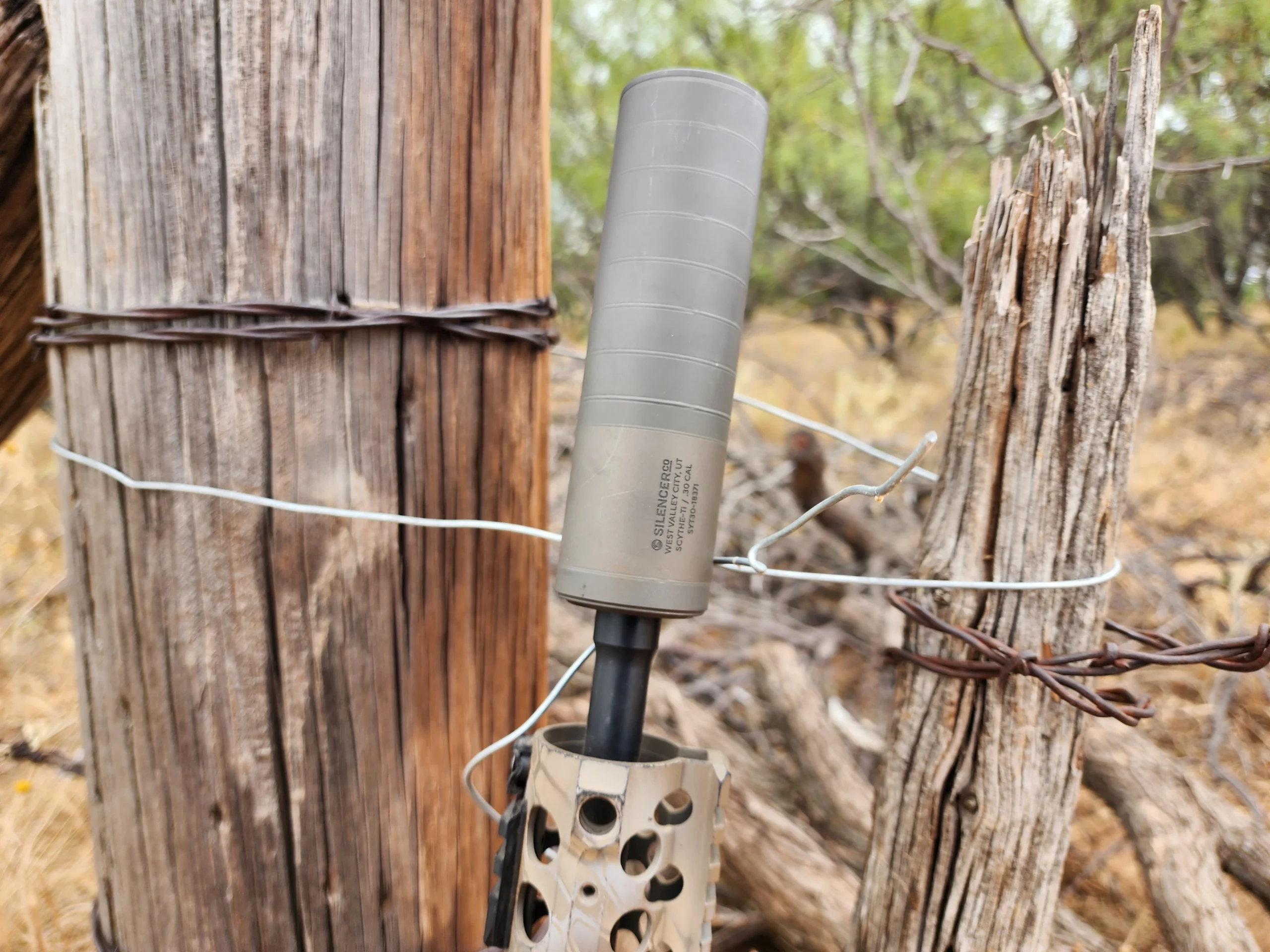
It’s true that using a suppressor while hunting means your gun is longer and maneuvering it could present some challenges. However, none of those challenges are insurmountable, and, in fact, it just takes a few tricks to get to the point where you don’t even notice it.
Box Blinds
If you’re hunting in a box blind with hard window ledges, you have a built-in surface to rest the forend or handguard of your rifle on. Remember that proper support means neither the rifle’s barrel nor the suppressor should be touching the ledge. If for some reason the ledge on your box blind is too narrow or unstable to use as a rifle rest, you can use a small sandbag or a short clamp-on rest to stabilize your gun.
Pop-Up Blinds
Pop-up blinds offer hunters the ability to carry in lightweight gear and set up wherever they want. What they don’t offer is a hard surface on which to rest a suppressed rifle. A good set of shooting sticks remedies this issue and it’s the hunter’s choice whether that’s a monopod, bipod, or tripod. Take the time to adjust height and placement right away so you’re not struggling with shooting sticks at the moment your target deer walks out.
Field and Ground Setups
Maybe you hunt on the move, stalking deer through the woods, or perhaps you prefer to sit at the edge of an open field against a tree. Shooting sticks remain a good way to keep your gun and suppressor stable.
Another option is a bipod mounted to the rifle itself, so all you need to do is fold out the legs when the time comes. That’s also a time when you want an ultra-light suppressor so you’re not adding excess weight to your setup, and that’s where the SilencerCo Scythe-Ti comes in (more on that in a minute).
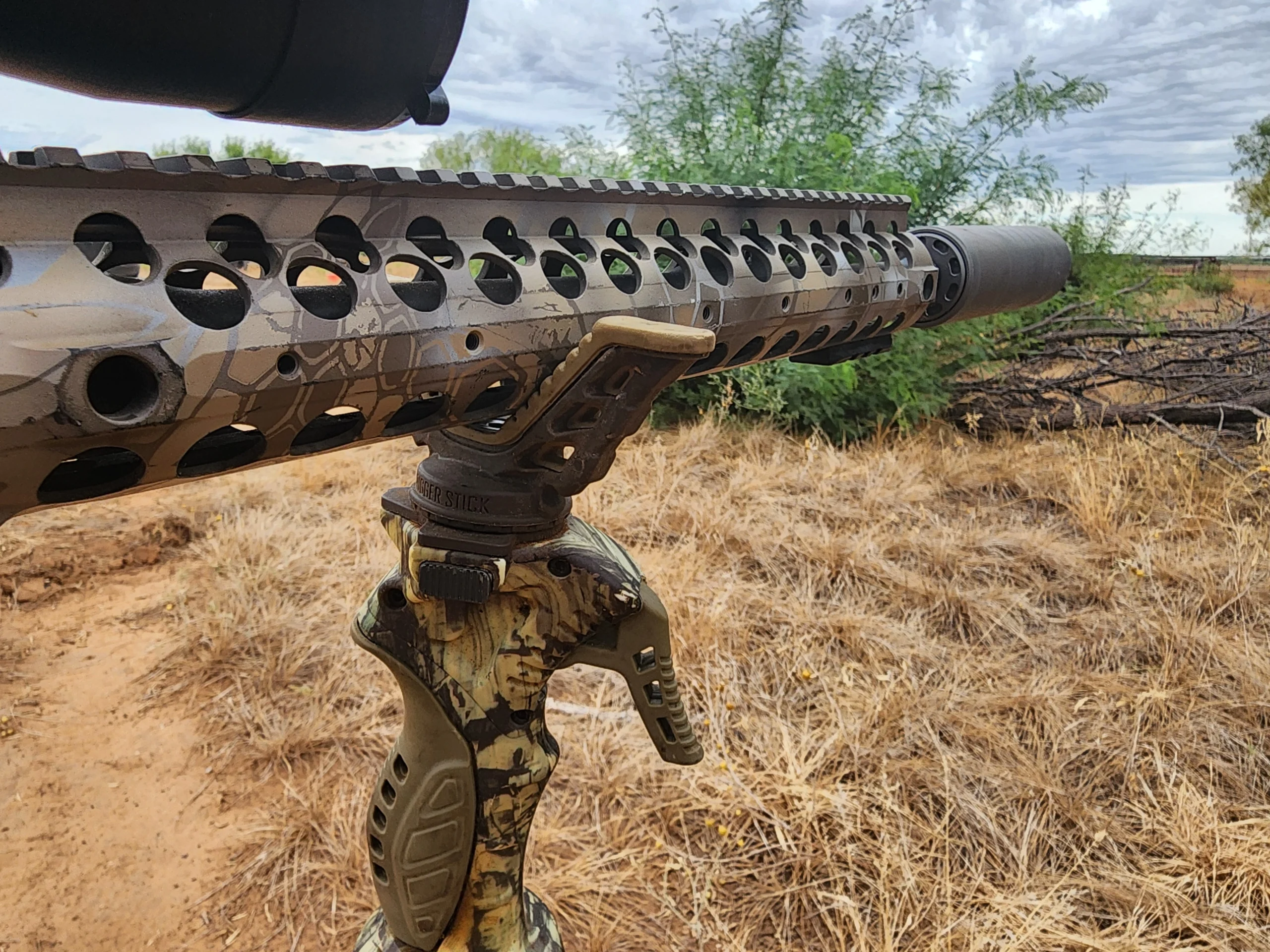
Regardless of your setup, length and weight matter most the moment you have to maneuver a suppressed rifle through a blind window — hard-sided or mesh.
Open it ahead of time so you’re not making noise or sudden movements once deer are close, and if it’s mesh, tie it back so it doesn’t flap in the breeze. Before you settle in to wait, know the exact angle you’ll need to slide that suppressor through without bumping the sides.
Choosing a Suppressor for Deer Hunting
Most hunters are hunting whitetail and muleys with rifles, and the good news is that there are numerous suppressor options available for a variety of calibers. When you’re choosing a suppressor for your hunting rifle, don’t just go with the first thing you see or the model that’s on sale. First, answer a few questions:
- How long is your barrel?
- How much length do you want to add to it?
- Do you want a dedicated caliber model or one you can switch to other guns?
- Do you prefer a user-serviceable suppressor?
- Do you want a standard or ultralight weight model?
- What’s your budget, and would it be worth waiting to save for a different suppressor?
Now that you have a general idea what you need, here’s our suggestion for the ideal hunting suppressor, from someone who’s spent years hunting suppressed.
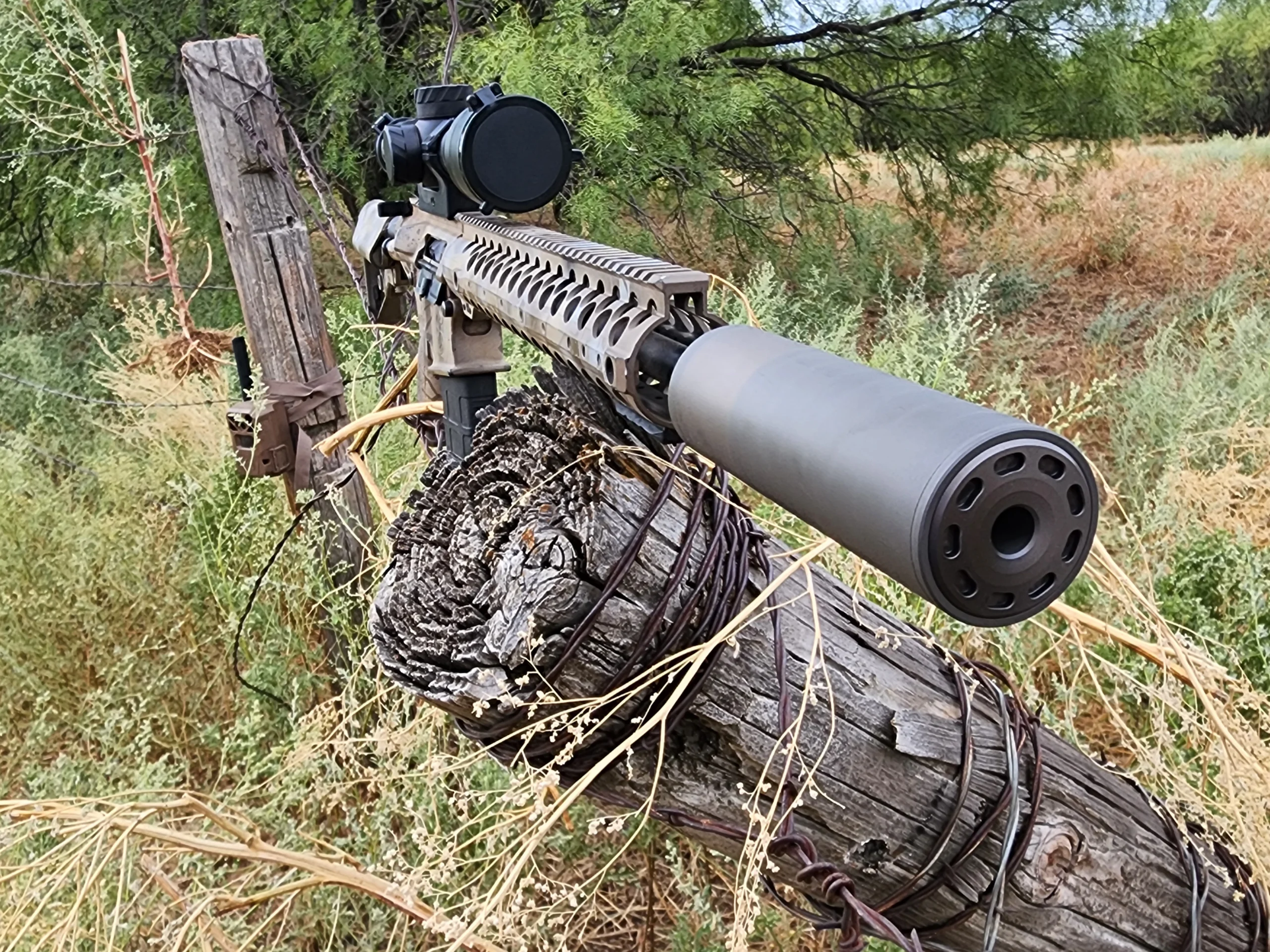
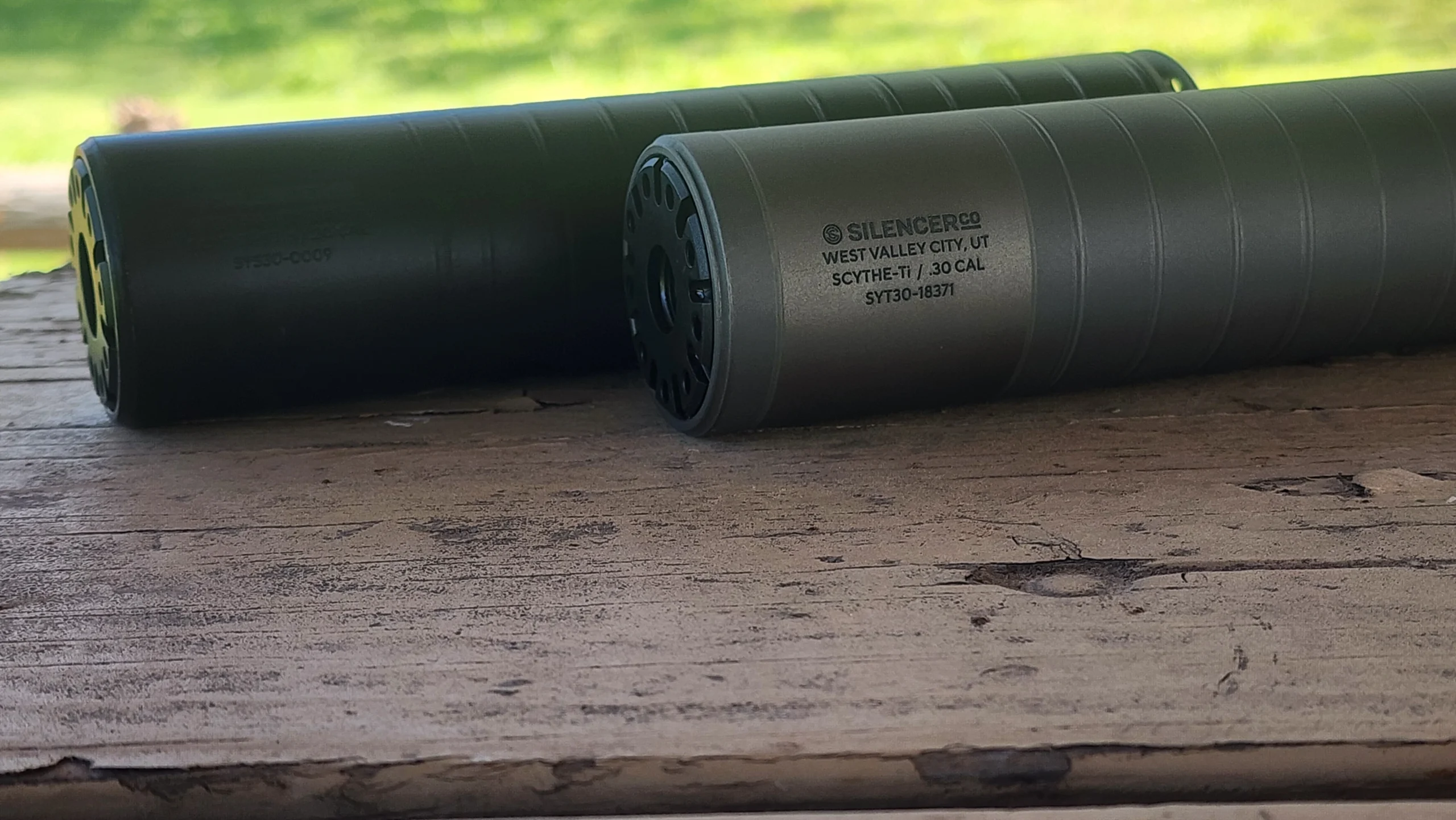
The Go-To: SilencerCo Scythe-Ti
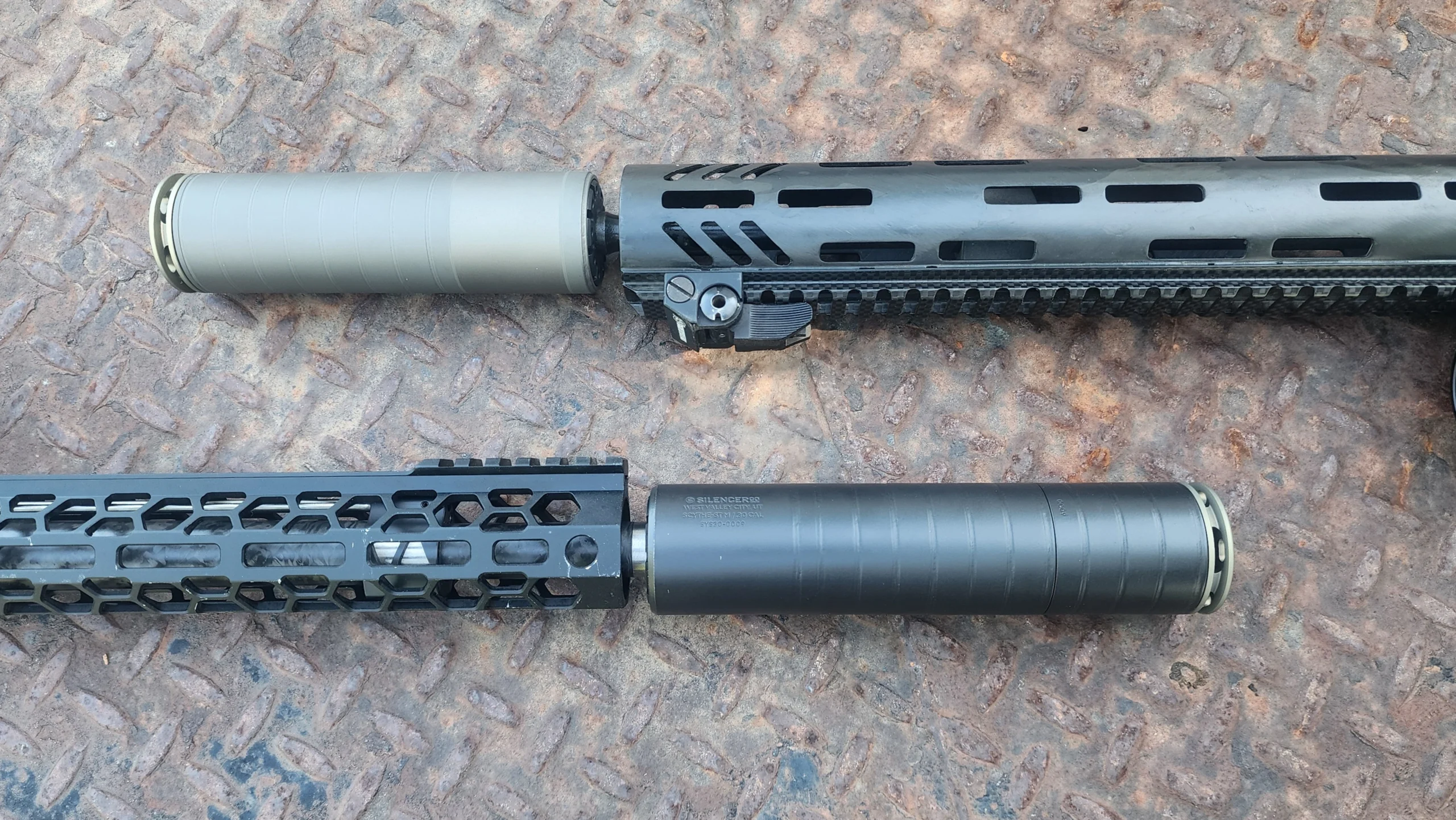
Overall weight is a top concern for most hunters, and the SilencerCo Scythe-Ti solves it with titanium construction — a scant 7.3 ounces and 6.16 inches, barely noticeable at the muzzle end of your rifle.
It’s a multi-caliber, sealed suppressor rated for 223 Rem/5.56 NATO to 300 RUM, with no barrel length restrictions. It’s also a stellar performer on decibels: 129.5 on 5.56 NATO, 132.5 on 308 Win, 127.6 on .300 BLK. Not rated for full-auto — but you’re not mag-dumping on deer, anyway. What you get is a lightweight, maneuverable can that makes deer season more fun and easier on the ears for everyone involved.
Honorable mention goes to the modular Scythe STM, the length-adjustable relative of the Scythe-Ti. Built from laser-welded 17-4 stainless steel, it’s heavier — 10.4 to 14.7 ounces depending on configuration — but also full-auto rated, unlike the Scythe-Ti, so those extra ounces buy you a suppressor that can take a beating and keep running.
Want to compare more options across calibers and budgets? Check out our full guide to the best hunting suppressors.
Before Your First Suppressed Hunt
Deer hunting suppressed is a great tradition to start in your family. Before you head out, run through a short checklist:
- Confirm your state’s legality. The nine-state list above covers ownership and hunting-use restrictions, but double-check your specific state and season rules before you go.
- Sight in with the suppressor attached. Point of impact can shift once you thread on a can — don’t find that out for the first time when a deer walks out. Zero your rifle exactly the way you plan to hunt with it.
- Prioritize weight if you’re hiking to a stand. Toting a rifle through fields and mountains? Go with the Scythe-Ti. If you’d rather have something that can take a beating and don’t mind the extra ounces, the Scythe STM is the better call.
Take all factors into consideration, then take the plunge. This is your year for hunting suppressed, so make it happen.
Kat Ainsworth Stevens