What Does Caliber Mean? The Real Suppressor Spec

Kat Ainsworth Stevens
When it comes to suppressors, the details and nuances tend to be more extensive than you realize. Once you’ve started looking at the various models you realize that not all suppressors can be used on every firearm. Some are dedicated caliber, others are multi-caliber, and there’s a special subset for rimfire and lead projectiles.
Caliber matters, but so does barrel length, ammunition, and PSI (pounds per square inch). And when it comes to pressure, there’s more to it than you might realize: chamber pressure and muzzle pressure are sisters, not twins. Suppressors aren’t one size fits all. PSI plays a role in that — just not in the way you might think.
But First, What's Caliber?
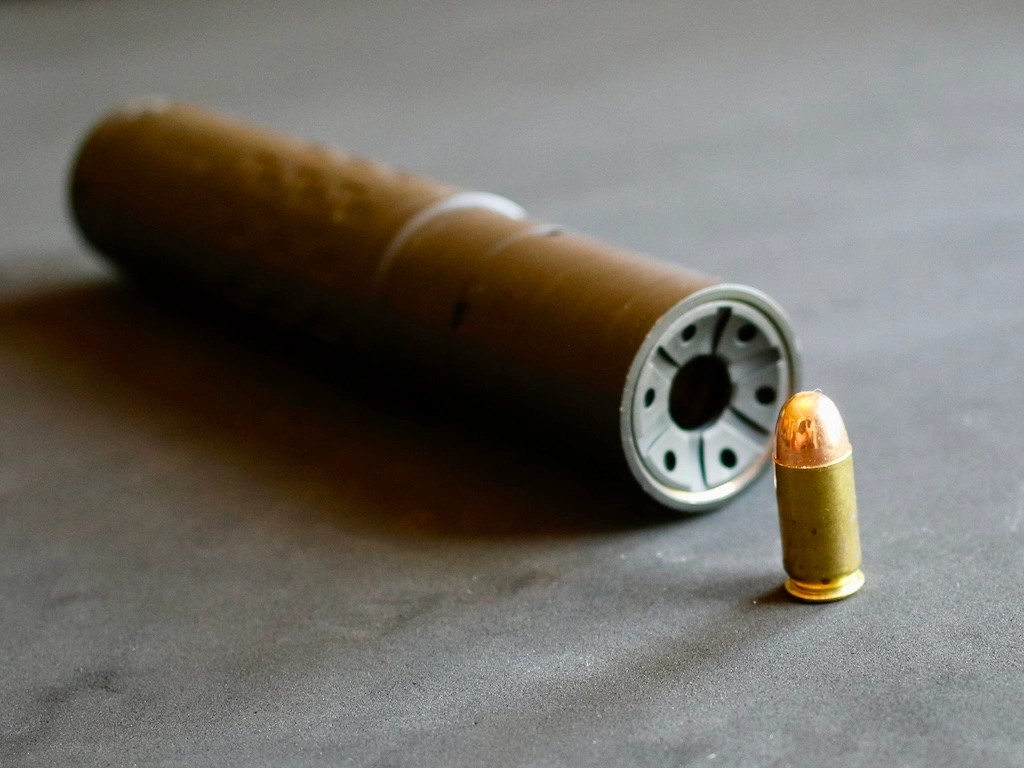
Caliber is the diameter of the bore at the back end of the barrel where the rifling hasn’t yet begun. If you want to apply the term to ammunition, caliber is the diameter of the bullet itself.
The term is widely misused in the gun world. Usually, it doesn’t matter, and fussing would be pedantic, but sometimes it helps to understand what’s actually being measured.
In common vernacular, caliber is shorthand for what a gun is chambered in, like 9mm, or what’s printed on a box of .45 ACP. That’s looser than the technical definition above: a rifled barrel’s bore isn’t one uniform diameter start to finish, which is exactly why the measurement point matters.
What's PSI?
PSI stands for Pounds per Square Inch. SAAMI (Sporting Arms and Ammunition Manufacturers’ Institute) has set precise measurements and standards for the various cartridges on the market since it was founded in 1926.
Why PSI Matters to You
If you’re a handloader, a competitive shooter, or just someone fascinated by the details, you know PSI matters a lot. It should matter to you if you own or intend to own any firearms at all, and it’s a genuinely useful number — just not for the reason most people reach for it when they’re picking a suppressor, which we’ll get to.
The reason PSI matters to you as a firearms owner is because it refers to how much pressure is created in the chamber when the trigger is pulled. Not all guns are designed to withstand all PSIs imaginable; that isn’t how firearms work.
Different ammunition is loaded to a varied PSI, with the maximum average PSI set by SAAMI. 9x19mm has a max PSI of 35,000, 223 Remington’s is 55,000, and 300 RUM is capped by SAAMI at 65,000 PSI. SAAMI does include overpressure loads in their specifications, giving 9x19mm a little bump to 38,500 PSI for +P rounds.
What These Numbers Don’t Tell You
Every number above is chamber pressure — what your barrel and action have to survive at the moment of firing. That’s the number your gun cares about. It’s not the number your suppressor experiences, and the two don’t track each other the way you’d assume — more on that shortly.
If you’ve ever seen the aftermath of firing the wrong high-pressure round through a gun, you know it can peel a barrel like a banana. That’s chamber pressure’s job to prevent — and it’s a barrel-and-action problem, not a suppressor one.
Chamber Pressure vs. Muzzle Pressure
Here’s where nuance matters. The maximum average PSI for cartridges directly relates to chamber pressure. Chamber pressure refers to the pressure generated within the chamber of the gun at the moment the trigger is pulled. However, it’s not the exact same pressure that impacts the suppressor itself.
The suppressor is affected by muzzle pressure, which is created by however much gas remains at the end of the barrel (to put it simply, chamber pressure dissipates and drops as the bullet travels down the barrel). Factors that impact that include the ammunition’s powder burn rate and charge weight, plus the gun’s barrel length. That last one is why you see barrel length restrictions or the lack thereof on suppressor specifications.
Barrel length is a significant factor for suppressors. For example, .308 Win fired through a 10.5-inch barrel affects a suppressor more than a .338 Lapua Magnum being fired through a 26-inch barrel, despite the higher chamber pressure of the latter. Similarly, 5.56 NATO through an 11.5-inch barrel typically creates more muzzle pressure than a .300 BLK subsonic fired through a 16-inch barrel, even though the two are within a few thousand PSI of each other on paper.
What the Numbers Actually Look Like
The two barrel-length examples above are illustrative and consistent with published pressure-testing data, but not literally drawn from a single controlled test. A 2010 study by Philip Dater (GEMTECH) directly measured this effect on one cartridge, 5.56 NATO/M855, across barrel lengths from 5 to 24 inches, and the swing is dramatic:
| Barrel Length | Muzzle (“Uncorking”) Pressure |
|---|---|
| 24 in. | 4,800 psi |
| 14.5 in. | ~8,150 psi |
| 10.5 in. | ~11,500 psi |
| 7 in. | 17,140 psi |
| 5 in. | 25,042 psi |
Same cartridge, same chamber pressure spec, more than a 5x difference in the pressure a suppressor actually has to deal with, purely from barrel length. That’s the number that matters for suppressor selection — and it isn’t one any single published SAAMI or CIP figure will tell you. (Sourced from “Effects of Barrel Length on Bore Pressure, Projectile Velocity and Sound Measurements,” Philip H. Dater, MD, GEMTECH, 2010.)
Reading a Compatibility List: The Omega 36M Example
Same principle as above, applied: match caliber first, but check minimum barrel length too — that combination, not a PSI figure, is the real spec.
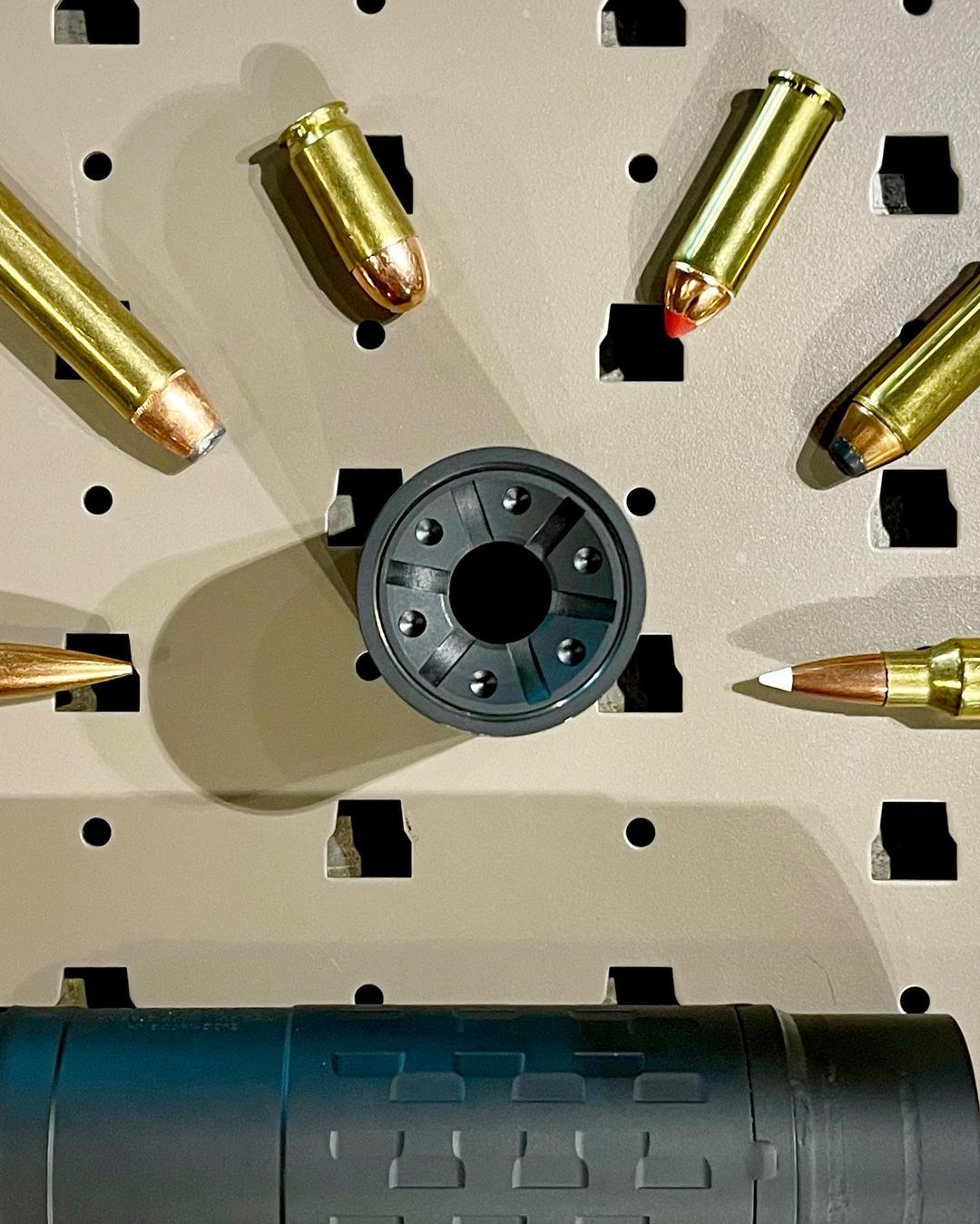
It’s understandable that you’d look at a multi-caliber suppressor like the SilencerCo Omega 36M, see it’s compatible with 5.56 NATO to .338 Lapua Magnum and 350 Legend, and assume that means any round with a caliber within that range is safe. The caliber match is real, but it’s only half the picture — barrel length and the specific load matter just as much, which is exactly why compatibility is published as a list of calibers and minimum barrel lengths rather than a single pressure number.
Under CIP (the European equivalent of SAAMI), the 338 Lapua Magnum’s max chamber pressure is 60,916 PSI. The 350 Legend is a SAAMI-standardized cartridge and has a max chamber PSI of 55,000. 338 Lapua Magnum’s bullet diameter is 0.338-inches; 350 Legend’s bullet diameter is 0.357-inches. Same lesson as before: those are chamber-pressure numbers from two different standards bodies, and neither one is the spec your suppressor cares about — bullet diameter and barrel length are.

Why .277 Fury Isn't a Suppressor Story
Let’s use the .277 Fury as an example of why chamber pressure and suppressor safety are different conversations entirely. This is a SAAMI standardized round designed by SIG Sauer. Its bullet diameter is 0.278 inches, which is well below the diameter of the aforementioned rounds. However, it’s a high-pressure round with a max chamber PSI of 80,000.
That’s an additional 19,084 PSI above the 338 Lapua Magnum — and it’s genuinely significant, but it’s significant for the barrel and action that have to contain it, not for a suppressor downstream. SIG built the .277 Fury around a hybrid steel-and-brass case specifically to handle that pressure safely in the chamber; by the time gas reaches the muzzle, it’s the same barrel-length and load factors above that determine what a suppressor actually experiences, not the 80,000 psi figure itself.
The same goes for wildcats, handloads, and hot reloads: the barrel and chamber need to be rated for that pressure, full stop — but that’s not a suppressor question either. For the suppressor, it’s still just caliber, minimum barrel length, and the manufacturer’s published compatibility guidance.
Basically, if you’re not sure whether a round is within the manufacturer’s published guidelines, it’s time to ask questions. Please don’t ask those questions on social media or at the local gun store counter. Check the manual, and if you can’t find your answer, contact the manufacturer — in this case, that’d be SilencerCo — and get an official answer.
Don’t risk ruining your suppressor and possibly negating your warranty just because you’re “sure it can take it.”
Here’s the takeaway: chamber pressure is what the barrel and action are engineered for. Muzzle pressure, gas volume, and heat are what the suppressor is engineered for. The second set depends heavily on barrel length and powder choice — which is exactly why manufacturers publish compatibility as a list of calibers and minimum barrel lengths rather than as a pressure formula.
Want to go deeper on caliber compatibility specifically? See our guide on choosing between a multi-caliber and dedicated suppressor.
Kat Ainsworth Stevens