Suppressor Mirage Cover: Stop Heat Distortion in Your Scope

Chris Rhodes
In precision shooting, mirage is a double-edged sword. Downrange heat waves allow marksmen to read wind speed and direction, but localized heat rising directly off a rifle barrel or suppressor creates severe visual distortion. Understanding how heat refraction affects your scope—and implementing thermal mitigation tools like suppressor covers—allows shooters to maintain a clear sight picture during extended strings of fire.
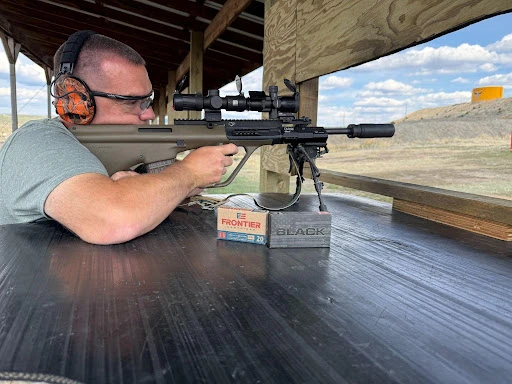
Understanding Heat Mirage in Precision Shooting
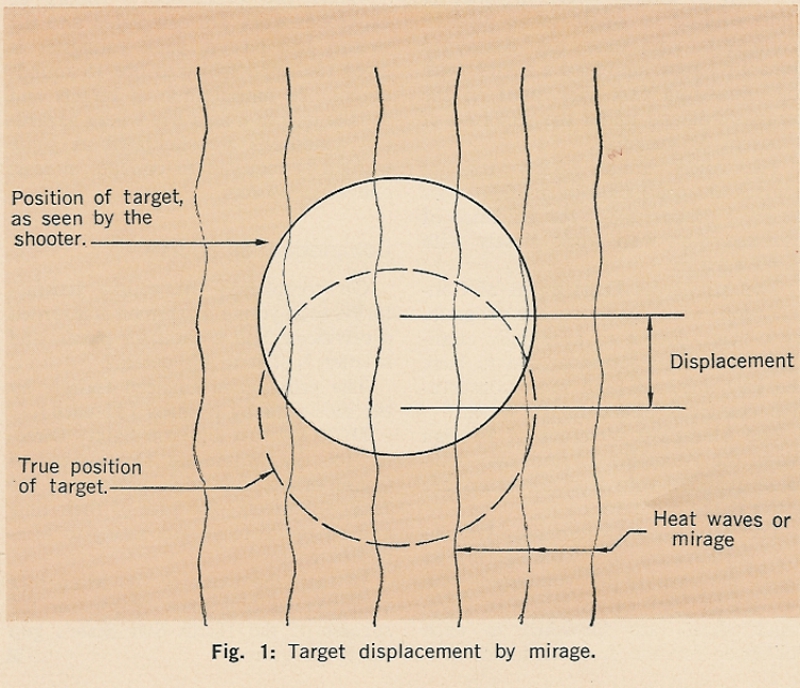
Heat mirage occurs when ground surfaces, rifle barrels, or suppressors heat the surrounding air. As this air warms, it expands and becomes less dense than the cooler air above it. Light passing through these air layers of varying densities bends, a phenomenon known as refraction.
Through a rifle scope or spotting scope, this refraction appears as shimmering heat waves that can obscure distant targets or create optical illusions, making objects appear to shift from their true position.
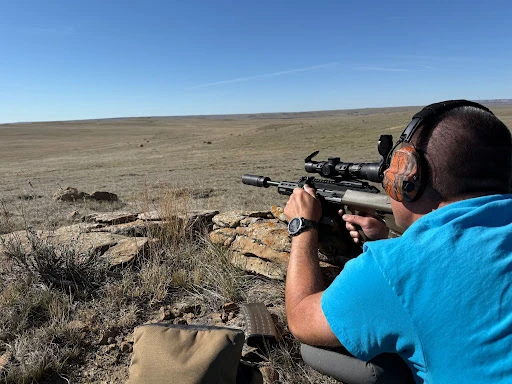
The Dual Nature of Mirage: Reading Wind vs. Target Distortion
Mirage impacts long-range marksmanship in both positive and negative ways. When generated downrange across terrain, heat waves serve as an accurate tool for reading wind vectors. However, when generated near the muzzle, heat waves become an optical obstacle.
Reading Downrange Mirage for Wind Estimation
Using a magnified optic, marksmen can observe downrange mirage to gauge crosswinds. As air currents move across the shooting field, they push rising heat waves horizontally. Observing the angle of these heat waves offers a precise measurement of wind velocity near the target area, where foliage indicators may be absent.
|
Mirage Appearance |
Estimated Wind Velocity |
Operational Impact |
|
Rising Straight Up (“Boiling”) |
0–2 mph |
No crosswind drift; indicates vertical heat convection. |
|
Tilted at ~60 Degrees |
3–5 mph |
Light crosswind; minor windage correction required. |
|
Tilted at ~45 Degrees |
6–8 mph |
Moderate crosswind; steady lateral drift. |
|
Flattened Parallel to Ground |
9–12+ mph |
Strong crosswind; high mirage velocity across optics. |
Near-Muzzle Mirage: The Shooter’s Enemy
While downrange mirage aids in reading environmental conditions, heat generated directly in front of the objective lens disrupts image resolution. Because this thermal turbulence occurs near the optic, the light refraction is magnified across the entire field of view, causing severe target blur and apparent target movement.
Why Suppressors Accelerate Heat Mirage
Suppressors trap expanding, high-temperature combustion gases to reduce muzzle report and recoil. During sustained strings of fire, internal suppressor temperatures increase to the point that the outer wall radiates enough heat to create a visible convective plume directly in the optical path.
High scope magnification amplifies this distortion, making crisp target acquisition nearly impossible at distance.
What Causes Suppressor Mirage?
How Suppressor Heat Creates Sight Distortion:
- Heat Trapping: Internal silencer temperatures climb quickly with sustained fire, building up faster than the can is able to shed heat between rounds.
- Convective Plume: Radiant thermal energy creates a turbulent column of rising hot air directly in front of your objective lens.
- Light Refraction: Light rays bend as they pass through shifting air densities, scattering the image and blurring your target.
How Many Shots Before Suppressor Mirage Starts?
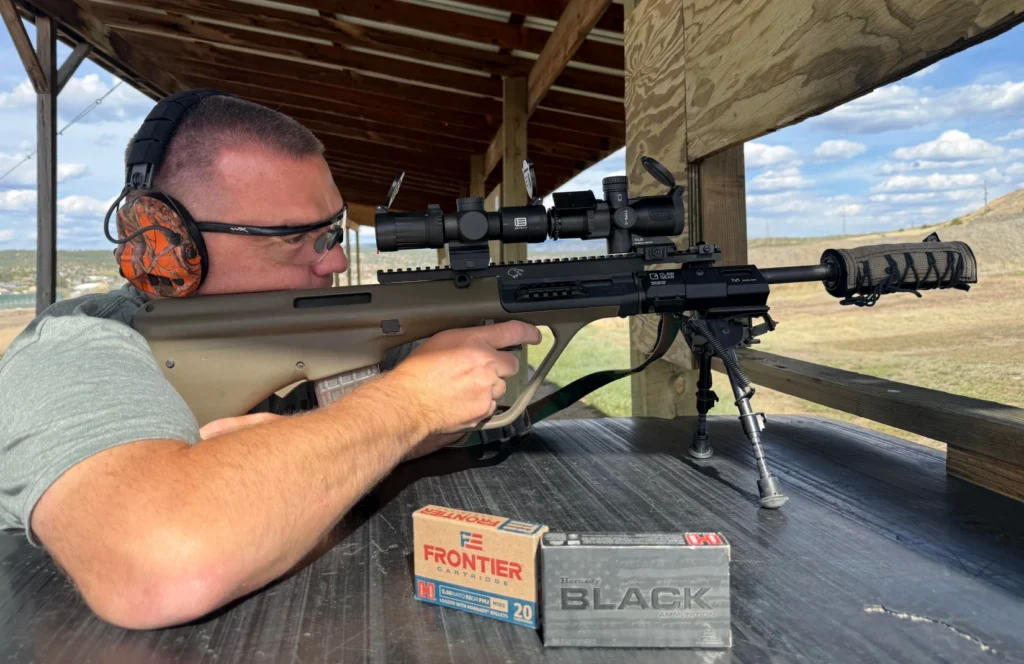
During a recent prairie dog hunt using a Steyr AUG with a 20″ barrel equipped with a 1-8x magnified optic and a Velos LBP 556K suppressor, heat mirage became noticeable after roughly 15 rapid shots. At distances beyond 400 yards, rising thermal plumes blurred small targets completely, forcing pause intervals to let the barrel and silencer cool.
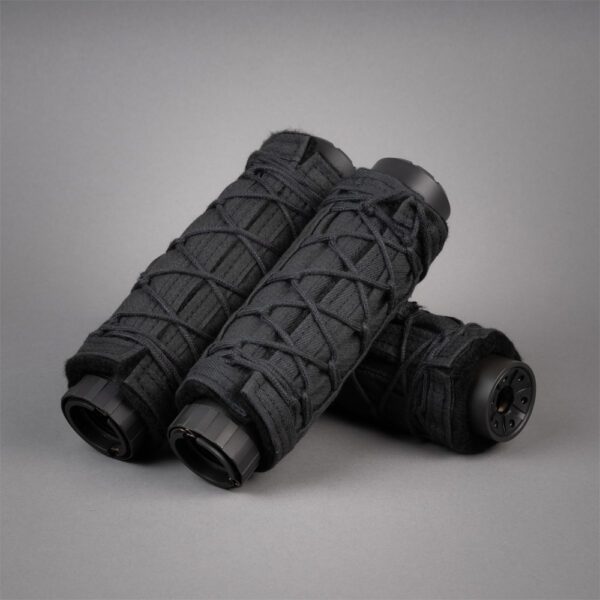
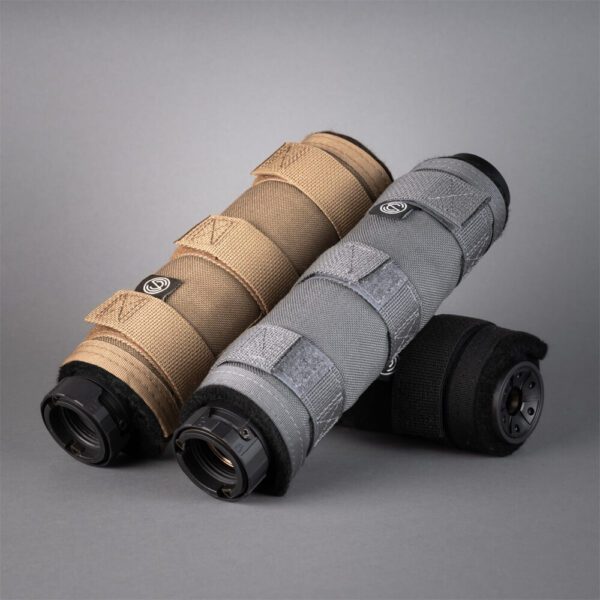
Repeating the course of fire with the 5.5″ Extreme Temp Corset Suppressor Cover significantly extended shooting performance. By insulating the outer body of the silencer, the cover delayed visual distortion, allowing for 5 to 10 additional clear shots per string before thermal plumes began interfering with the sight picture.
3 Proven Methods to Mitigate Suppressor Heat Mirage
1. Thermal Suppressor Covers
High-temperature suppressor wraps (such as the SilencerCo Corset) trap radiant heat inside a heavy-duty thermal barrier. By disrupting the immediate updraft of hot air in front of the objective lens, these covers preserve optical clarity through longer firing sequences.
2. Mirage Bands and Barrel Shields
Historically popular among benchrest shooters, mirage bands are flexible strips mounted above heavy rifle barrels. They direct rising barrel heat laterally to the left and right, preventing thermal plumes from rising directly into the scope’s line of sight.
3. Operational Cooling Protocols
Managing cadence during zeroing or load development helps prevent heat buildup. Leaving the bolt open between strings allows air to circulate through the bore, while portable barrel coolers can accelerate heat dissipation between groups.
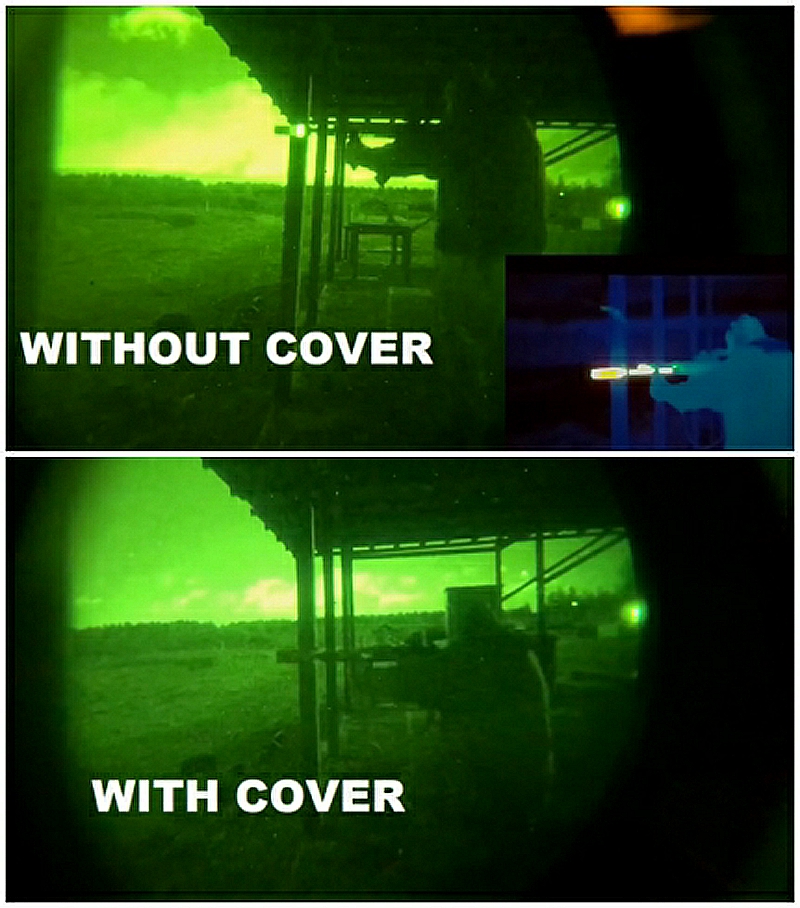
Optics Technology: Daylight Optics vs. Thermal Imaging
Standard daytime optics rely on ambient visible light, making them susceptible to atmospheric heat refraction. Thermal optics, such as the INFITAC IOL25 clip-on, operate on long-wave infrared wavelengths to detect thermal signatures rather than reflected light. Because thermal sensors process direct temperature differentials, rising air currents off a hot barrel or silencer do not distort the target image in the same manner as daytime optics.
Frequently Asked Questions About Suppressor Mirage
Do suppressor covers affect rifle accuracy or point of impact (POI)?
A properly fitted suppressor cover does not alter barrel harmonics or degrade accuracy. Adding weight to the muzzle can cause a small, consistent vertical point-of-impact shift, so shooters should verify zero with the cover installed.
How many rounds can a silencer cover withstand before mirage returns?
Depending on ambient temperatures and fire rate, a quality heat shield typically adds 5 to 10 rounds of clear target resolution during rapid fire before heat saturates the outer fabric.
Will rapid firing melt a suppressor cover?
Covers built with high-heat inner liners (such as fiberglass, silicone, or Nomex) are rated for temperatures exceeding 1,000°F, making them suitable for semi-auto use. SilencerCo’s Extreme Corset Suppressor Cover is rated for up to 2500 degrees Fahrenheit. Lightweight hunting wraps, however, are intended for slower, precision-oriented shooting.
Why does higher scope magnification make mirage look worse?
Increasing scope magnification magnifies both the target and the air column between the shooter and the target. Higher power settings amplify the visible movement of refracted light waves, making mirage more pronounced.
How hot does a suppressor get?
Exact temperatures vary by suppressor, caliber, and fire rate, but the practical effect is well documented: sustained strings of fire heat a suppressor enough to cause skin burns and interfere with the sight picture.
Chris Rhodes