Will a 9mm Suppressor Work on .300 Blackout?

Travis Pike
Good suppressors are a serious investment, so it makes total sense to stretch your dollar across multiple firearms in your safe. Given the massive overlap in popularity between 9mm and 300 BLK, the obvious question becomes: can your 9mm suppressor safely pull double duty on a .300 Blackout host?
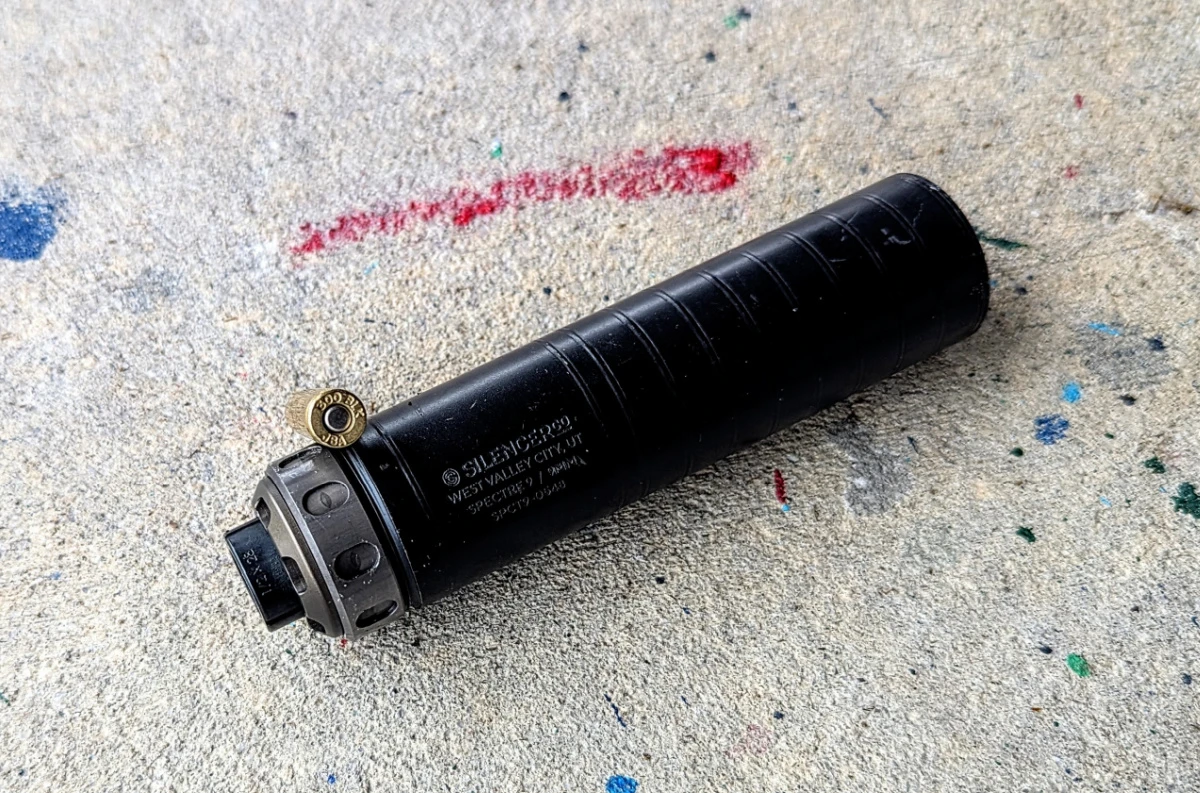
Quick Answer: Yes, many 9mm suppressors can safely fire .300 Blackout, but compatibility depends strictly on ammo pressure (subsonic vs. supersonic), barrel length, and suppressor construction. Firing high-pressure supersonic rifle rounds through a lightweight handgun suppressor can damage the baffles if it isn’t explicitly pressure-rated.
We know we can’t use a .300 Blackout can with 9mm because a 9mm projectile (.355”) is larger than a 7.62mm (.308”) bore, and we want to use our suppressors more than once. Conversely, a .308 caliber bullet easily clears a .355 bore. However, the pressure a centerfire rifle round generates at the muzzle is significantly higher than that of a handgun cartridge. With that in mind, is it safe? Is it effective? Can a handgun suppressor handle a rifle round?
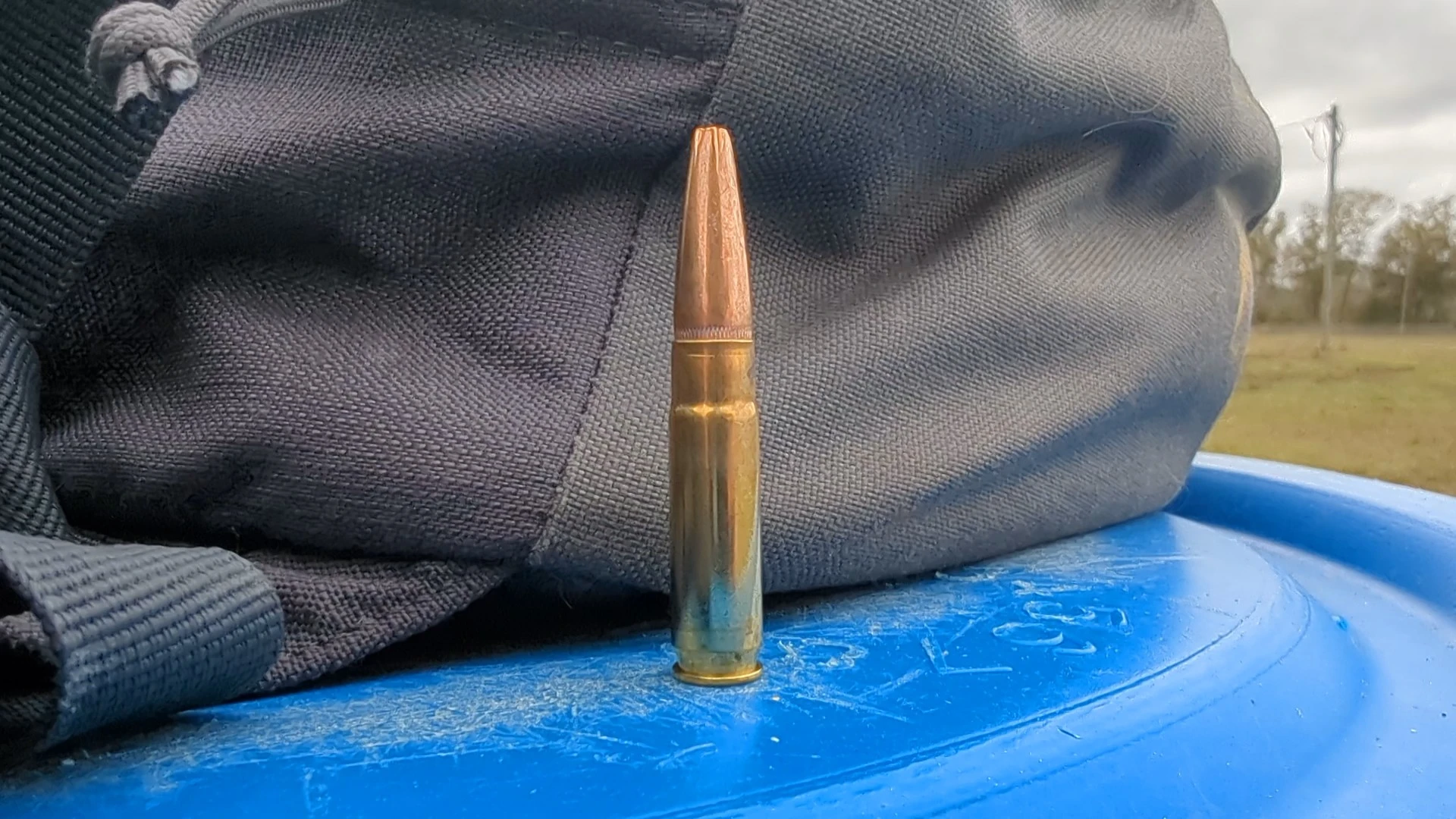
Can You Shoot .300 Blackout Through a 9mm Suppressor?
Bottom line up front, maybe. It’s not as black and white as knowing that .38 Special will safely work in a .357 Magnum. Suppressors vary a fair bit in their design, the materials used to make them, and ultimately the pressures they can handle. Some 9mm suppressors should never be used with .300 Blackout.
Which SilencerCo 9mm Suppressors Are Rated for .300 Blackout?
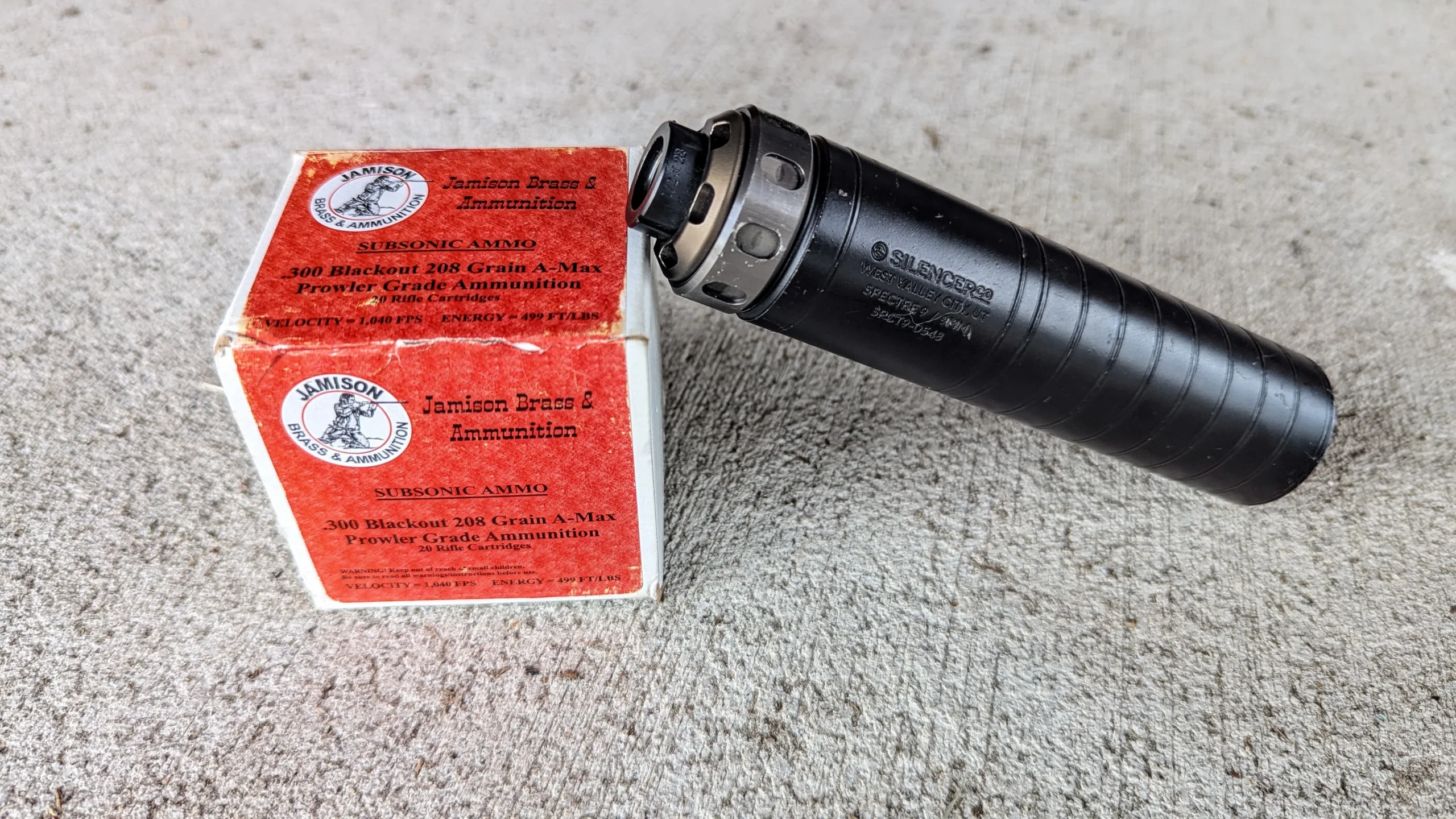
Osprey 9 2.0: Works safely with .300 Blackout subsonics only (minimum 8-inch barrel). Subsonic rounds generate roughly half the chamber PSI of supersonics, keeping muzzle pressure well within the safe operating threshold of an aluminum-accented 9mm can.
Spectre 9: Capable of handling both subsonic and supersonic .300 BLK. However, the caveat is that supersonics are restricted to a semi-auto rate of fire, whereas subsonics can handle full-auto cycles.
Omega 9K Series: Built rock-solid and tough as nails out of fully welded stainless steel, handling both subs and supers in full-auto.
Omega 36M / Hybrid 46M: Fully pressure-rated, modular, multi-caliber suppressors that can run both subsonic and supersonic rounds for outstanding versatility.
Important Safety Note on Barrel Lengths: Many 9mm suppressors enforce minimum barrel length limits (typically 7 to 8 inches) when firing supersonic .300 Blackout. Short barrels allow unburned powder to torch the blast baffle at extreme pressures, so always verify your host barrel length against your suppressor’s official spec sheet.
If you want your suppressor to pull double duty, then you’re going to need to do a little research into its capabilities, potential restrictions, and what you intend to do with that suppressor.a
Understanding Sound Suppression: Dedicated .30 Cal vs. 9mm Bore
A lot goes into how effective a suppressor can be on any firearm. Barrel length is a factor, round type, action type, and more. A .300 Blackout with a 16-inch barrel is probably going to sound quieter than an 8-inch barrel .300 Blackout.
If we took the same gun and ammo, but used a dedicated .30 caliber can and a dedicated 9mm can, the .30 caliber can is going to be quieter. This comes down to bore aperture efficiency. A .30 caliber bullet passing through a .355” (9mm) bore leaves extra clearance around the projectile, allowing expanding propellant gas to slip past the bullet (gas bypass) before reaching the baffles.
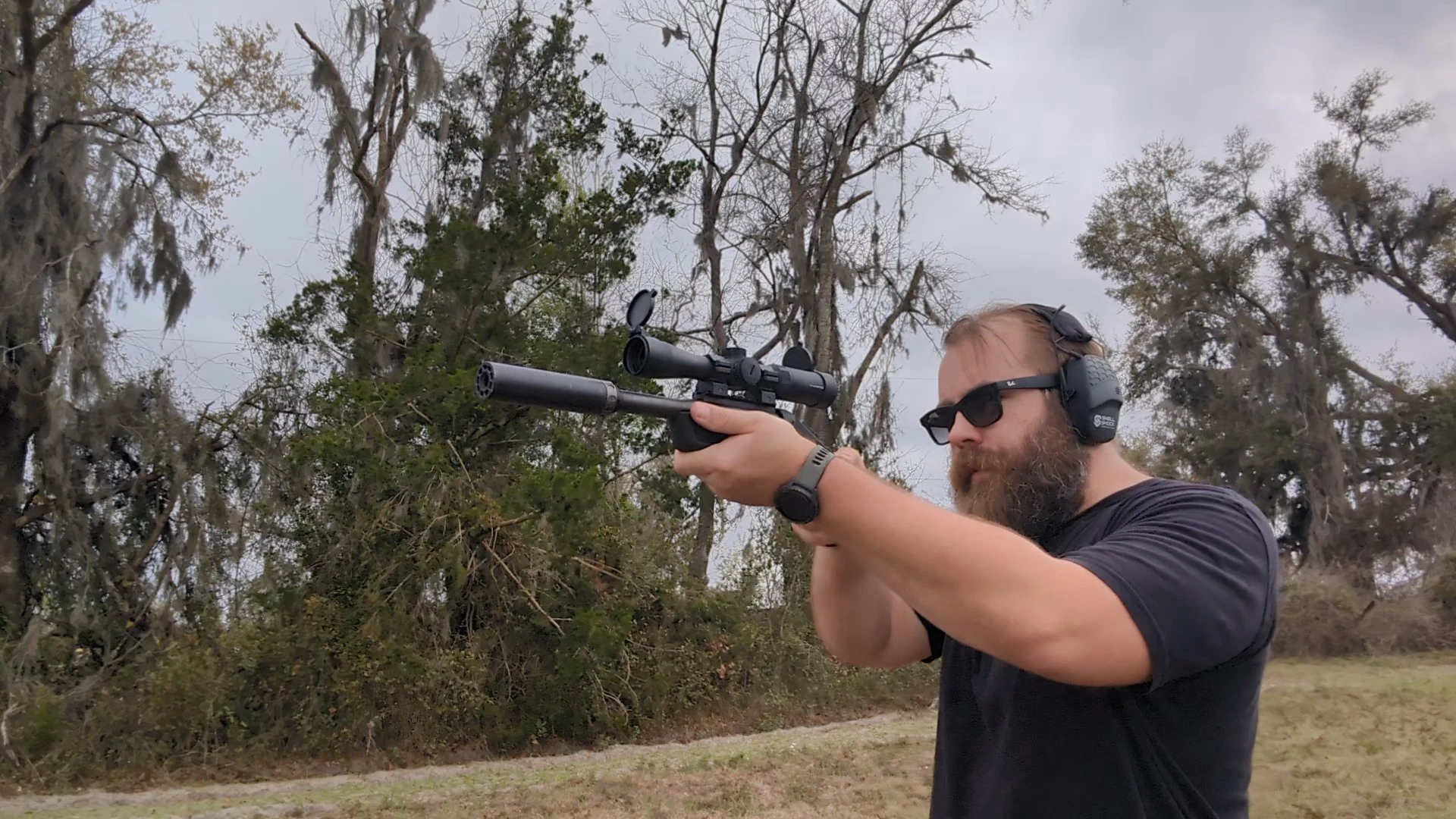
How much does that extra bore clearance matter? While exact decibel (dB) ratings shift depending on atmospheric conditions and host setup, the pitch and tone difference is clear. When I put a 9mm can on my Rossi Brawler in .300 Blackout, I was quite pleased with its performance with subsonic rounds. It turned BANG into pew according to my issued set of ears.
However, when I used a borrowed Omega 300 DT with the Rossi Brawler, the difference in volume was noticeable. The Omega 300 DT did a better job of cutting noise because the tight internal bore trapped gas more effectively. With that said, I’m still quite happy to suppress my .300 Blackouts with my Spectre 9.
Mounting & Hardware Notes
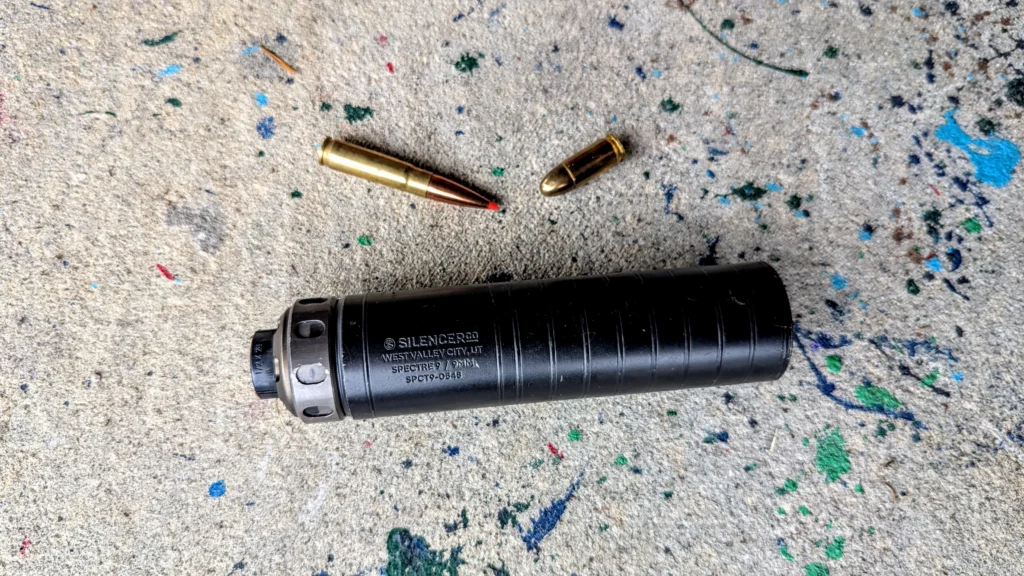
Before mounting your 9mm silencer to a .300 Blackout host, double-check your mounting hardware:
Thread Pitch Differences: Most 9mm handguns use 1/2×28 threads, while standard .300 Blackout rifle barrels use 5/8×24 threads. You will need the appropriate thread adapter or ASR mount.
Disable the Nielsen Device: Never use a tilting-barrel handgun booster (piston/spring assemblies) on a fixed rifle barrel. Keep in mind that a fixed barrel spacer can only be used with subsonic rounds, as running supersonics will damage the piston. If you plan to shoot supers, you will need to mount via a Direct Thread or ASR module to prevent baffle strikes or thread damage.
9mm Can or Dedicated .30 Cal: Which Should You Run?
What are your goals? That’s the question you should ask yourself. What do you intend to do with your suppressor? Are you chasing performance to reduce noise as much as possible? Maybe the dedicated .30 cal can is for you.
For me, the 9mm Spectre 9 reduces enough noise, while being shorter and lighter than the vast majority, if not all, dedicated .30 cal cans. On a gun like the Rossi Brawler, weight and length matter a fair bit. I can accept a slightly louder gun to keep it easier to handle.
To figure out what’s right for you, you’re going to have to set your goals and decide the parameters you’re willing to accept.
9mm Suppressors on .300 Blackout: Frequently Asked Questions
Will firing .300 Blackout supersonic ammo damage my 9mm suppressor?
It can if your 9mm suppressor is not explicitly rifle-pressure rated. Firing supersonic .300 Blackout through lightweight pistol suppressors (like the Osprey 9) can cause internal baffle erosion or structural failure. Always check your specific model’s pressure limits.
Do I need a piston or booster to shoot .300 Blackout through a 9mm suppressor?
No. You can only use a fixed barrel spacer when shooting subsonic rounds. Firing supersonics will damage the piston, so running supers requires a Direct Thread or ASR mount. Firing a suppressor with an active Nielsen booster on a fixed rifle barrel can damage both the firearm threads and the suppressor.
Is a dedicated .30 cal suppressor quieter on .300 Blackout than a 9mm suppressor?
Yes. A dedicated .30 caliber suppressor features a tighter bore diameter matching the .308 projectile, trapping expanding gases more efficiently than an over-bored 9mm suppressor.
Travis Pike