The Case for Suppressed Home Defense Handguns

Travis Pike
Suppressed home defense handguns offer serious advantages every defender needs when seconds matter.
Something goes bump in the night. You’re positive it’s not the cat knocking something off your table. What’s the first thing you do?
You grab your hearing protection, turn it on, put it on, and then prepare to defend yourself, right? The truth is, you don’t do that—you simply don’t have time. You retrieve a firearm and prepare to defend yourself and your family.
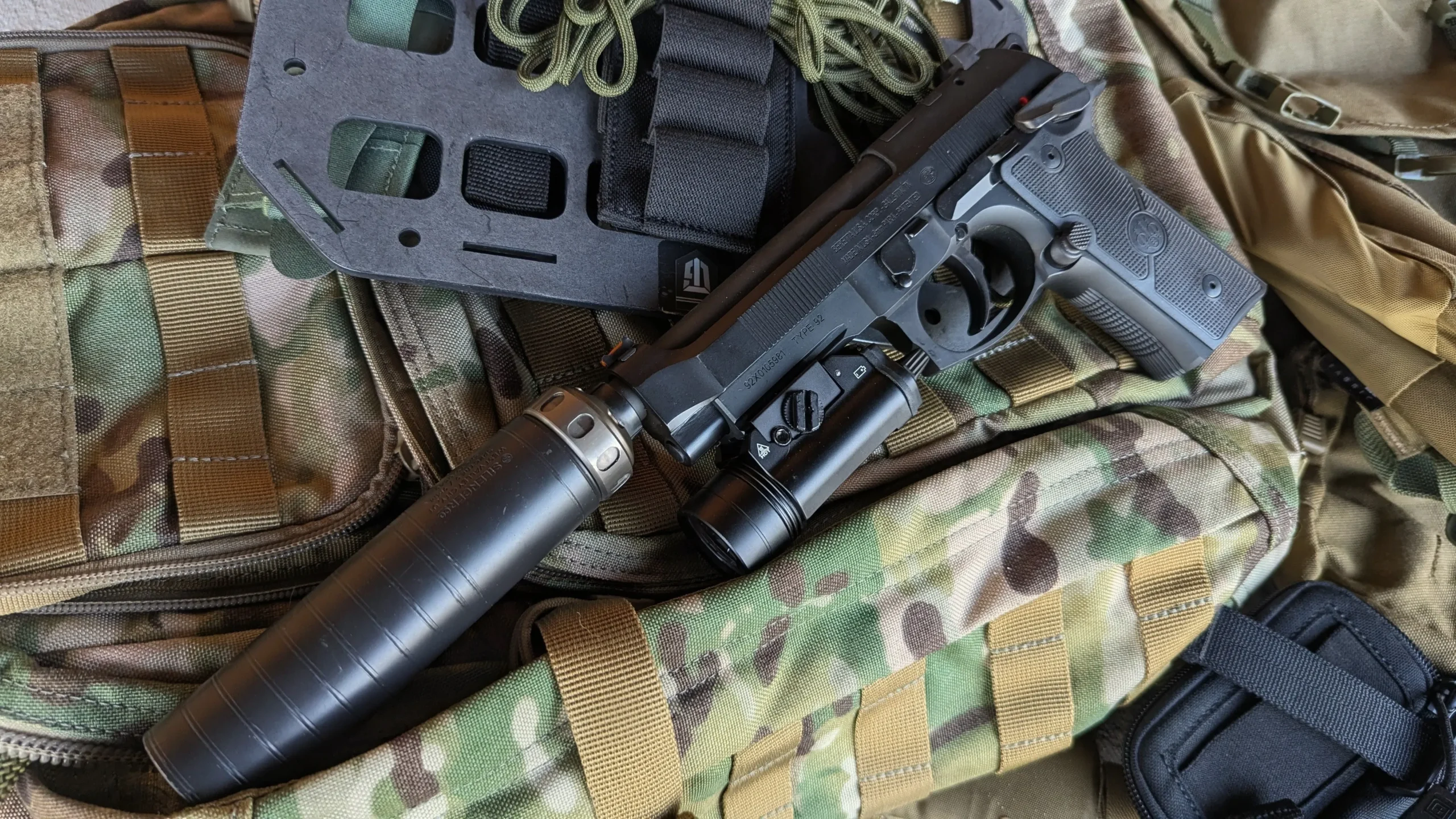
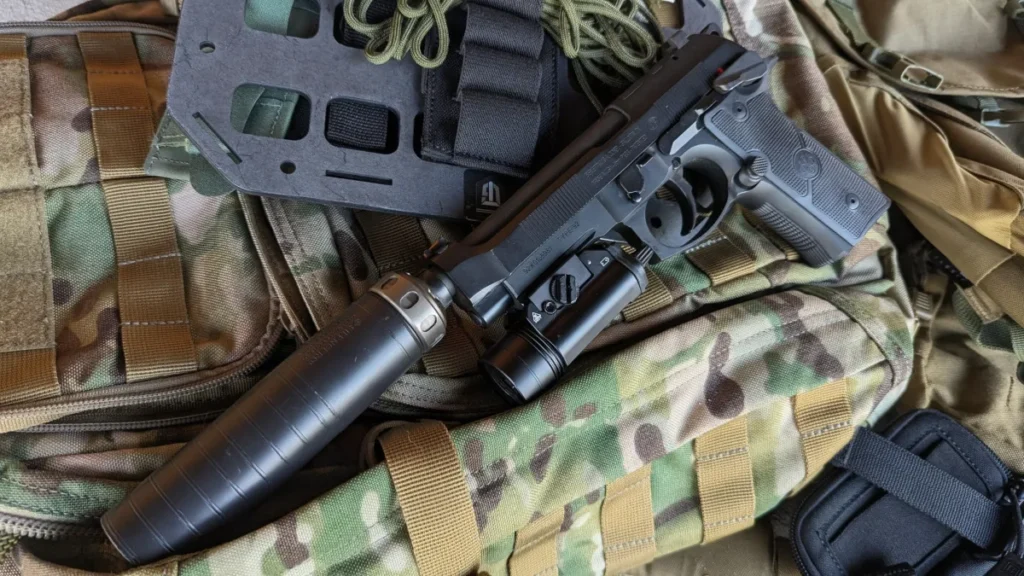
Since we don’t have time to don hearing protection when bad things happen, the next best thing is having a suppressor already mounted on your chosen firearm. While there are many great firearms available for home defense, I feel a suppressed handgun offers the most serious and compelling advantages in a home defense scenario.
Why Choose a Suppressed Handgun for Home Defense?
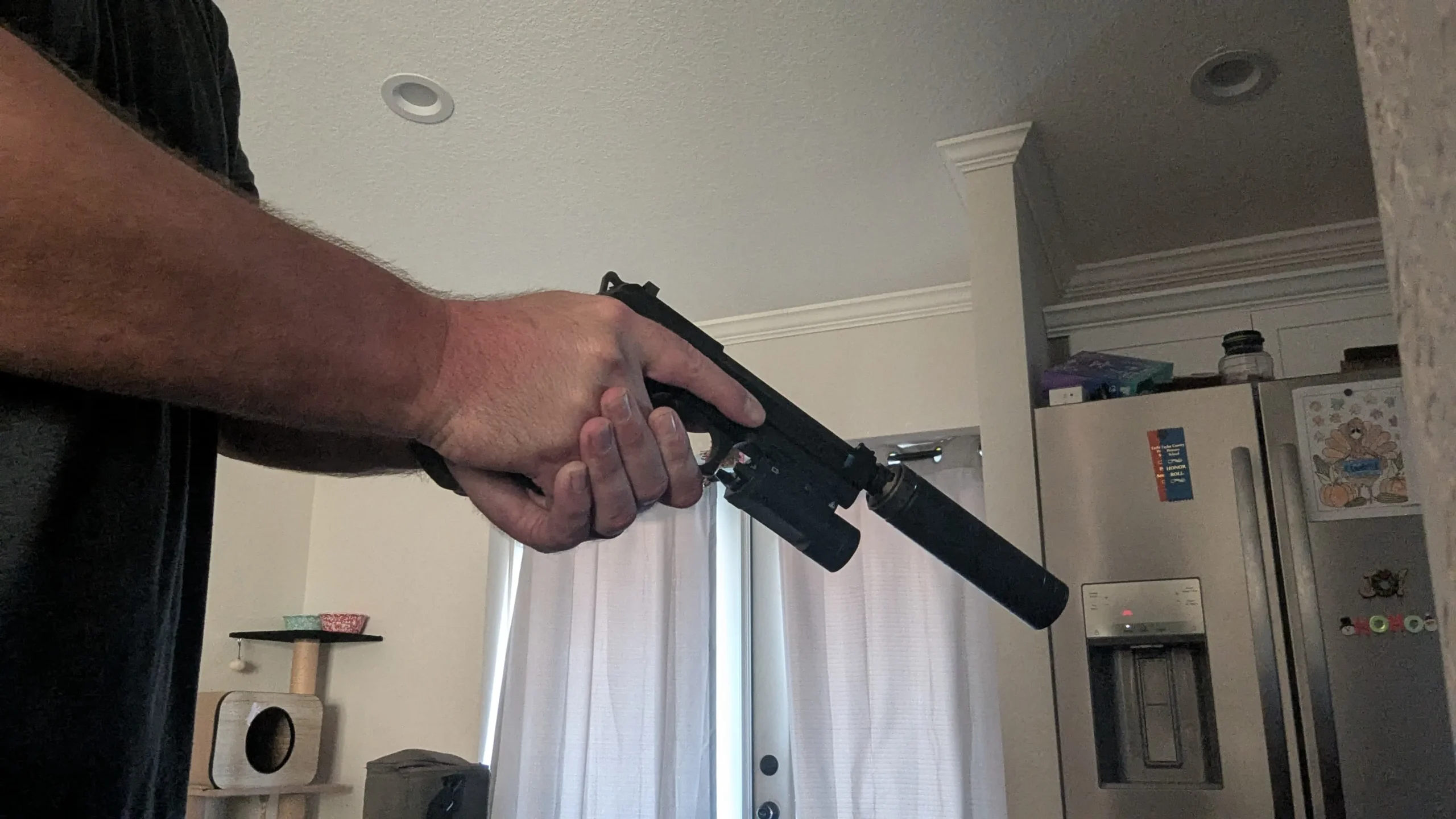
Handguns have some downright awesome advantages for home defense. They are small, easy to carry, and incredibly maneuverable—perfectly suited for the close-quarters world of your home. Handguns can be easily wielded with one hand, which makes it easy to navigate doors, call the police, and carry or move children to somewhere safe.
Even while being wielded one-handed, the weapon is fairly easy to fire and control if a threat presents itself. The small, easy-to-wield nature of the handgun makes its advantage clear and extremely useful.
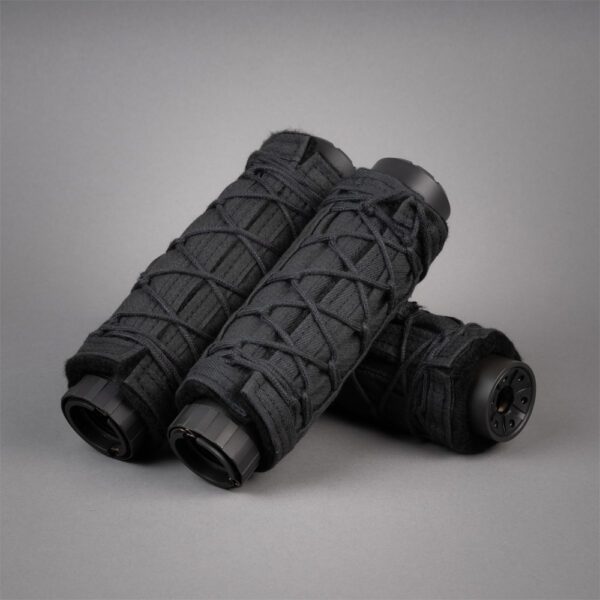
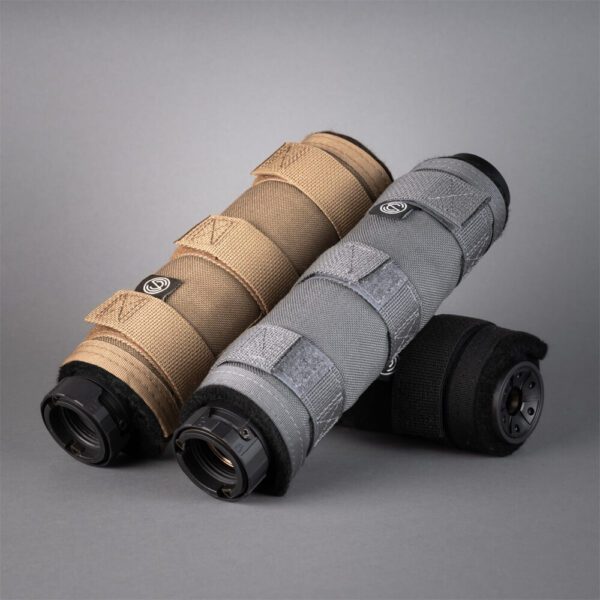
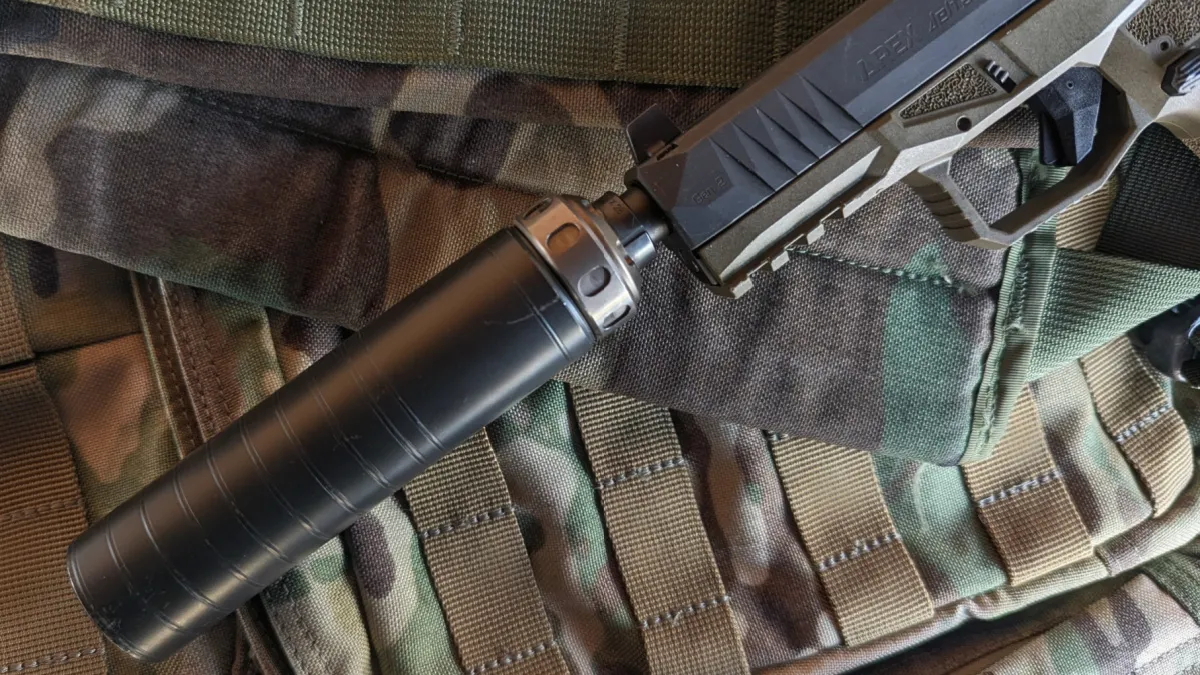
When we add a suppressor, we certainly introduce some length and weight, but often, the gain is well worth the minor addition. For example, the Spectre 9K 9mm handgun suppressor is only 3.69 inches long and weighs only 3.17 ounces. That minor addition won’t add any absurd length or weight to your firearm.
It’s still easy to maneuver indoors, and still easy to shoot one-handed. In fact, it’s easier to shoot with one hand when suppressed. These inherent characteristics are exactly what make suppressors—and therefore, suppressed handguns—so uniquely well-suited for home protection.
Hearing Protection: The Primary Advantage of Suppressed Handguns
The primary goal of a suppressor is noise reduction. When combined with a handgun, this creates an efficient package that significantly reduces the volume of a gunshot. Handguns also tend to be easier to suppress than other firearms due to the easily accessible subsonic defensive ammunition.
An unsuppressed handgun can generate up to 160 dBs indoors. That’s causing instant and irreparable hearing loss. This noise level causes instant and irreparable hearing loss. When equipped with a high-quality suppressor, you can reduce that volume by 20 to 35 dBs. With the aforementioned Spectre 9K, I can reduce the volume to about 133 dBs.
While 133 dBs is still loud, it is far less likely to cause the immediate, permanent damage of an unsuppressed shot. Importantly, I must keep in mind I’m not just protecting my own hearing, but the hearing of my entire family.
Preserving my hearing is critical to maintaining situational awareness. Instead of the incurable “RING” of tinnitus, I can hear additional threats, communicate clearly with police dispatch, and more. If the police arrive, I need to be able to hear their commands immediately and clearly—a suppressed handgun ensures that capability.
Reduced Muzzle Flash in Low Light Situations
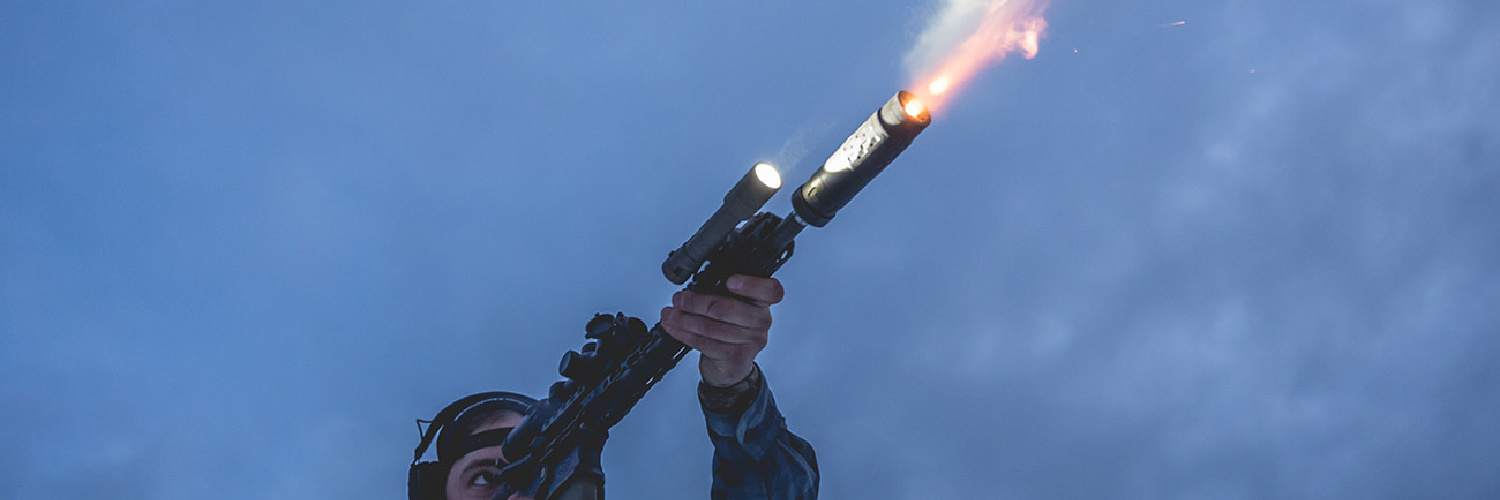
While handgun muzzle flash is often manageable in low light, it can still momentarily create vision spots or disrupt your natural night vision. A suppressor can reduce or even eliminate muzzle flash. I consider this a notable benefit, as maintaining clear vision is paramount during a low-light encounter.
Increased Control: Recoil Reduction and Muzzle Stability
Modern semi-automatic handguns, especially in calibers like 9mm, are inherently easy to control, but the addition of a suppressor makes them even more manageable. The suppressor acts like a muzzle brake when the gasses hit the baffles, which directly reduces felt recoil.
Furthermore, the additional weight at the end of the barrel naturally reduces muzzle rise. This combination makes the firearm significantly easier to shoot and control, especially with one hand.
In my view, the suppressor is the ultimate muzzle device for defense. It performs the functions of a compensator or a brake—reducing recoil and muzzle rise—but without their noise drawbacks, while simultaneously providing critical noise mitigation.
Key Considerations Before Suppressing Your Handgun
Before adding a suppressor to your preferred home defense handgun, there are a few key technical elements every owner must understand.
The Nielsen Device
A Nielsen Device, also called a booster, ensures that your suppressed handgun operates reliably. Most modern semi-automatic handguns utilize a short-recoil operation, meaning the barrel briefly reciprocates slightly and tilts upward. To ensure these handgun types cycle and function with the added weight of a suppressor, you’ll need a Nielsen Device.
You also need to test your specific handgun, suppressor, and defensive ammunition combination to ensure it cycles reliably and performs adequately.
I always stress that—even without a suppressor—you should take the time to ensure reliable operation with any firearm and ammo combination used for home defense.
Sighting Systems and Suppressor Height Sights
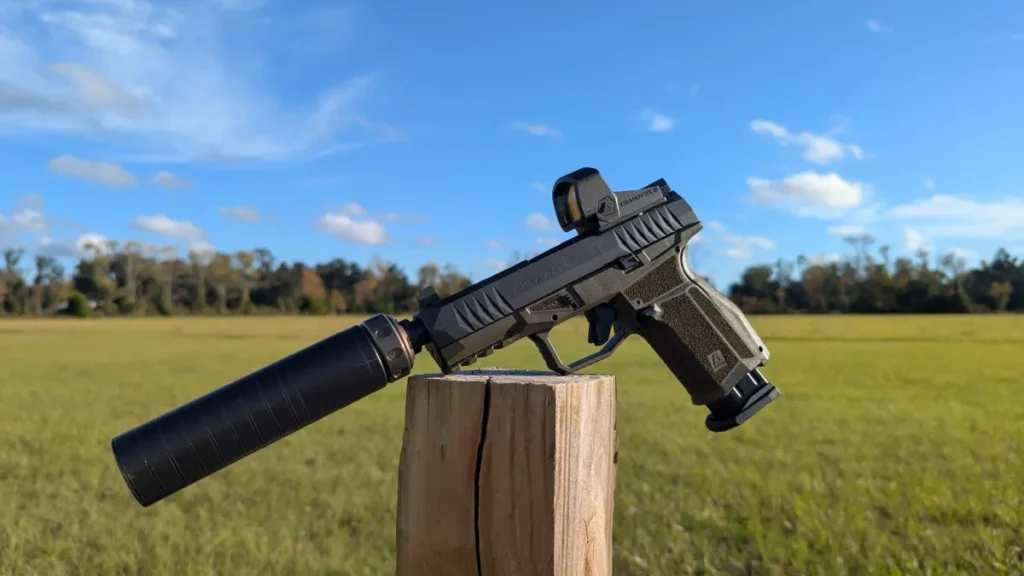
Since most suppressors have a cylindrical design, they often sit high enough to render traditional sights unusable. This isn’t the case when it comes to suppressors like the SilencerCo Osprey 2.0 and S98. These suppressors sit are flat across the top and sit below the shooter’s line of sight. This unique profile keeps the suppressor from extending into the line of sight.
For all other traditional round suppressors, you will need to invest in suppressor height sights. These sights ride higher on the slide, allowing you to clearly aim over the top of the can.
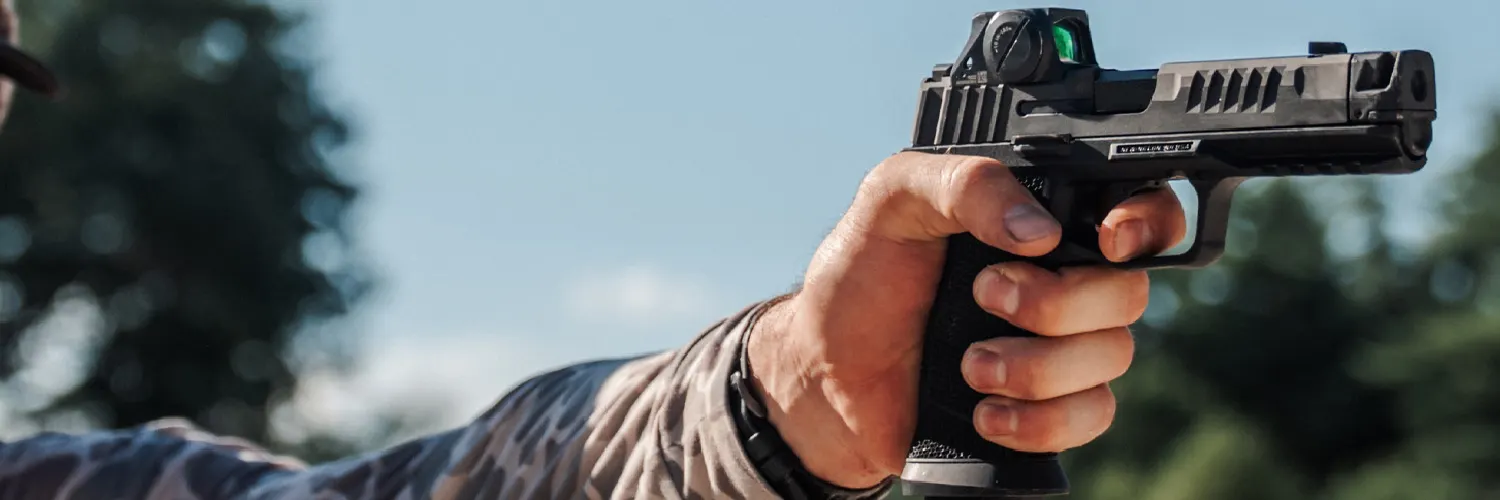
Fortunately, most modern handguns are also optics-ready. A red dot allows you to easily see over your suppressor and accurately shoot your firearm.
Weapon Light and Suppressor Shadow
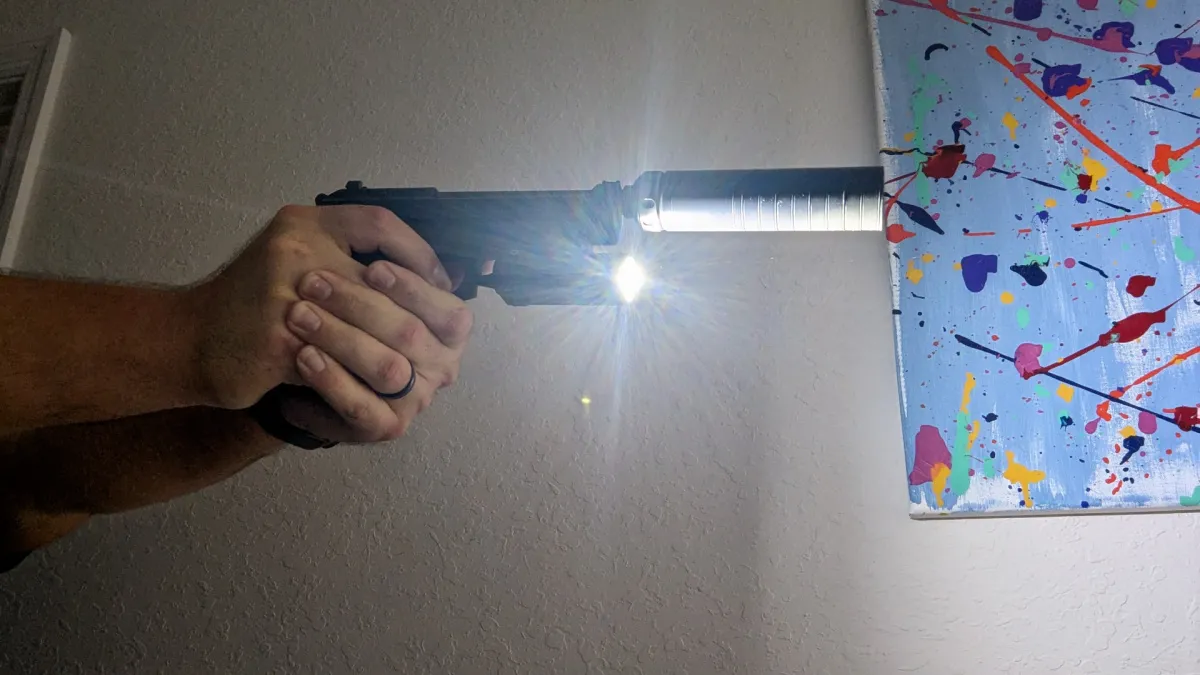
Your home defense weapon should be equipped with a flashlight. You don’t get to choose when a home invasion occurs. Light is a must-have for establishing positive identification (PID) of any threat.
When you attach a tactical light to a suppressed handgun, you inevitably introduce suppressor shadow. The suppressor, now extending beyond the muzzle, casts a cone-shaped shadow directly above the beam.
The primary issue arises when trying to use advanced lighting techniques, such as the baseboard or “umbrella” method of bouncing light. These methods allow you to reflect light into a room without sweeping the muzzle across potential non-threats. These methods become less efficient with a suppressor casting a shadow.
Handgun Ballistics in Home Defense
Finally, one of the inherent limitations of handgun ballistics for home defense. Compared to rifles or shotguns, handgun rounds are simply not as effective at immediately stopping a threat, as they lack the same wounding characteristics.
Therefore, shot placement becomes critical; you have to put rounds into fairly small, vital area to effectively stop a threat. Handguns are more challenging to aim and fire since they lack a stabilizing stock, which is why the control benefits of a suppressed setup are so valuable. With that in mind, train hard and train often.
The Case for Going Suppressed
Suppressed handguns can be invaluable tools for home defense, as long as you recognize and prepare for any potential downsides. The platform retains the handgun’s inherent benefits—it remains maneuverable and easy to wield one-handed. The suppressor adds layers of advantage: it significantly reduces noise, improves shooter control, and overall makes the firearm much easier and safer to handle during a high-stress scenario.
Training and preparation are paramount. If you aren’t preparing, you’re preparing to fail.
Travis Pike