Home / All About Silencers / Hornady .338 ARC Guide: AR-15 Conversion, Ballistics, & Suppressors
Hornady .338 ARC Guide: AR-15 Conversion, Ballistics, & Suppressors

Travis Pike
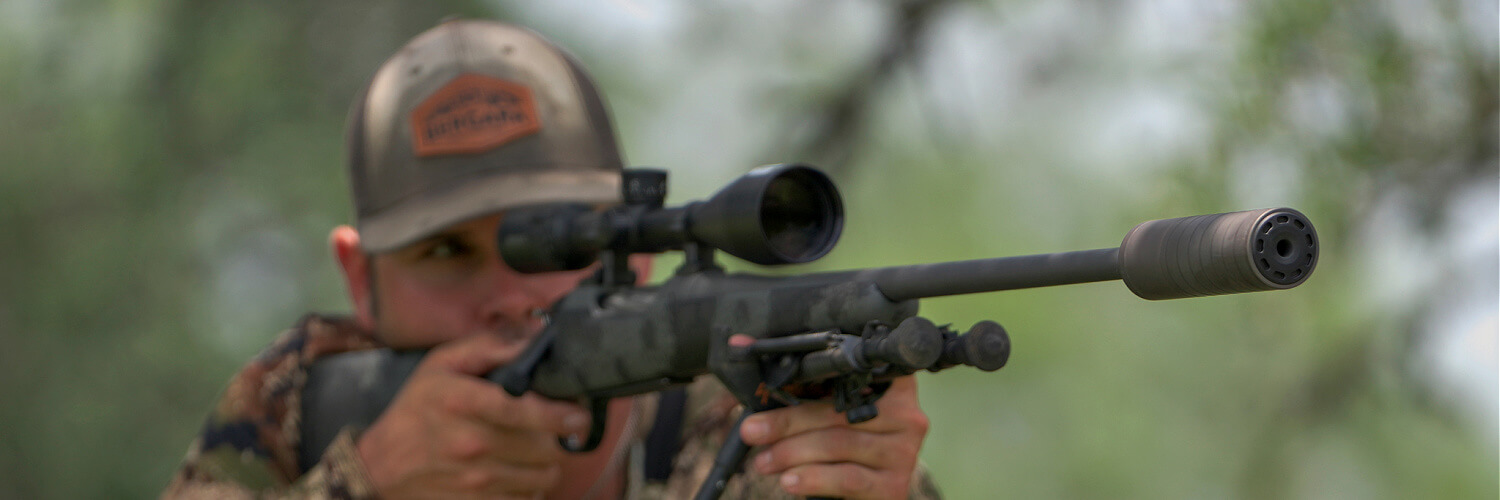
Hornady’s ARC (Advanced Rifle Cartridge) family was originally built to increase the ballistic potential of the AR platform. While cartridges like the 6mm ARC and .22 ARC focus on flat trajectories, high ballistic coefficients, and stretching distance, the .338 ARC takes a completely different approach.
Long-range precision isn’t the goal here—hard-hitting terminal energy and optimized suppressor performance are. Engineered to squeeze maximum heavy-payload energy out of a standard AR-15 platform, the .338 ARC fills a crucial gap for shooters wanting true subsonic stopping power without jumping to a large-frame rifle like the 8.6 Blackout.
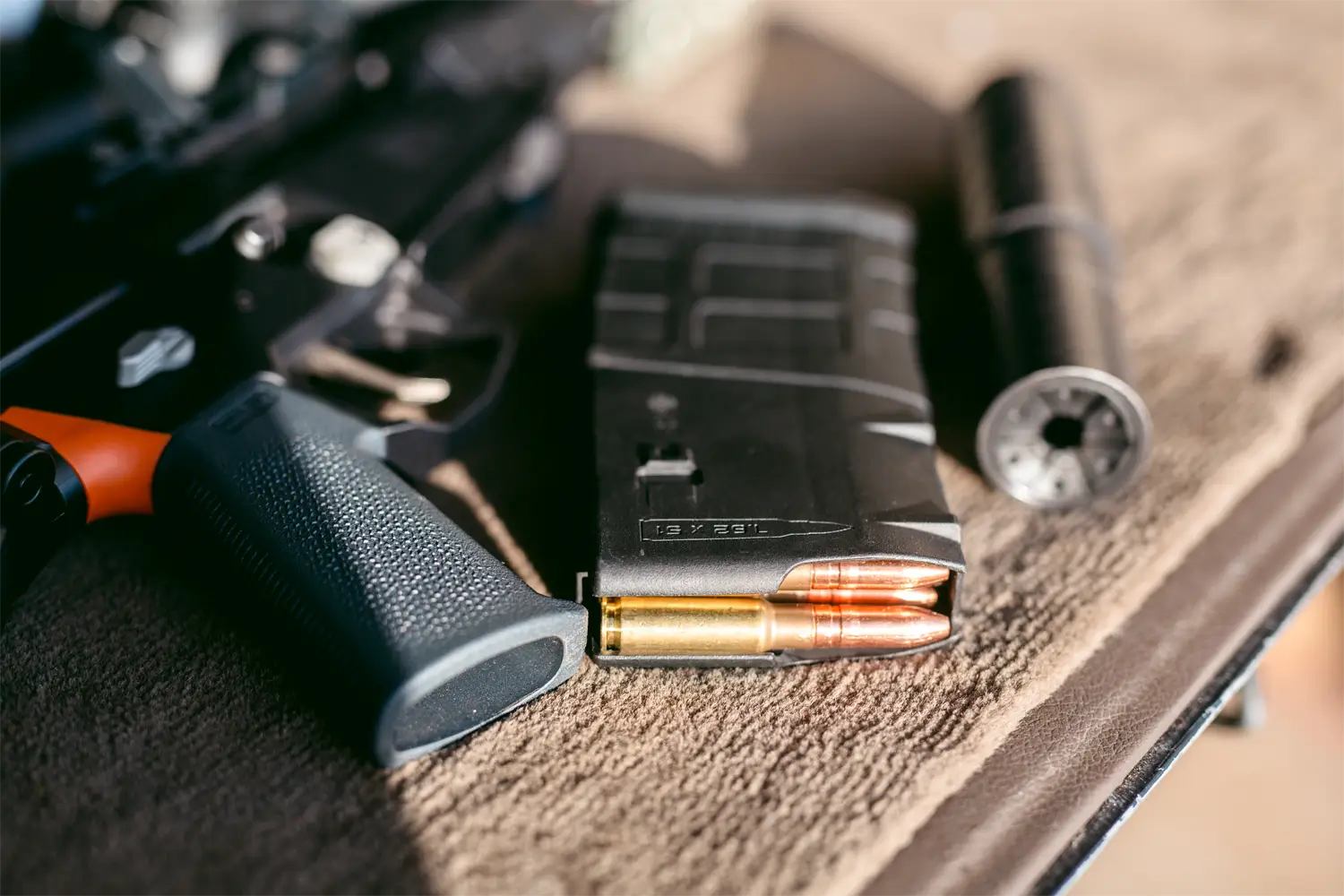
Built around the .338 bore size, this round delivers massive projectile mass at short-to-moderate ranges. It packs a serious punch into the light-recoiling AR-15.
The Goal: Big-Bore Energy in a Standard AR-15
If you want heavy terminal performance from a semi-auto, the traditional answer has been stepping up to the larger AR-10 platform. The trade-off, of course, is weight, bulk, and proprietary parts. The .338 ARC aims to bridge that gap by delivering high-payload energy inside a standard AR-15 frame.
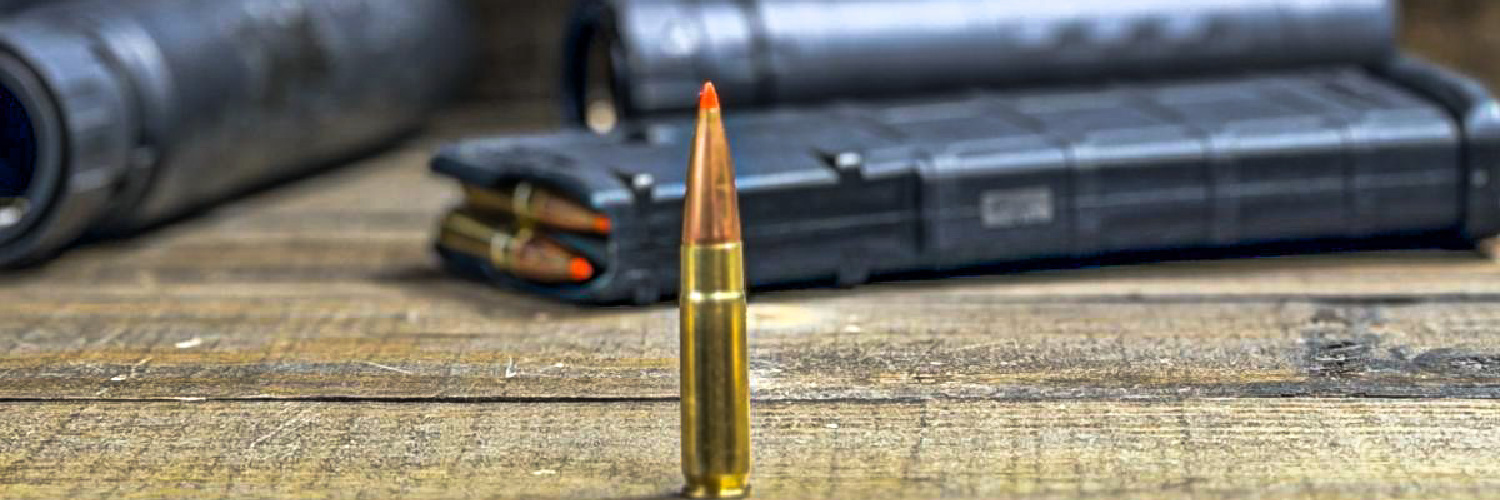
Hornady clearly designed the cartridge as a direct competitor to the .300 Blackout. While subsonic .300 BLK typically tops out around 220 grains, the .338 ARC steps up to a massive 307-grain projectile.
Because subsonic loads are speed-capped below the threshold of sound (~1,116 fps), energy can’t be added with velocity—it has to come from mass. By pushing a 307-grain bullet at roughly 1,050 fps, the .338 ARC delivers about 1.5 times the muzzle energy of a subsonic .300 Blackout.
CARTRIDGE |
RIFLE PLATFORM |
SUBSONIC BULLET MASS |
MUZZLE VELOCITY |
SUBSONIC MUZZLE ENERGY |
|---|---|---|---|---|
| .338 ARC | AR-15 / Micro-Bolt | 307 gr | ~1,050 fps | 752 ft-lbs |
| .300 Blackout | AR-15 | 208–220 gr | ~1,020–1,050 fps | ~465–500 ft-lbs |
| 8.6 Blackout | AR-10 / Short Action | 285–300 gr | ~1,050 fps | ~700–735 ft-lbs |
Hornady Factory Ammo by Use Case
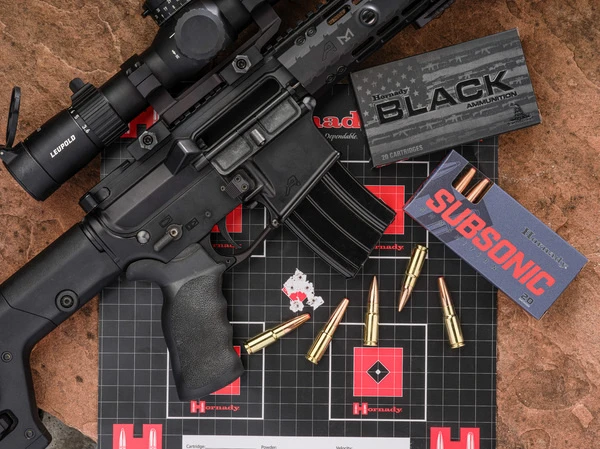
Rather than leaving shooters to rely solely on handloads, Hornady launched the .338 ARC with three distinct factory offerings tailored for different roles:
1. Subsonic Hunting & Maximum Quiet
Primary Load: Hornady 307 gr Sub-X Subsonic
Specs: 1,050 fps | 752 ft-lbs Muzzle Energy
Best Use Case: Medium game hunting (deer, feral hogs) and suppressed defense within 100 to 125 yards. Subsonic rounds can sometimes act like solid hole punchers due to low velocities, but Hornady’s Flex Tip Sub-X design ensures reliable expansion down to 900 fps—giving you deep penetration and clean terminal performance while staying quiet through a can.
2. Supersonic Medium Game Hunting
Primary Load: Hornady 170 gr MonoFlex BLACK
Specs: 2,075 fps | 1,625 ft-lbs Muzzle Energy
Best Use Case: Extending your reach out to 250+ yards. The monolithic copper-alloy projectile holds together exceptionally well through bone and tough hide, delivering true .308-class punch out of an AR-15 frame.
3. Precision Match & Practice
Primary Load: Hornady 175 gr HP Match BLACK
Specs: 2,075 fps | 1,673 ft-lbs Muzzle Energy
Best Use Case: Range practice, sighting in optics, and target work out to 400 yards.
Converting an AR-15 to .338 ARC
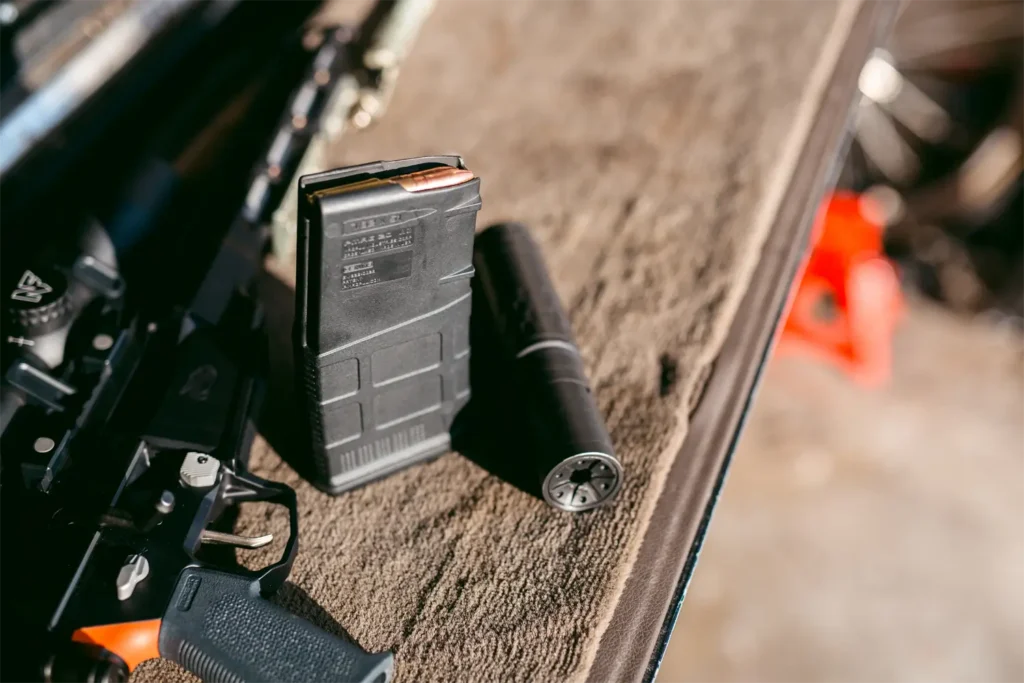
Technically, all you need to run .338 ARC through an AR-15 is to replace the barrel, bolt, and magazine. Most folks aren’t going to strip down their build that far, but swapping to a complete 338 ARC upper and dedicated magazines is easy enough to make it viable.
Here is what you need to know about each component:
The Bolt: The bolt design changes to a thinner bolt face—the same type you see on 7.62x39mm and 6.5 Grendel rifles. That thinner base does mean you need to invest in a quality bolt; it can be a weak point if it isn’t made of quality steel and properly heat-treated.
Magazines: Can you use STANAG mags? Not reliably. You’ll need a dedicated magazine to get reliable feeding. CMMG makes a dedicated .338 ARC mag, and the Duramag .400 Legend magazines reportedly work well with the cartridge as well.
Buffer Setup: When we get into buffer weights, that gets a little trickier. In most .338 ARC builds, a standard carbine buffer works just fine, though you may want to experiment with buffer weight if you’re running a suppressor or a heavily tuned gas system.
Bolt-Action Options: What if you don’t want an AR-15? Bolt-action rifles are an option, and Savage makes several in .338 ARC, or you can build your own from a Howa Mini action. I wouldn’t be surprised to see more options fairly soon due to how well bolt actions suppress.
Best Suppressors for .338 ARC
IMPORTANT SAFETY NOTE: Do NOT use a standard .30-caliber suppressor (like a 7.62 NATO or .300 BLK can) on a .338 ARC rifle. A .338 bullet measures 8.6mm in diameter and will cause a baffle strike in a .30-caliber silencer. You must use a suppressor rated for .36 caliber, 9mm, or larger rifle calibers.
SUPPRESSOR | CALIBER RATING | LENGTH OPTIONS | BEST FOR |
|---|---|---|---|
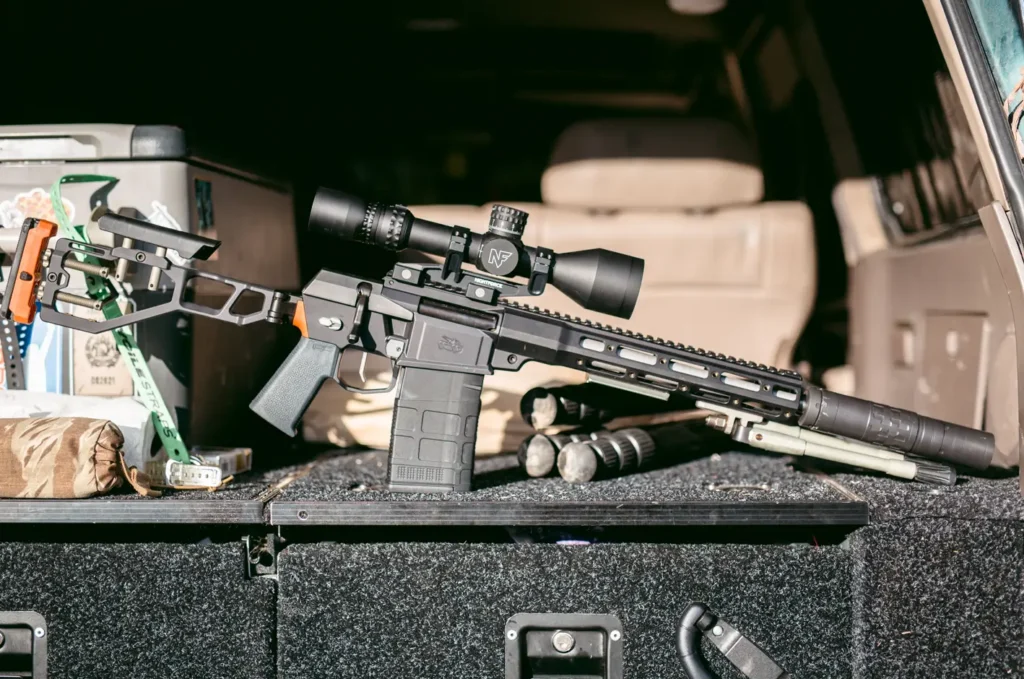
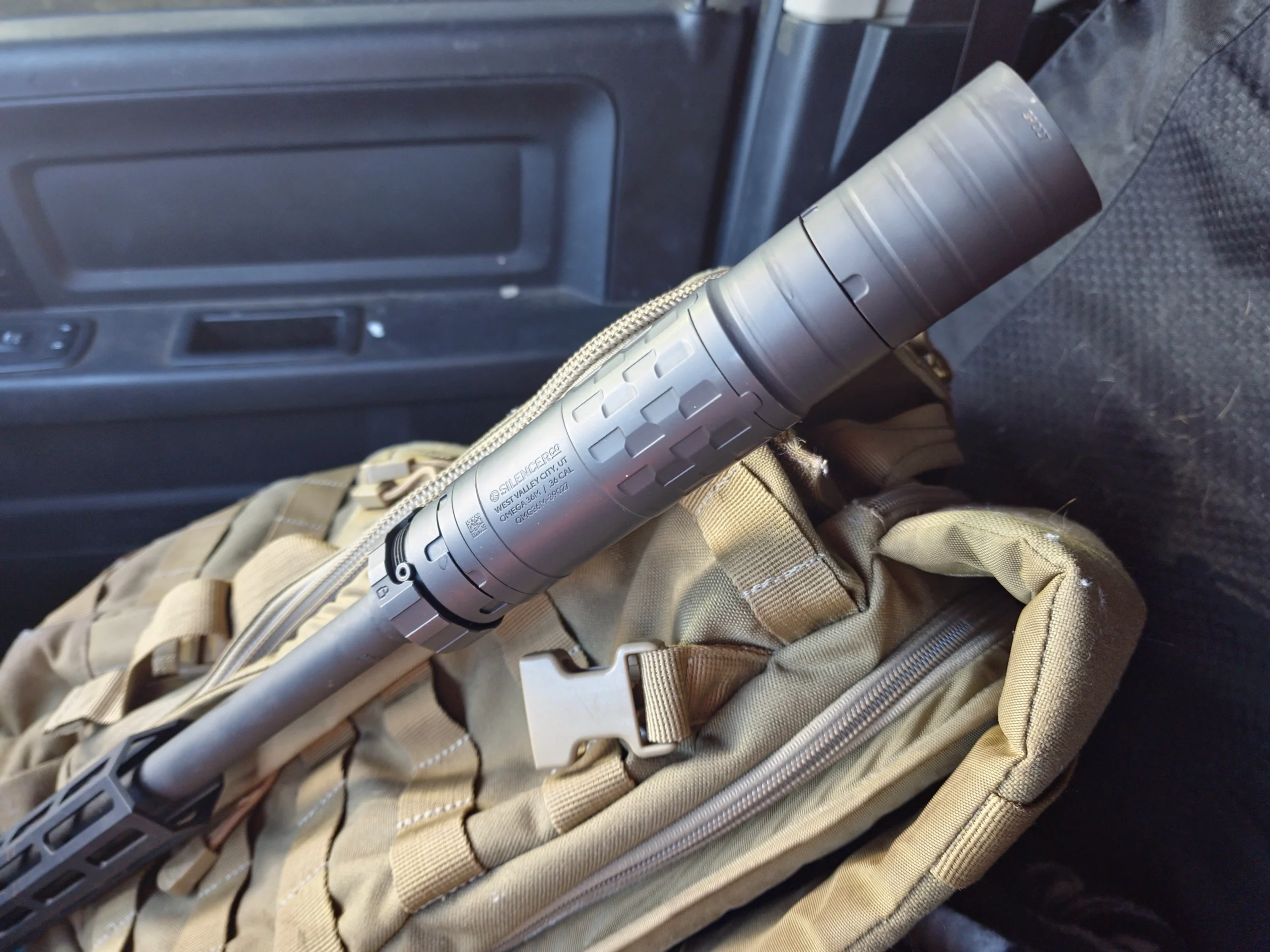
| SilencerCo Omega 36M | Up to .338 Lapua / 9mm | Modular: 5.1″ (Short) or 7.0″ (Long) | Maximum versatility across AR platforms and tight cover setups |
| SilencerCo Hybrid 46M | Sub-caliber up to .45-70 Gov’t / .458 SOCOM | Modular: 5.78″ (Short) or 7.72″ (Long) | Heavy subsonic loads, maximum internal volume, and ultimate sound suppression |
Both cans use modular front sections, meaning you can drop the extra length when maneuverability matters, or keep it long when you want maximum suppression with those chunky 307-grain subs.
Downsides to the .338 ARC
While the .338 ARC offers impressive energy and suppression, it does come with a few trade-offs to consider. First is its steep trajectory—a 307-grain bullet moving at subsonic speeds drops fast. You’re practically mortaring the round out to 200 yards, and with a 100-yard zero, expect to see around 30 or more inches of drop at the 200-yard mark
That trajectory limits the subsonics’ hunting capability. You want to be within 100 yards of your chosen game. That’s perfect for the swampy southeast, but out west, it will be a significant challenge.
Cost is another factor. Ammo is expensive—all of the ARC rounds are expensive, and this chunky .338 requires a lot of lead and copper to produce. As a result, factory ammo will likely remain expensive throughout the cartridge’s life compared to standard intermediate rounds.
Hornady .338 ARC: Frequently Asked Questions
Is .338 ARC an AR-15 or AR-10 cartridge?
The .338 ARC is strictly an AR-15 cartridge. It uses the same overall cartridge length as the 5.56 NATO and 6.5 Grendel, allowing it to function inside standard AR-15 lower and upper receivers without the added size, weight, and bulk of an AR-10 platform. (By contrast, heavier subsonic rounds like 8.6 Blackout require an AR-10 or short-action frame).
What bolt does .338 ARC use?
The .338 ARC uses a standard 6.5 Grendel / ARC bolt (also known as a Type 2 Grendel bolt with a 0.136-inch face depth and a 0.441-inch rim diameter). If you are converting an existing 6.5 Grendel or 6mm ARC rifle, your current bolt and bolt carrier group will work; if you are converting a standard 5.56 AR-15, you only need to swap out the bolt assembly and barrel.
Can I use my .30 caliber suppressor on a .338 ARC?
No. A .30-caliber suppressor bore is too narrow for a .338 projectile and will cause a severe baffle strike. You must use a suppressor rated for at least .36 caliber (such as the SilencerCo Omega 36M), a high-pressure 9mm/.45 ACP can, or a dedicated .338-rated rifle suppressor.
Is .338 ARC better than .300 Blackout for hunting?
For subsonic hunting, yes. The 307-grain Sub-X projectile delivers 752 ft-lbs of muzzle energy—roughly 1.5 times the energy of a 220-grain .300 Blackout subsonic load. Combined with a larger frontal area, it offers deeper penetration and wider wound channels on medium game.
Will .338 ARC fit in standard 5.56 AR-15 magazines?
No. The wider case shoulder prevents rounds from stacking properly in standard 5.56 magazines. Dedicated 6.5 Grendel or .338 ARC magazines (such as Duramag .400 Legend or CMMG mags) are required for reliable feeding.
Can a .338 ARC round accidentally chamber in a 5.56 barrel?
No. Unlike .300 Blackout, which can fit into a 5.56 chamber with dangerous results, the larger body and shoulder dimensions of the .338 ARC prevent it from chambering in a standard 5.56 NATO barrel.
Conclusion: A Step Forward for Quiet Power
With suppressors becoming more popular every day, it’s safe to bet we’ll see even more suppressor-friendly subsonic rifle cartridges hitting the market. It’s an interesting shift in the firearms world—watching the old mantra of “smaller, lighter, faster” give way to a new era of bigger, heavier, and quieter.
The .338 ARC won’t replace your 5.56 or outshoot a Creedmoor at distance. It does one job, and does it well: dumping maximum subsonic energy quietly downrange from a compact AR-15. It is another step forward in improving ammunition for a specific use.
Travis Pike