How to Build the Quietest .300 Blackout Setup

Jason Mosher
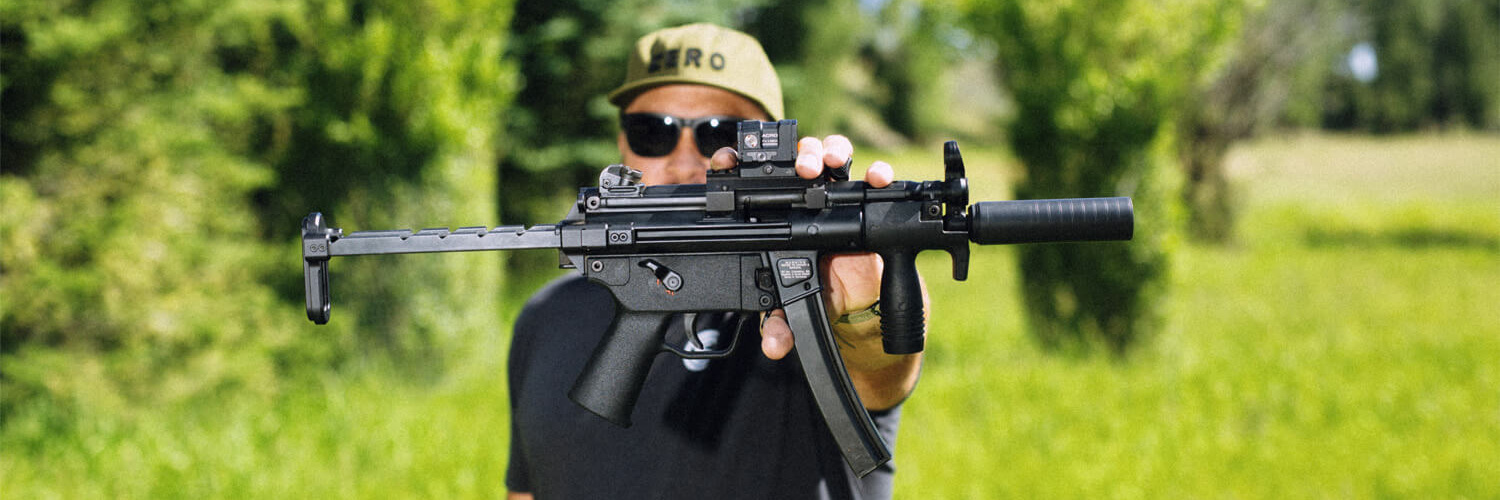
In the rifle world, 5.56 NATO has been the go-to round for ages. But as suppressors become more and more popular, .300 Blackout is becoming the “go-to” round for suppressed, short-barreled rifles. This cartridge was designed from its very inception to produce hard-hitting performance while remaining extremely quiet.
When you are new to silencers, it’s easy to think that achieving a quiet gun only requires a high-quality silencer, right? But the truth is, it involves much more than just sticking a can on a barrel. The type of ammo used, barrel length, caliber, and the size and quality of the suppressor all play a role in how quiet a rifle ultimately is.
Suppressors are used for various reasons, but the most common, of course, is to make the shot quieter. As previously mentioned, the .300 Blackout is the perfect caliber for this purpose. But since we know it takes more than just the silencer, here is some helpful information on finding the quietest combination for this setup.
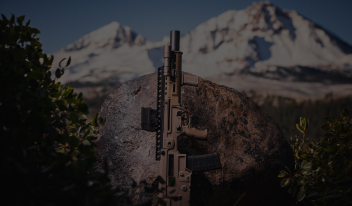
At a Glance: The Ultimate Quiet .300 Blackout Configuration
Quiet Benchmark Suppressor: SilencerCo Omega 300 DT (Achieves an incredibly low 119.5 dB sound signature)
Optimal Ammunition Type: Subsonic (Heavy 200 to 220 Grain projectiles)
Ideal Barrel Length: 8 to 9 inches for complete powder burn
Action Tuning: Adjustable Gas Block to completely eliminate ejection port noise
Understanding Suppressor Acoustics: Muzzle Noise vs. Ejection Port Noise
To build the quietest possible setup, you must first understand that your firearm produces sound from two distinct locations. It’s easy to look exclusively at the decibel rating at the muzzle. While muzzle noise is incredibly important, it is only half of the equation when you are shooting a semi-automatic host like an AR-15.
Muzzle noise is the sound of rapidly expanding propellant gases exiting the front of the silencer. A traditional, baffle-heavy suppressor excels at trapping these gases by forcing them through a series of internal chambers, cooling them down before they enter the atmosphere.
Ejection port noise occurs when the firearm’s action unlocks. In a semi-automatic rifle, residual pressure in the barrel vents backward through the chamber. This gas blast happens inches from your face, which can make a rifle sound loud to the shooter even if the muzzle signature is incredibly quiet.
To eliminate muzzle noise, you need a high-volume suppressor with an efficient baffle stack. To control ejection port noise, you need to manage the cycling speed of your action. An adjustable gas system on a semi-automatic rifle will help make sure the gases exit the front of the gun, not the back.
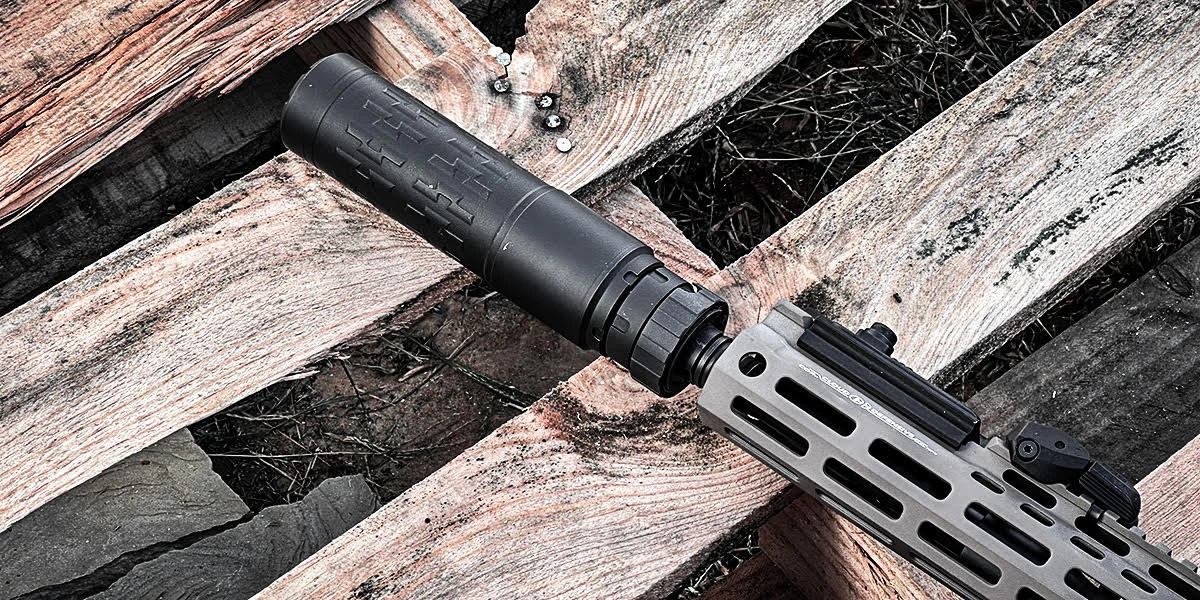
The Core Elements of a Whisper-Quiet System
Finding maximum suppression requires balancing three variables: your suppressor choice, your ammunition selection, and your weapon’s configuration. If any of these pieces are out of sync, your sound signature will suffer.
My first experience with a silencer years ago was not a good one. The first mistake I made was using a low-quality suppressor. It was heavy and lacked a good baffle system. After getting some advice from a friend, I was introduced to SilencerCo. This was years ago, but I’ve been a believer ever since I started using their suppressors.
Selecting ammunition was my second mistake. Little did I know, not all ammo excels with suppressors. I grabbed some 55-grain stock ammo from my safe and called it good. I would later learn that heavier, slower rounds work much better with a silencer.
And third, I didn’t use the best setup for making a quiet rifle. I stuck the 30-caliber suppressor on a 5.56 AR-15 with a 12-inch barrel. Sure, it reduced the sound slightly, but it was still extremely loud! Had I used an adjustable gas system, subsonic ammunition, and a longer barrel, I would have had better success.
Fortunately, over time I started to learn more about setting up a quieter system. It was this journey that led me to my first .300 Blackout rifle.
Here are three simple steps that can make life much easier when setting up a .300 Blackout rifle.
1. Sizing the Volume of Your Suppressor
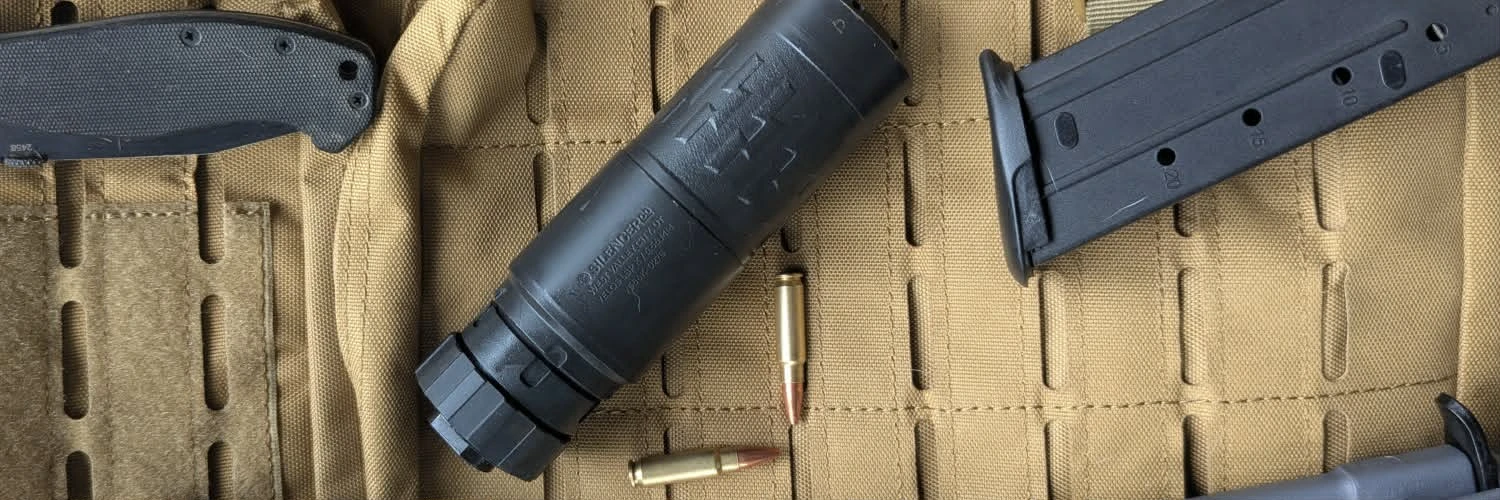
When it comes to pure sound reduction, internal volume is the ultimate goal. A larger internal chassis gives hot, high-pressure gases more room to expand and cool before they escape into the open air. For the .300 Blackout, the SilencerCo Omega 300 is my prime choice.
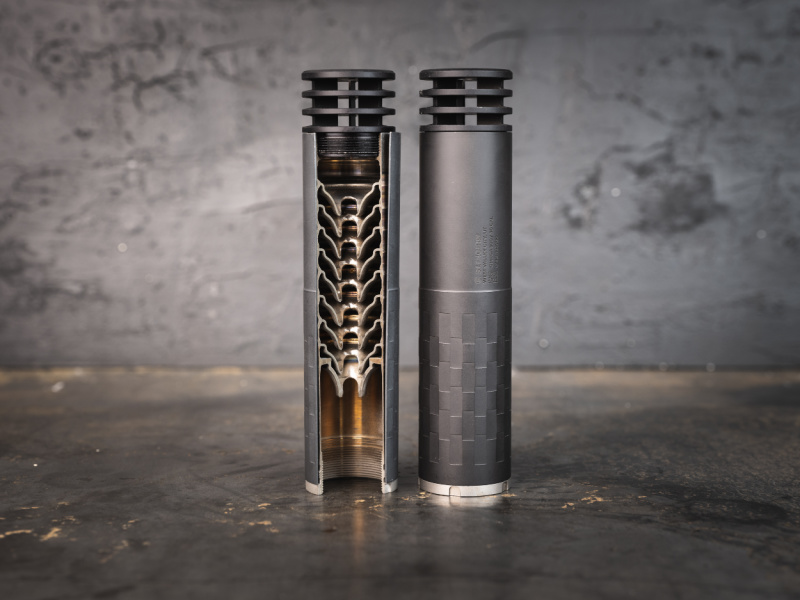
The Omega 300 has a fully welded design using a Cobalt-6 blast baffle alongside Inconel, 17-4 stainless steel, and a titanium outer structure. This blend of metal keeps the suppressor extremely light (12.6 ounces for the direct thread mount configuration) and durable. Its 1.57-inch diameter provides the deep internal volume needed to handle the volume of gas generated by a rifle cartridge.
It also has modular end caps, which is a no-brainer for me. With this setup, you can use the included .30 caliber Bravo Anchor Brake to mitigate recoil and disrupt gas flow even more. Alternatively, you can also switch to a flat front cap to minimize overall length.
On a dedicated .300 Blackout build, this setup can bring the overall muzzle sound signature down to just 119.5 dB with subsonic ammunition.
Does a Suppressor Add Velocity in .300 Blackout?
When you’re building a quiet rifle, bullet speed matters. On the range, guys often worry about “free-bore boost”—the extra push a bullet gets from trapped gases inside a silencer. If you’re running subsonics, the fear is that this minor speed bump will accidentally push your round past the speed of sound (~1,125 FPS), causing a loud sonic crack and defeating the whole purpose of the build.
Fortunately, the .300 BLK cartridge works in your favor here. It relies on fast-burning powders that fully burn up within a short 8- to 9-inch barrel. By the time the bullet enters the can, the gas pressure has already dropped. On a chronograph, you’ll usually only see a minor velocity jump of about 5 to 15 FPS.
For a closer look at the science and why this minimal velocity gain is actually a huge benefit for keeping your shots quiet, check out the full breakdown here: Does a Suppressor Add Bullet Velocity to .300 Blackout?
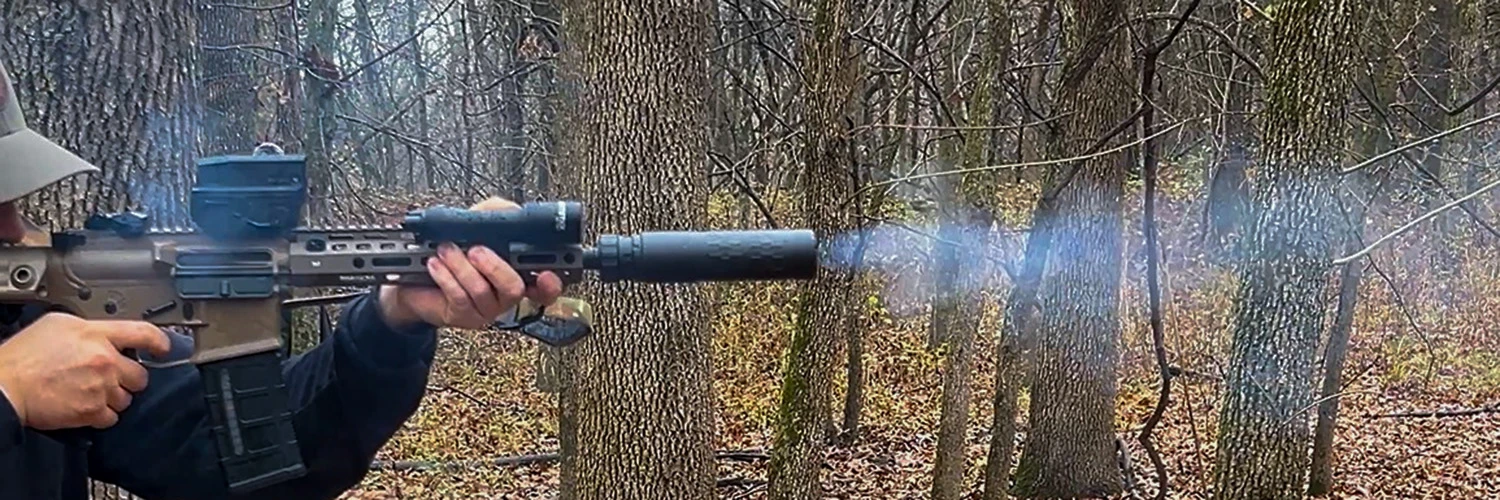
2. Matching Subsonic Ammo and Bullet Weight
Most of the time, we think the faster a bullet, the better, right? But if your goal is to make a setup as quiet as possible, you actually need a heavier and slower bullet. And by slow, I mean subsonic. You cannot have a quiet system if your bullet breaks the sound barrier. Supersonic rounds create a loud, metallic crack as they fly through the air—a ballistic crack that won’t be eliminated by a silencer.
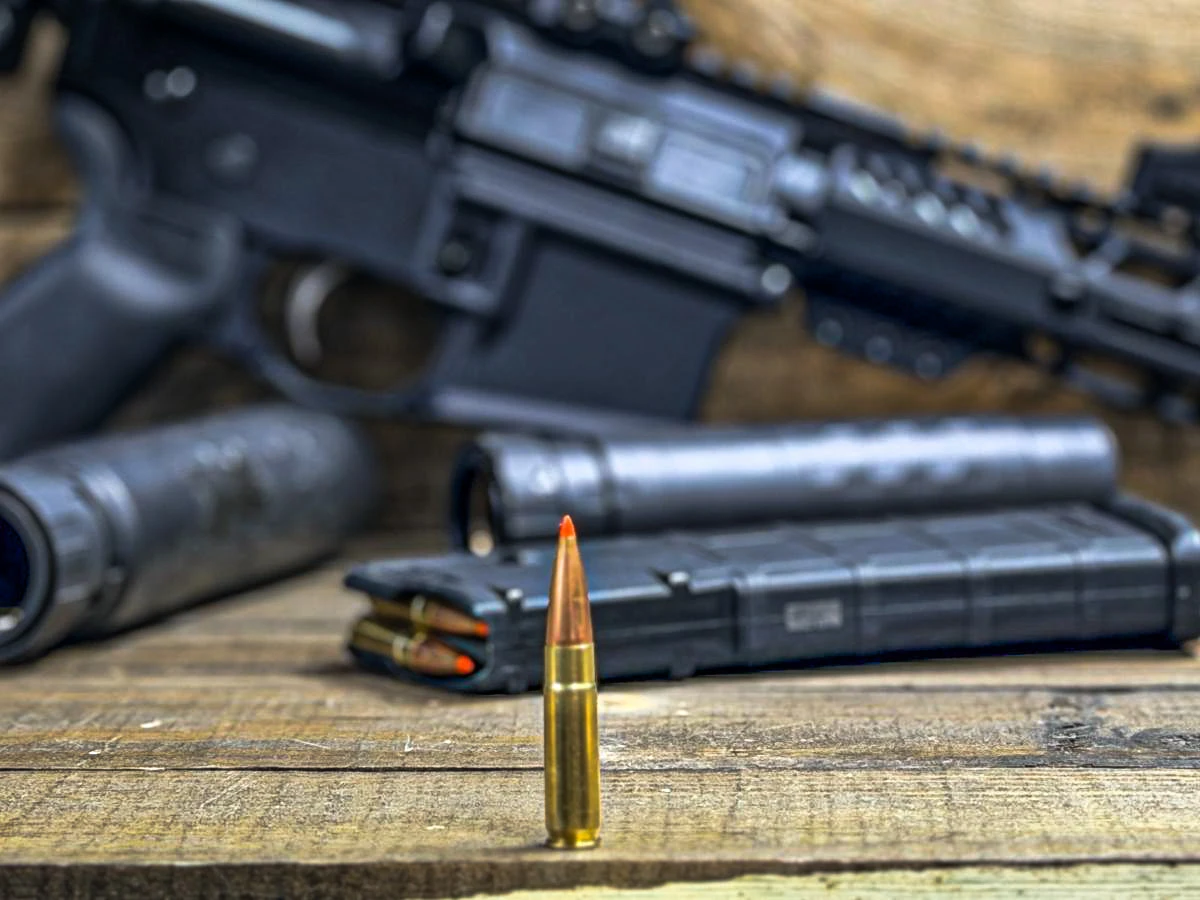
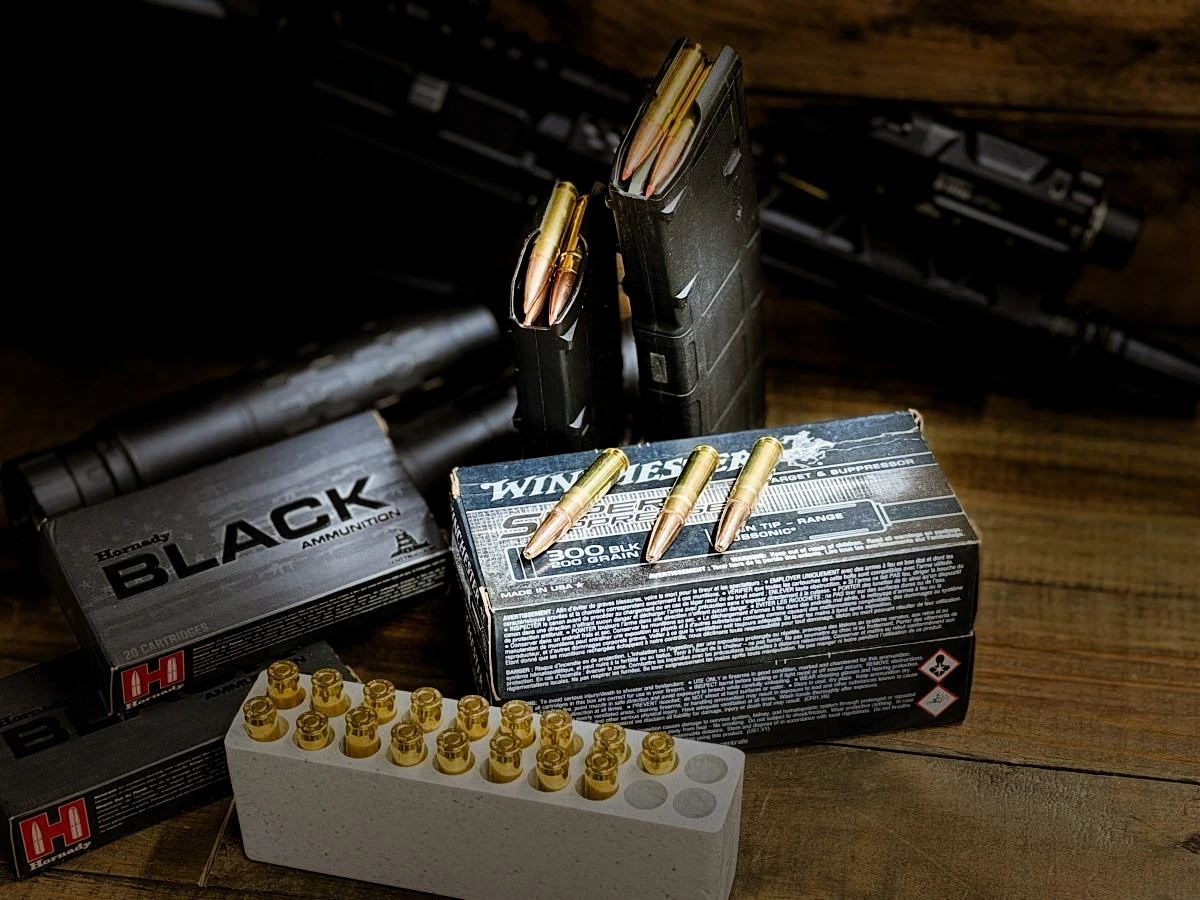
Subsonic bullets travel below the speed of sound, which is roughly 1,125 feet per second, depending on the ambient temperature. Because these rounds travel slower, they require heavy projectiles to maintain downrange energy. Look for ammunition loaded with bullets weighing 200 grains or more. These heavy projectiles burn smaller powder charges, which creates less total gas volume for your suppressor to manage.
3. Optimizing the Weapon System Host
The barrel length you choose will dictate your ultimate sound floor. As I mentioned above, the .300 Blackout was designed specifically for short barrels. This means you can maximize the bullet’s potential while burning all of the powder’s energy before it leaves the barrel.
For the most part, the AR-15 platform is the most popular choice for .300 Blackout rifles. But because of the ejection port issue mentioned above, a bolt-action rifle chambered in .300 Blackout would be even quieter than a semi-automatic rifle. The type of rifle you choose, however, comes down to your personal preference and intended use.
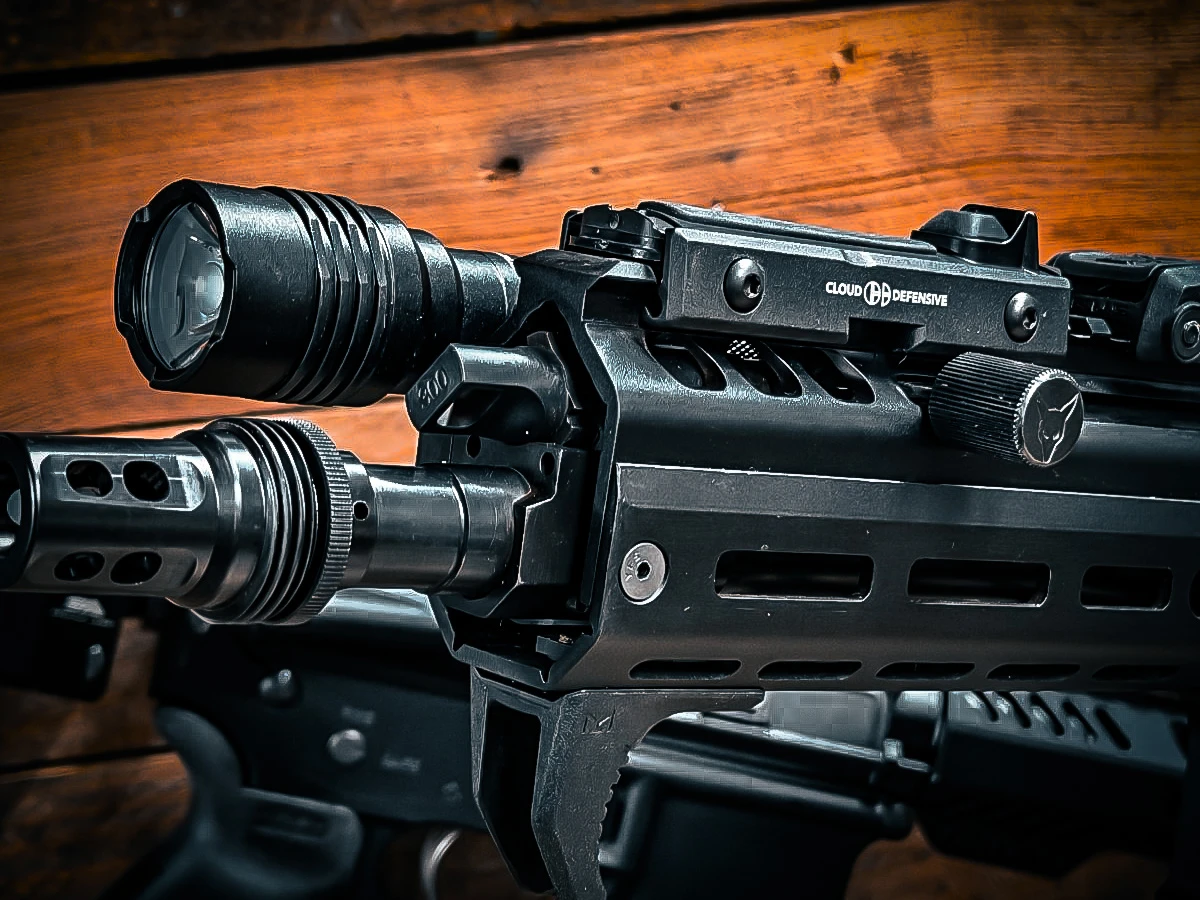
If you are running an AR-15 carbine or a pistol with a brace, you need to tune the gas system. Using an adjustable gas block allows you to restrict the amount of gas returning to the receiver. This delays the unlocking of the bolt carrier, which reduces the pressure inside the barrel before the casing is pulled from the chamber.
Barrel length also plays a major role in your setup. A longer barrel allows gunpowder to burn more completely inside the steel rifling before entering the silencer. For the .300 Blackout, a barrel length between 8 and 9 inches offers the ideal balance. It burns the propellant efficiently while keeping the overall package compact and easy to handle. A 5.56 rifle needs about 16 inches of barrel to achieve this, which is one reason I moved to .300 Blackout.
Component | Target Spec for Quietest Performance | Why It Matters | |
| Suppressor | High internal volume | Gives high-pressure gases room to expand/cool | |
| Ammunition | Subsonic (200+ Grain Projectiles) | Eliminates the loud, metallic sonic crack | |
| Barrel Length | 8″ to 9″ | Efficient powder burn without adding excess length | |
| Gas System | Adjustable Gas Block | Controls action cycle speed to limit port noise |
Beating the First Round Pop (FRP)
You may not always notice, but your first round can be much louder than the rest. When a silencer sits idle, it fills with ambient air, meaning the inside of your suppressor is full of oxygen. When you pull the trigger for your first shot, the hot, unburnt propellant gases from the cartridge are pushed into that fresh oxygen.
This interaction causes a secondary ignition inside the suppressor body. The result is a distinct, louder “pop” on the very first shot. Subsequent shots are significantly quieter because the internal oxygen has been burned away and replaced by inert exhaust gases.
The Omega 300 handles this process through its advanced internal geometry. Its high-efficiency baffle stack is designed to stage gas expansion exceptionally well. By controlling the initial flow and stack-up of expanding gases, the silencer disrupts the oxygen mixture quickly.
This design minimizes the volume differential between your first shot and your follow-up shots, ensuring your opening round stays incredibly quiet.
Setting Up a Quiet System
If your goal is to build a quiet system, the .300 Blackout is a great caliber, and the Omega 300 is one of the quietest for it. You can also use it with other calibers like .223/5.56, 6.5 Creedmoor, .308 Winchester, .300 Winchester Magnum, and more.
For maximum sound reduction, you can also use a direct thread (DT) mount on the Omega 300, though you do lose the ability to quickly attach and remove the suppressor. Either way, the Omega 300 is by far the best choice for your .300 Blackout setup. Just don’t forget to pair it with some good subsonic ammunition.
.300 Blackout Compatibility FAQ
Can a .30 cal suppressor shoot .300 Blackout?
Yes, it is the ideal choice. Because .300 Blackout utilizes a standard .308-inch diameter projectile, it aligns perfectly with the bore of any standard .30-caliber rifle silencer (such as those built for .308 Win or 7.62x51mm NATO). These cans have the internal volume necessary to handle both heavy subsonic and high-pressure supersonic loads.
Will a 9mm suppressor work on .300 Blackout?
Yes, but only with subsonic ammunition. A 9mm bullet has a wider diameter (.355-inch) than a .300 Blackout (.308-inch), so the bullet will easily clear the baffles. However, you must verify that your specific 9mm model is rated by the manufacturer for .300 BLK subsonics (like the SilencerCo Spectre 9). 9mm pistol silencers cannot withstand the extreme pressures of supersonic .300 Blackout rounds and will suffer a catastrophic failure if used incorrectly.
Do you need a suppressor for .300 Blackout?
Mechanically, the firearm functions fine without one, but a silencer is practically required to experience the true intent of the cartridge. Advanced Armament Corporation (AAC) specifically engineered the .300 Blackout to be used with a silencer. Without a suppressor, you are missing out on its primary advantages: heavy-hitting, hearing-safe ballistic performance out of short barrels.
How loud is a .300 Blackout without a suppressor?
Unsuppressed, a .300 Blackout ranges between 150 and 160 decibels (dB), which is well above the threshold for immediate, permanent hearing loss. Supersonic rounds emit a sharp, concussive crack, while unsuppressed subsonics mimic the blast of a heavy handgun. Adding a suppressor drops that sound signature down to a comfortable, hearing-safe 120 to 125 dB.
Jason Mosher